Turn PDF Pages Into Images and Shrink Bulky PDFs - in Bulk, Offline
Turbo Batch PDF Converter is a Windows desktop app that does two jobs exceptionally well: it renders the pages of your PDFs into image files, and it compresses oversized PDFs down to a manageable size. Both run on entire folders at once, entirely on your own PC, with no uploads and no external software to install. The rendering is powered by the built-in PyMuPDF engine, so there is no Poppler, no Ghostscript, and no command-line setup - just open the app and convert.
Two Tools in One App
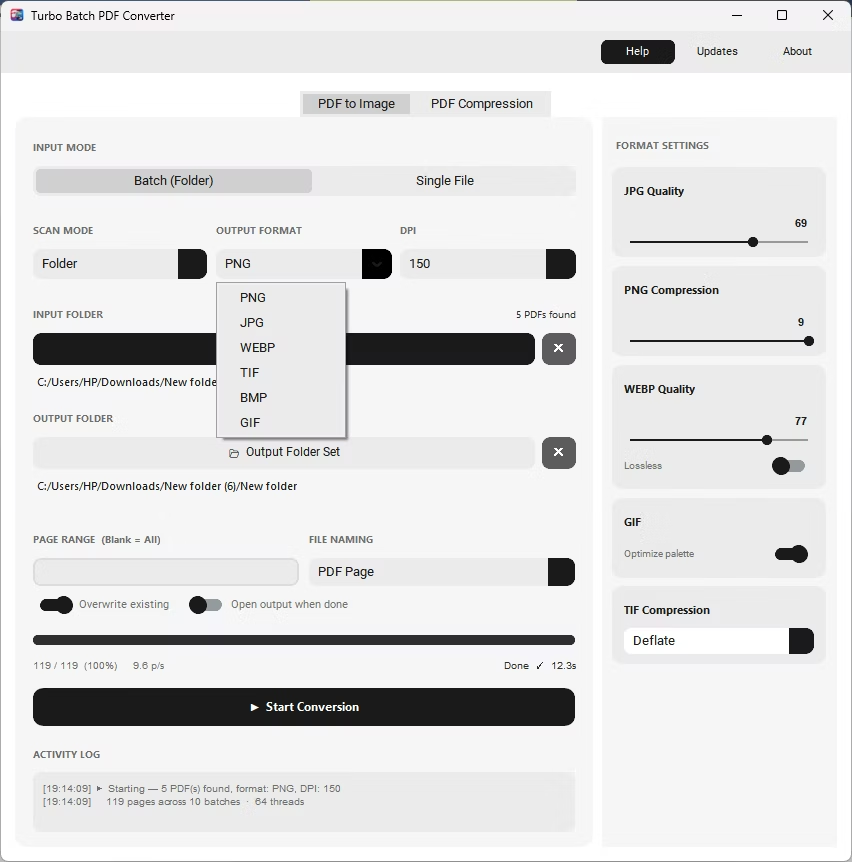
The app is organized into two tabs. The PDF to Image tab converts each page of a PDF into a separate image in the format you choose - JPG, PNG, WEBP, TIFF, BMP, or GIF - at a DPI you control. The PDF Compression tab rewrites PDFs to be smaller, with five escalating levels of optimization from lossless structure cleanup all the way to aggressive image downsampling. You can process a single file or a whole folder in either tab.
What Problems It Solves
- Getting individual page images out of a PDF for use in documents, slides, or on the web.
- Converting hundreds of PDFs to images in one run instead of one file at a time.
- Shrinking PDFs that are too large to email, upload, or archive.
- Producing print-ready page images at high DPI, or lightweight previews at low DPI.
- Doing all of this offline, on confidential documents that cannot go to a web service.
- Avoiding fiddly installs of Poppler, Ghostscript, or other external PDF binaries.
Who Should Use It
Office and administrative staff extracting pages from reports, designers and marketers pulling page images into layouts, publishers and archivists rendering scanned documents and eBooks, developers who need page images or smaller PDFs in a pipeline, and anyone who regularly deals with PDFs that need to become images or simply need to be smaller. If you work with PDFs on Windows and want a fast, private, no-install tool, this is built for that.
Supported Input Format
Turbo Batch PDF Converter reads any standard PDF file, including multi-page scanned documents, reports, and eBooks, and renders each page with the built-in PyMuPDF engine - no Poppler or Ghostscript install required.
Supported Output Formats (6 Image Formats)
Whether you need a pdf to jpg converter for photos, a pdf to png high quality converter for graphics with transparency, a pdf to bmp converter for legacy software, a pdf to gif converter for lightweight images, or a pdf to tiff converter app for scanned archives, Turbo Batch PDF Converter covers every common output format from a single interface.
Key Features
▶ PDF to Image Tab
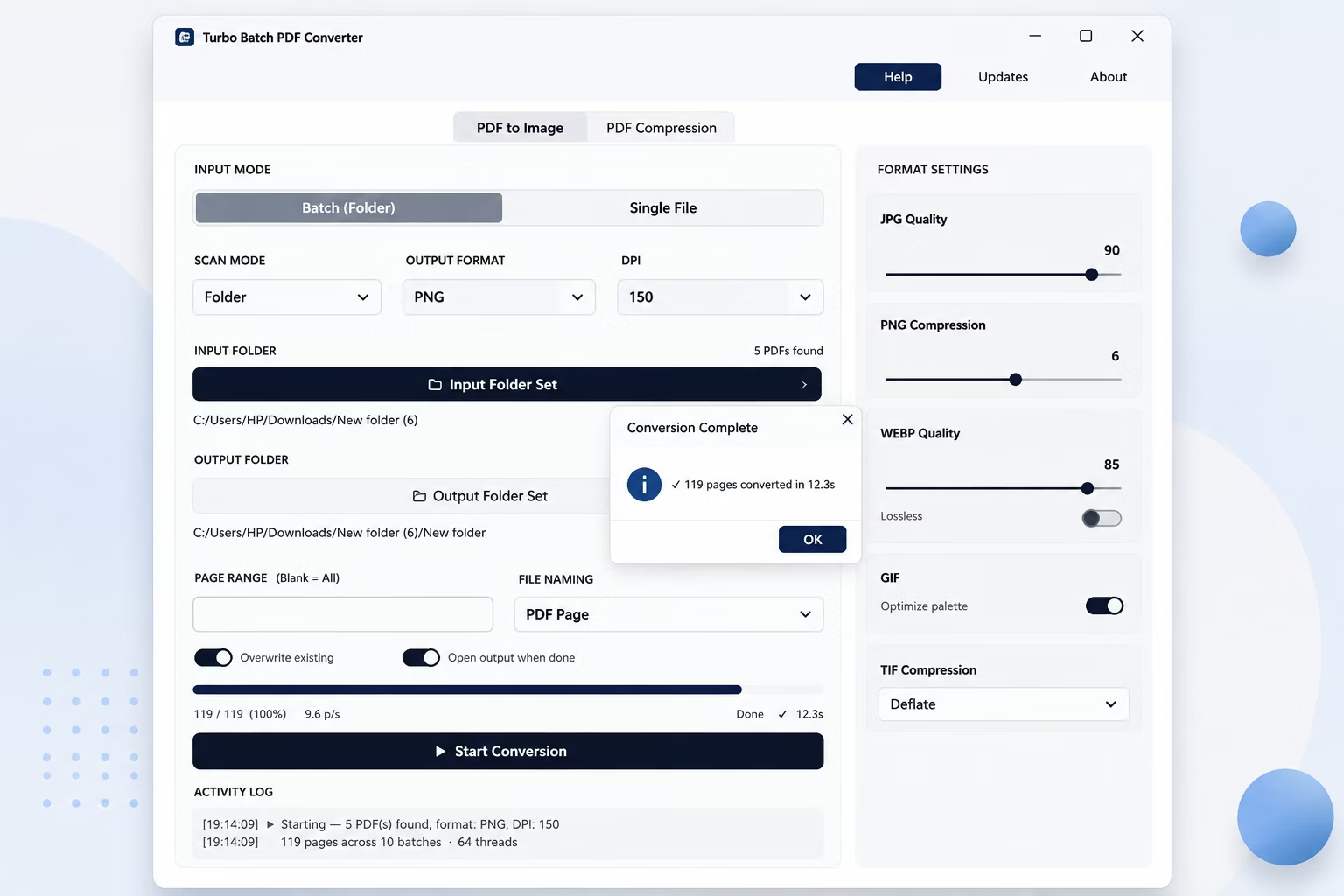
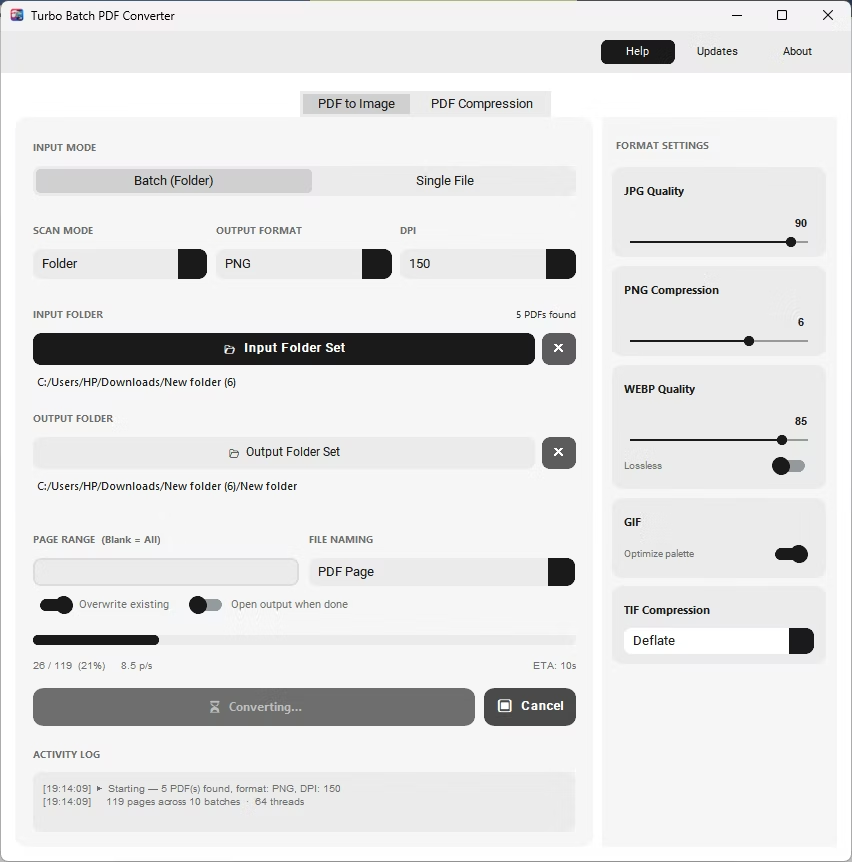
The core of the app is a complete pdf to image converter. Select a PDF or a whole folder of PDFs, choose your output format, set the DPI, and click Start Conversion. Every page is rendered through the PyMuPDF engine and saved as a separate image file, with live progress, speed, and ETA shown in the activity panel.
▶ PDF Compression Tab
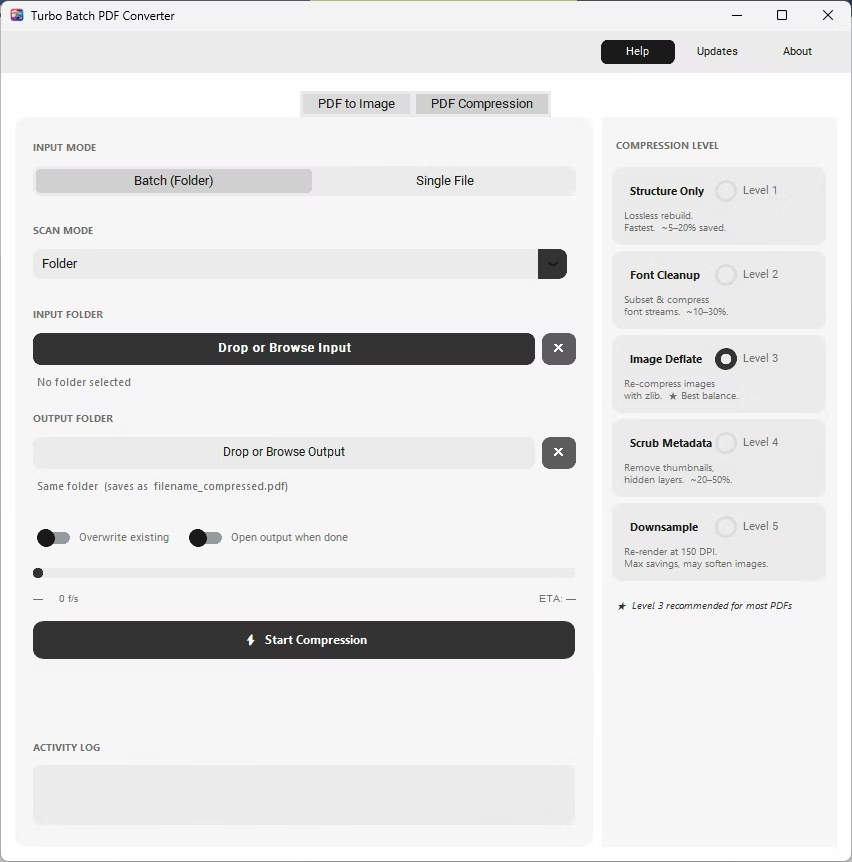
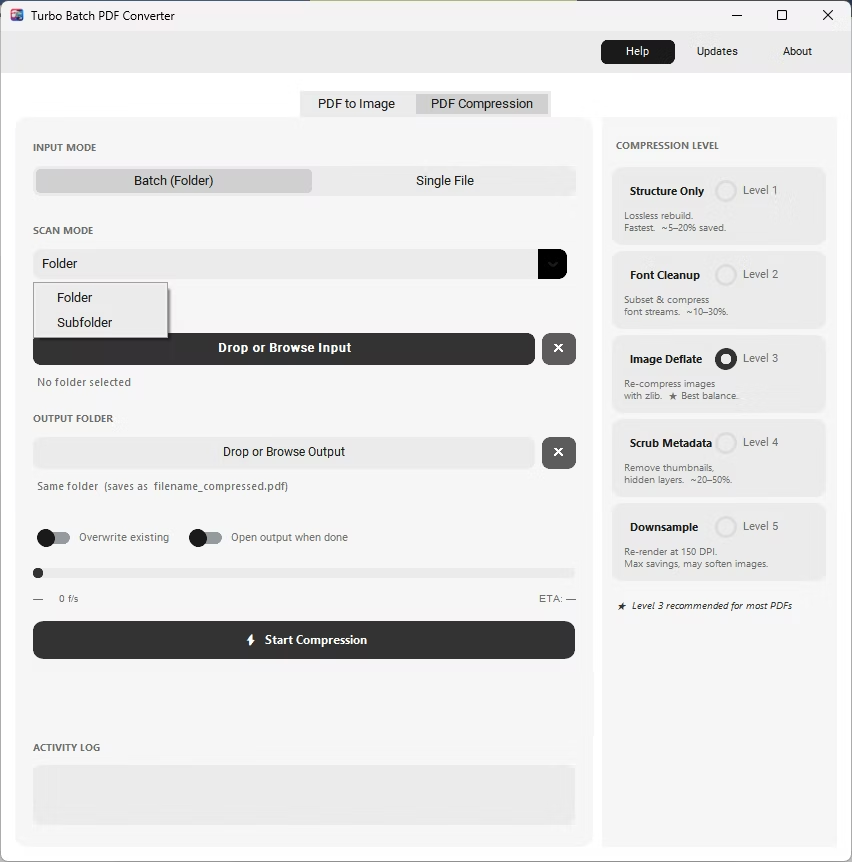
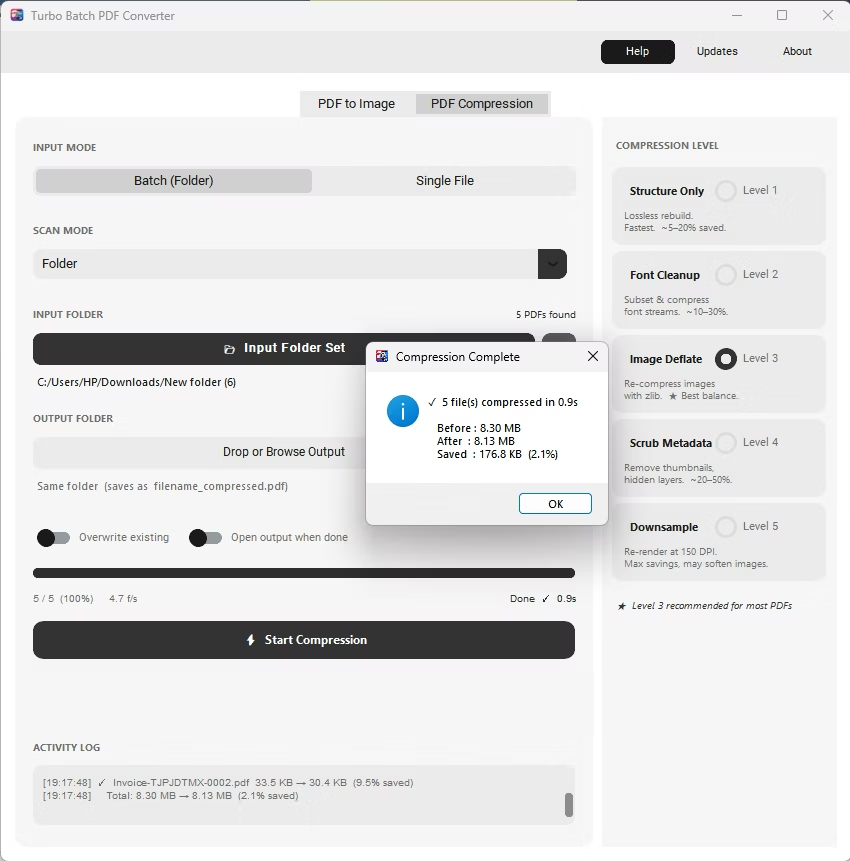
A second tab lets you shrink PDF file sizes without converting them to images. Five compression levels - from lossless structure cleanup to aggressive image downsampling - reduce file size while showing the original and compressed size, plus the percentage saved, for every file.
Batch (Folder) and Single File Modes
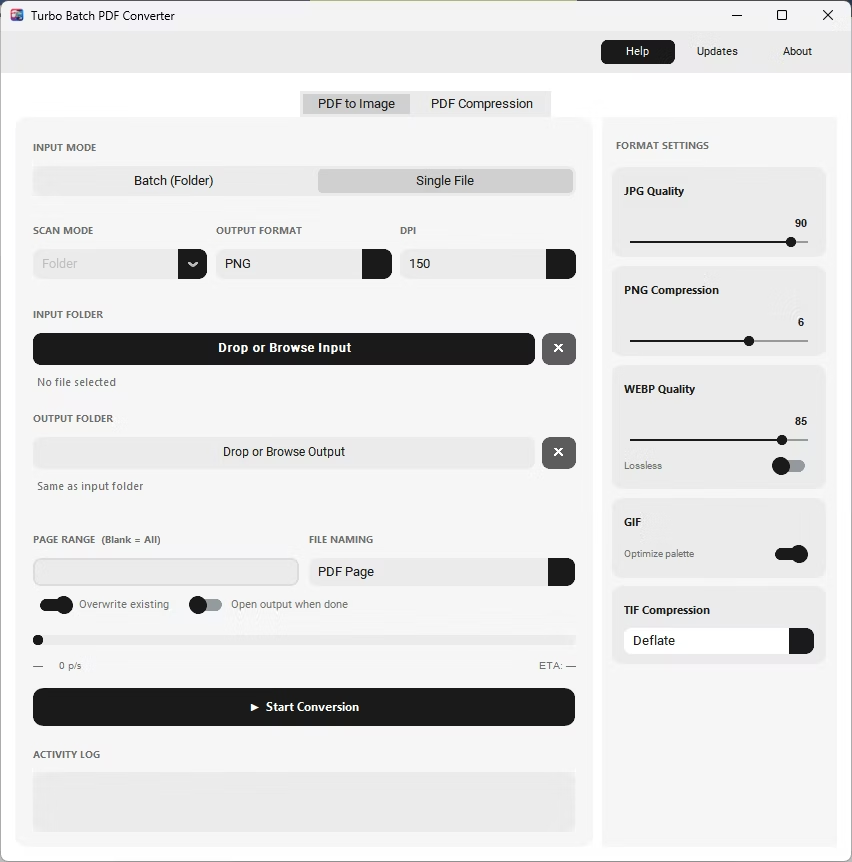
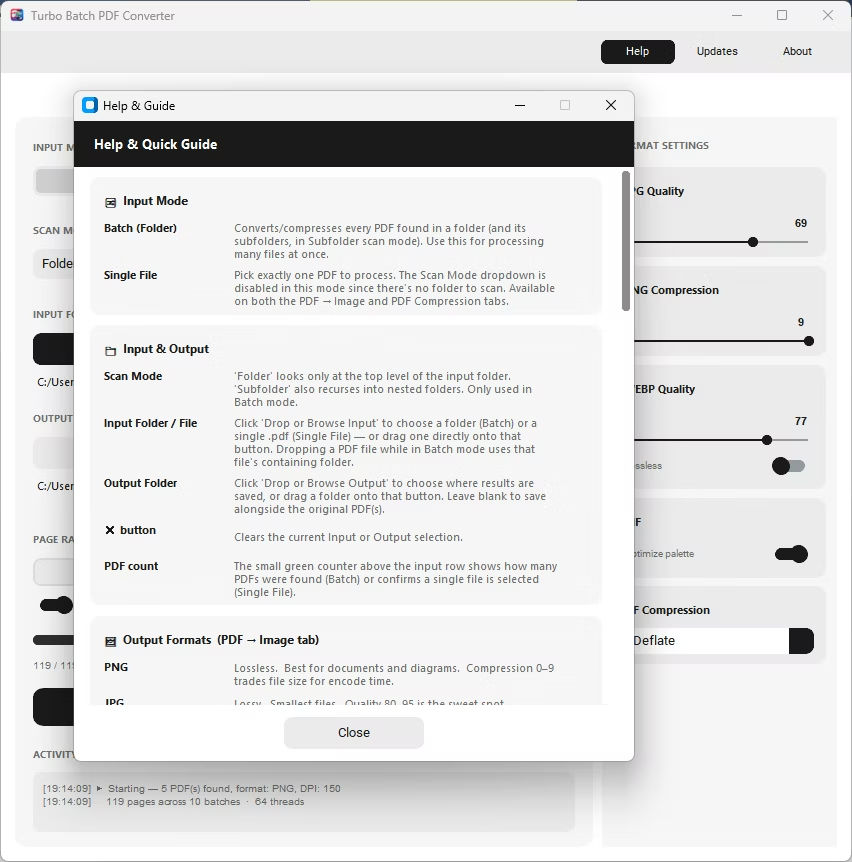
Switch between Batch (Folder) mode to process an entire directory of PDFs, or Single File mode to convert one document at a time. Both the PDF to Image tab and the PDF Compression tab support this toggle independently.
Folder and Subfolder Recursive Scanning
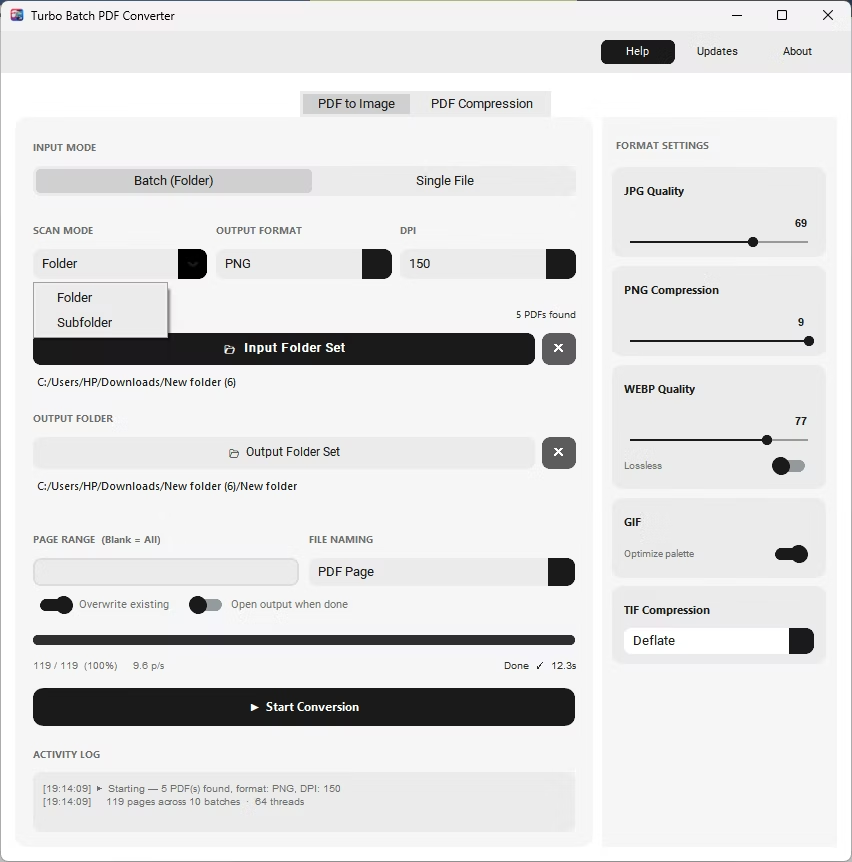
Choose Folder mode to scan only the top-level directory, or Subfolder mode to recursively walk every nested folder and pick up every PDF inside, including deeply organized document archives.
PDF to JPG converter with Adjustable Quality
As a dedicated pdf to jpg converter, JPG output quality is adjustable from 1 to 100 with a live slider, so you can balance sharp text against smaller file sizes for large batches of scanned pages.
PDF to PNG high quality converter Output
PNG output works as a true pdf to png high quality converter, with lossless compression levels from 0 to 9. Higher DPI settings combined with low compression preserve fine text and line-art detail for archival use.
WEBP Output with Lossless Option
Convert PDF pages to WEBP with an adjustable quality slider (1-100) or flip on the Lossless switch for pixel-perfect output at a smaller size than PNG - useful for web-based document previews.
PDF to BMP converter for Legacy Workflows
Output straight, uncompressed BMP files with a single click. As a pdf to bmp converter, it is ideal for legacy Windows applications, embedded systems, and printing workflows that require raw bitmap input.
PDF to GIF converter with Palette Optimization
The built-in pdf to gif converter converts each page to an adaptive 256-color GIF, with an optional "Optimize palette" toggle for smaller file sizes - handy for lightweight thumbnails and previews.
PDF to TIFF converter app with Compression Choice
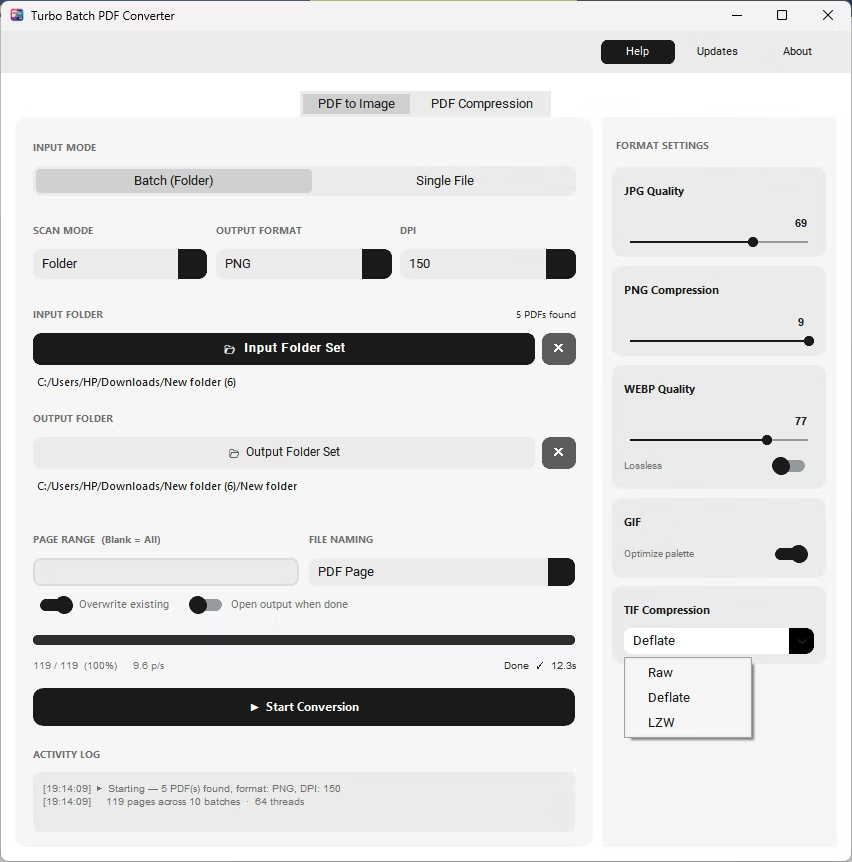
As a full pdf to tiff converter app, TIFF output supports Raw, Deflate, or LZW compression. Choosing Deflate or LZW instead of Raw is the easiest way to get a pdf to tiff small size result for scanned document storage.
Selectable DPI up to 600
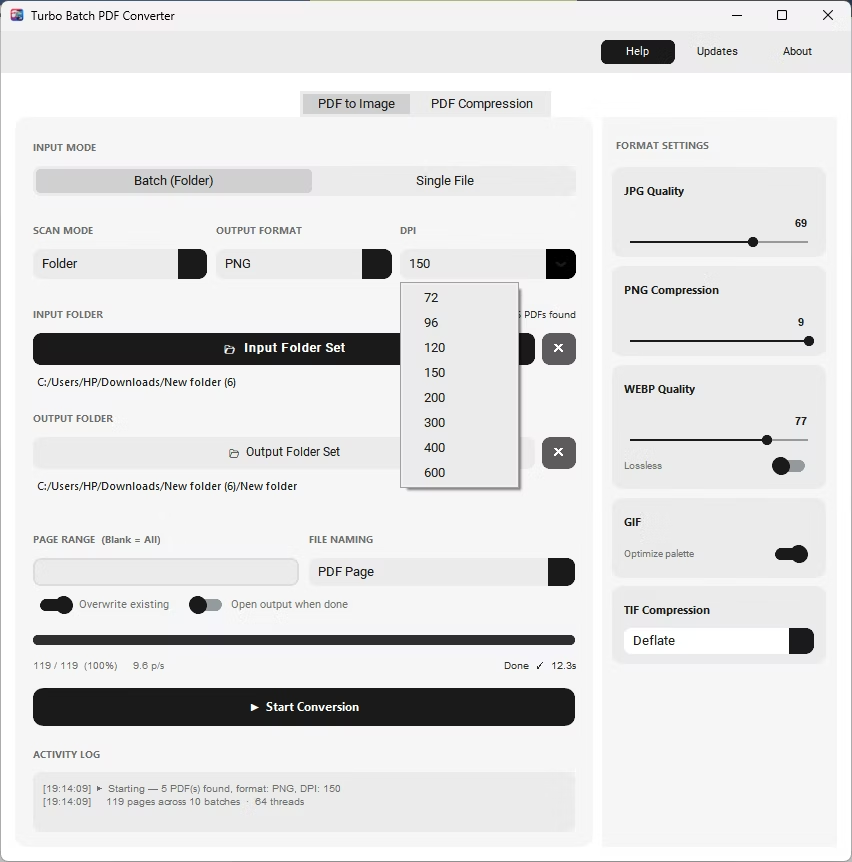
Render pages from 72 DPI (screen preview) up to 600 DPI (professional print) using the DPI dropdown. Choosing 300 or 600 DPI produces sharp, print-ready pages for any of the six supported output formats.
Custom Page Range Selection
Enter a page range such as "1-3, 5, 8-10" to convert only the pages you need, or leave it blank to convert every page. This works across the entire batch, saving time on large multi-hundred-page PDFs.
Two File Naming Modes
Choose "PDF Page" naming (e.g. report_p3.jpg) to keep the source file visible in every output name, or "Page Only" naming (e.g. page_0003.jpg) for simple sequential numbering.
Drag and Drop Input / Output
Drop a PDF file or a folder of PDFs directly onto the Browse buttons, or use the file dialog. The same drag-and-drop support is available on both the PDF to Image tab and the PDF Compression tab.
Overwrite and Auto-Open Toggles
Turn on "Overwrite existing" to replace files that already exist in the output folder, and "Open output when done" to automatically open the destination folder as soon as the batch finishes.
Up to 64 Parallel Workers
Pages are rendered using a fixed pool of up to 64 concurrent workers, with work split into chunks of 20 pages per task, so even PDFs with thousands of pages convert quickly on modern multi-core CPUs.
Real-Time Conversion Dashboard
Live stats show pages done versus total pages, conversion speed in pages per second, and estimated time remaining - refreshed continuously while the batch runs.
100% Offline PDF to Image Converter
Every page render happens locally on your PC through the PyMuPDF engine. There are no uploads, no file size limits, and no dependency on an internet connection once the app is installed.
PDF Compression Levels
| Level | What It Does | Typical Saving |
|---|---|---|
| Level 1 | Structure only - removes duplicate objects, rebuilds the cross-reference table, and deflates streams. Images are untouched, so this level is fully lossless and the fastest option. | ~5-20% |
| Level 2 | Everything in Level 1, plus font subsetting, embed cleanup, and cleaned page content streams. Best suited to text-heavy PDFs. | ~10-30% |
| Level 3 (Recommended) | Everything in Level 2, plus re-compression of existing image streams. A good balance of size reduction and visual quality for most documents. | ~15-40% |
| Level 4 | Everything in Level 3, plus scrubbing of metadata, annotations, hidden layers, and embedded thumbnails. | ~20-50% |
| Level 5 | Everything in Level 4, plus a full image downsample - every page is re-rendered at 150 DPI and rebuilt as a raster-only PDF. Maximum reduction, but text and vector elements are no longer live, and already-compact text-only PDFs may grow slightly larger. | ~30-70% |
Each compressed file reports its original size, its new size, and the percentage saved in the activity log, so you can confirm the result before deleting the source PDF.
Technical Notes
How DPI Affects Output Quality and Size
DPI (dots per inch) controls the pixel resolution of every rendered page. 72-96 DPI suits on-screen preview, 150-200 DPI covers general document use, and 300-600 DPI is recommended for professional printing or archival scans. Some people search for pdf to tiff 1200 dpi expecting a specific setting, but 600 DPI - the app's maximum - already exceeds what most printers and scanning standards require, while keeping file sizes manageable and conversion speed fast.
Getting a pdf to tiff small size Result
Raw TIFF stores every pixel uncompressed and produces the largest files. Switching TIF Compression to Deflate or LZW is lossless and typically cuts file size significantly, which is the recommended way to get a pdf to tiff small size output without lowering DPI. Combine LZW compression with a moderate DPI, such as 150-200, for scanned text documents.
Built-In Rendering Engine
Pages are rendered using a self-contained engine with no external software required. There is nothing extra to install, no flashing console windows in the background while converting, and PDFs open noticeably faster the moment you load them.
Chunked Parallel Rendering
Instead of assigning one page per worker, the app splits each PDF's pages into chunks of 20 and distributes those chunks across up to 64 workers. Each worker opens the source document, renders its chunk, and closes it independently, keeping memory use predictable even on documents with thousands of pages.
How It Works: PDF In, Images or Smaller PDFs Out
Both tabs follow the same simple rhythm - point the app at your input, choose your settings, and start. Everything runs locally and reports live progress.
1. Pick a Tab
Choose PDF to Image to render pages into image files, or PDF Compression to shrink PDFs. Each tab has its own settings and its own Start button.
2. Choose Input
Switch between Batch (Folder) and Single File input. Browse to your PDF or folder, or drag and drop it straight onto the tab.
3. Set Scan Mode
In folder input, pick Folder to process just that folder, or Subfolder to walk every nested folder inside it as well.
4. Configure Output
On the image tab, choose format, DPI, quality, page range, and file naming. On the compression tab, choose one of the five levels.
5. Start Conversion
Click Start and watch the activity panel: pages done versus total, speed in pages per second, and an estimated time remaining.
6. Open the Results
With Auto-Open enabled, the output folder pops open when the run finishes, so your images or compressed PDFs are right there.
The PDF to Image Tab in Detail
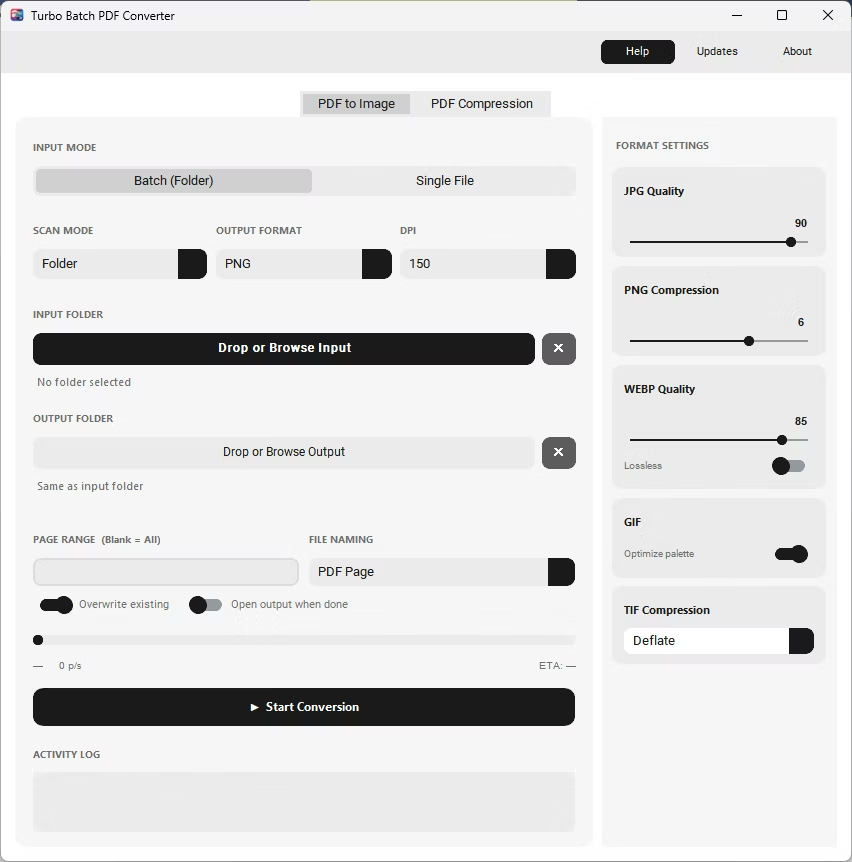
The image tab exposes every setting that shapes your output, so you can dial in exactly the result you need before converting a single page.
- Output Format - choose PNG, JPG, WEBP, TIF, BMP, or GIF. The format-specific controls below adapt to your choice.
- DPI - select from 72, 96, 120, 150, 200, 300, 400, or 600 DPI. The default is 150, a good balance of sharpness and file size.
- JPG Quality - a 1-100 slider that applies when the output format is JPG; higher means better quality and larger files.
- PNG Compression - a 0-9 slider that trades encode speed for file size; PNG stays lossless either way, so this only affects size and speed.
- WEBP Quality and Lossless - a 1-100 quality slider plus a lossless switch. When lossless is on, the quality slider is ignored.
- TIF Compression - Raw (uncompressed), Deflate (lossless zip-style), or LZW (lossless, older standard) for archival TIFF output.
- GIF Optimize Palette - a switch that optimizes the colour palette for smaller GIF files.
- Page Range - leave blank for every page, or enter syntax like "1-3, 5, 8-10" to render only the pages you need, across the whole batch.
- File Naming - "PDF Page" creates names like doc_p1.png, while "Page Only" creates uniform names like page_0001.png.
Convenience Toggles and Live Feedback
Beyond the core format and quality settings, both tabs include small conveniences that make large runs smoother and keep you informed at every step.
Overwrite Toggle
Leave overwrite off and the app skips any output file that already exists, noting each skip in the log - handy for resuming an interrupted batch without redoing finished work. Turn it on to force fresh output.
Open Output When Done
Enable this toggle and the output folder opens automatically the moment a run finishes, so your images or compressed PDFs are one click away instead of buried in a directory tree.
Live Activity Log
A scrolling log records what is happening in real time: PDFs found, pages counted, files saved, skips, and any per-page errors, each with a clear icon so you can scan the run at a glance.
Progress, Speed, and ETA
The progress row shows pages done versus total, the current conversion speed in pages per second, and an estimated time remaining, so a long batch never leaves you guessing.
Cancel Mid-Run
A Cancel button lets you stop a conversion or compression run cleanly if you started the wrong batch or changed your mind, without leaving the app in an odd state.
Completion Dialog
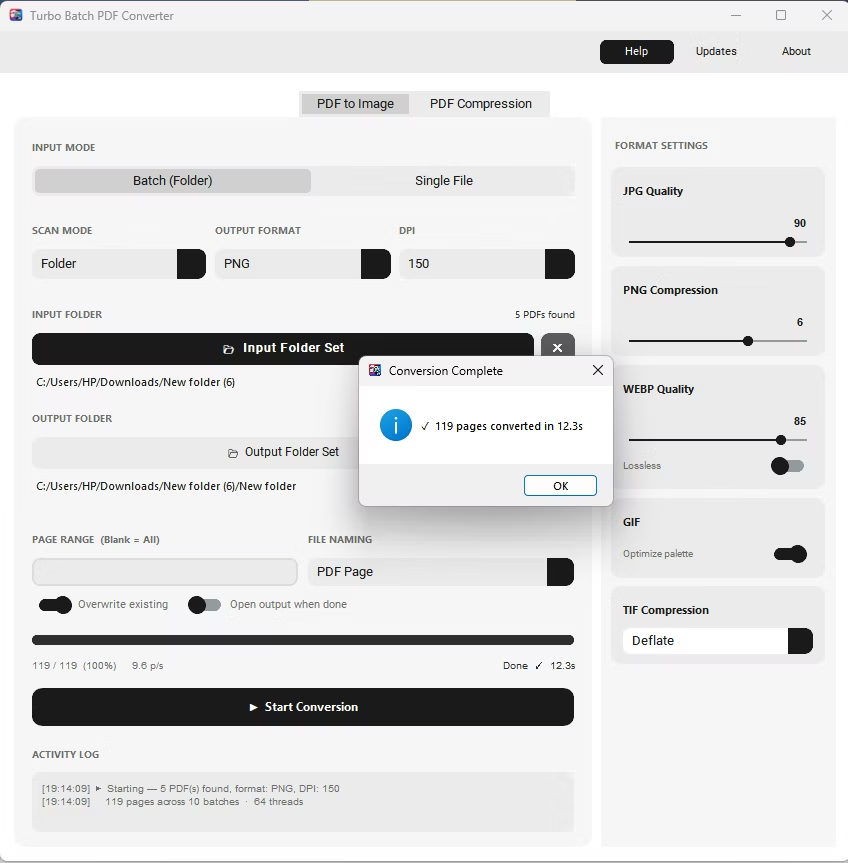
When a run ends, a summary dialog confirms it is finished, so you know the whole batch completed rather than wondering whether it stalled.
On the compression tab, the same conveniences apply, and each file additionally reports its original size, its new size, and the exact percentage saved - a running record you can check before deleting any source PDFs.
Choosing the Right Output Format
Each of the six image formats suits a different purpose. Here is when to reach for each.
PNG
Lossless, with a compression setting that trades size against encode time. Best for documents, diagrams, and anything with crisp text or sharp edges.
JPG
The fastest format to encode and the smallest for photographic pages, with an adjustable quality slider. Ideal for sharing and the web where perfect fidelity is not required.
WEBP
A modern lossy or lossless hybrid with the best quality-to-size ratio for photos, and it encodes faster than PNG at comparable quality.
TIFF
An archival standard with a choice of Raw, Deflate, or LZW compression. Suited to long-term storage and print or prepress handoff.
BMP
Uncompressed bitmap output, for the occasional downstream tool that specifically requires plain BMP input.
GIF
A 256-colour palette format with optional palette optimization, fine for simple graphics and small, widely compatible images.
Understanding DPI: From Screen Preview to Print-Ready
DPI - dots per inch - controls how many pixels each PDF page is rendered into. Higher DPI means sharper images and larger files. The app offers eight settings so you can match the job.
72-120 DPI
Screen resolution. Great for quick previews, thumbnails, and images that will only ever be viewed on a monitor or embedded small.
150-200 DPI
The everyday sweet spot, and 150 is the default. Sharp enough for on-screen reading and most documents, while keeping files reasonably small.
300 DPI
The standard for quality printing. Choose this when the page images will be printed or placed in a print layout.
400-600 DPI
Professional and archival print. 600 DPI meets or exceeds what most printers, scanners, and archival standards require, so there is rarely a need to look for more.
Tip: higher DPI multiplies both render time and file size, so pick the lowest DPI that still meets your quality target rather than defaulting to the maximum.
Who Uses Turbo Batch PDF Converter and How
PDFs turn up everywhere, and so does the need to get images out of them or make them smaller. The two tabs cover a wide range of jobs.
Office and Admin Teams
Pull specific pages out of long reports as PNGs to drop into slides and emails, using page ranges to grab only what is needed.
Designers and Marketers
Render PDF pages to high-DPI images for layouts and mockups, choosing WEBP or JPG for the web and TIFF for print.
Publishers and Archivists
Convert scanned documents and eBooks into per-page image sets at archival DPI, or compress large scan-heavy PDFs for storage.
Legal and Finance
Compress bulky case files and statements so they fit email and portal size limits, entirely offline for confidentiality.
Developers and Analysts
Batch-render PDF pages to images for OCR pipelines, thumbnails, or previews without wiring up Poppler or Ghostscript.
Educators and Trainers
Turn slide and worksheet PDFs into images for course materials, quizzes, and printable handouts.
Support and Operations
Shrink oversized manuals and forms so they upload and share quickly across the team.
Anyone With a Too-Big PDF
If a PDF is too large to send, the compression tab reduces it with a single click and reports exactly how much was saved.
Real-World Workflows
Extract a Few Pages as Images for a Presentation
On the PDF to Image tab, pick Single File, choose PNG at 300 DPI, and enter a page range like "2-4, 9". The app renders just those pages as sharp images, ready to drop straight into your slides.
Convert a Whole Folder of Scans to Archival TIFFs
Point the image tab at a folder of scanned PDFs, turn on Subfolder scan, choose TIFF with LZW compression at 600 DPI, and start. Every page of every PDF becomes a lossless archival image, processed across 64 parallel workers.
Shrink a Batch of Reports for Email
On the PDF Compression tab, select the folder of reports, choose Level 3 for a balanced reduction, and start. Each file is rewritten smaller, and the log shows the original size, new size, and percentage saved for every one.
Squeeze a Scan-Heavy PDF as Small as Possible
For a large document that is mostly scanned images, choose Level 5. Every page is re-rendered at 150 DPI and rebuilt as a raster PDF for maximum reduction - ideal when size matters more than keeping text selectable.
Best Practices and Tips
Pick the Lowest DPI That Works
DPI drives both time and file size. Start at 150, and only step up to 300 or 600 when the output will actually be printed or archived.
Match Format to Content
Use PNG or TIFF for text and diagrams, JPG or WEBP for photographic pages, and reserve BMP and GIF for the specific tools that need them.
Use Page Ranges on Big PDFs
When you only need a few pages, a range like "1-3, 5" avoids rendering hundreds of pages you will throw away.
Start Compression at Level 3
Level 3 is the recommended balance. Move up to 4 or 5 only if you need more reduction and can accept scrubbed metadata or rasterized pages.
Check the Log Before Deleting Sources
The activity log reports the saving on every compressed file. Confirm the result there before removing your original PDFs.
Use Page Only Naming for Pipelines
The "Page Only" naming mode produces uniform names like page_0001.png, which is handy when another tool expects a predictable sequence.
Scope and Limitations
Knowing what the app does and does not do helps set the right expectations.
- Input is PDF only. The app renders and compresses PDFs; it does not convert other document types into PDF.
- The PDF to Image tab outputs images (PNG, JPG, WEBP, TIFF, BMP, GIF) - it does not export editable Word, Excel, or PowerPoint files.
- The DPI dropdown tops out at 600, which meets most print and archival needs; there is no 1200 DPI option.
- Compression Level 5 rasterizes pages at 150 DPI, so text and vector content are no longer live, and already-compact text-only PDFs can occasionally grow slightly.
- The worker pool is fixed at 64 threads with no slider - it is tuned to keep large batches fast on modern multi-core CPUs.
- Drag-and-drop relies on an optional component; if it cannot load, you can still add files and folders with the Browse buttons.
Turbo Batch PDF Converter vs. Manual Methods
| Task | Manual / Online Approach | Turbo Batch PDF Converter |
|---|---|---|
| Convert 200 PDFs to images | Export each one by hand, or upload them to a web tool | Point at the folder, pick a format, convert the whole batch in one run |
| Render specific pages | Open each PDF and export pages individually | Enter a page range like "1-3, 5" applied across the batch |
| Set up the engine | Install Poppler or Ghostscript and configure paths | Built-in PyMuPDF - nothing external to install |
| Compress large PDFs | Separate compressor tool or an online service | Five compression levels in the same app, with per-file savings reported |
| Process nested folders | Repeat per folder | Subfolder scan walks the whole tree |
| Keep documents private | Web tools require uploading your files | 100% offline; nothing leaves your computer |
| Handle big batches fast | Single-threaded, one file at a time | 64 parallel workers, 20 pages per task |
Why Choose Turbo Batch PDF Converter
Plenty of tools can turn a single PDF page into an image or squeeze one file smaller. What sets this app apart is doing both, in bulk, entirely on your own machine, with the settings that matter actually exposed.
Two Tools, One Purchase
A full PDF to image converter and a five-level PDF compressor live in the same app, so you are not juggling separate tools or paying twice.
Genuinely Offline
Every page render and every compression pass runs locally through PyMuPDF. Your documents never leave your computer, which matters for anything confidential.
No External Dependencies
There is no Poppler to install, no Ghostscript to configure, and no PATH to set. The rendering engine is built in, so the app just works after activation.
Built for Volume
Batch a whole folder, walk subfolders, and let 64 parallel workers churn through thousands of pages while a live dashboard shows speed and ETA.
Real Control Over Output
Format, DPI, per-format quality and compression, page ranges, and file-naming modes are all adjustable, so the output matches exactly what your next step needs.
Transparent Compression
Every compressed file reports its original size, new size, and percentage saved, so you can trust the result before deleting a single source PDF.
One-Time Purchase
Licensed through Gumroad as a one-time buy with no subscription. Activate once and keep using it locally.
Familiar, Focused Interface
Two clear tabs, sensible defaults, and drag-and-drop input keep the learning curve short - open it and you already know where everything is.
Getting Started in Five Minutes
From download to your first converted batch is a short path. Here is the whole flow.
1. Install and Activate
Download the app from Gumroad and run it on 64-bit Windows 10 or 11. Enter the purchase email and license key once to activate; after that the app runs locally and only performs a lightweight license check.
2. Convert Your First PDF to Images
On the PDF to Image tab, drag in a PDF or click Browse. Pick an output format such as PNG, set the DPI to 150, and leave the page range blank to render every page. Click Start Conversion and watch the dashboard fill in. The output folder opens automatically when it finishes.
3. Compress a PDF
Switch to the PDF Compression tab, add a file or folder, and choose Level 3 to start. Click Start and read the per-file savings in the log. If you need more reduction, try Level 4 or Level 5; if you need to stay lossless, drop to Level 1 or 2.
4. Scale Up to Batches
Once you are comfortable, switch input to Batch (Folder), turn on Subfolder scan, and point the app at an entire directory tree. The 64-worker pool handles the volume, and page ranges plus file-naming modes keep even huge runs organized.
Safety and Reliability
- Thread-Safe Batch Engine - Every page render and every PDF compression runs as an independent task, so one worker never interferes with another during high-volume batches.
- Conversion Continuity - If a single page or file fails, the rest of the batch keeps going. Failures are reported in the activity log instead of stopping the whole job.
- Cancel Anytime - Both the PDF to Image tab and the PDF Compression tab support Cancel, which stops the batch as soon as the current task finishes.
- Overwrite Protection - With "Overwrite existing" switched off, files that already exist in the output folder are skipped instead of replaced.
- Stable on Large Batches - Built to handle folders with hundreds of PDFs and documents with thousands of pages without slowing down.
- Ideal for Sensitive Documents - Suitable for legal firms, medical records teams, accounting offices, and air-gapped networks that cannot upload files to the web.
Security and Privacy
Turbo Batch PDF Converter is a fully local desktop application. Every page render, image save, and PDF compression pass happens on your own computer. No PDF content is uploaded, scanned remotely, or shared with a third-party server, which makes it a trustworthy offline pdf to image converter for confidential paperwork.
- Does not log, analyze, or transmit the content of your PDF files
- No background telemetry, advertising trackers, or third-party analytics inside the conversion engine
- Internet access is used only for license activation - the request carries no file names or document content
- Suitable for legal contracts, medical scans, financial statements, and other sensitive documents
- A dependable choice whenever searching "how to convert pdf to gif online free" feels risky for confidential files - everything stays on your PC instead of a browser upload tool
Download
Looking for a pdf to jpg converter software free download for windows 10 64 bit? Grab the free trial demo below and test batch conversion, DPI settings, and PDF compression before buying the full license.
Download Free Trial DemoWindows 10 / 11, 64-bitApp Info
| App Name | Turbo Batch PDF Converter |
| Version | 2.3 |
| Category | PDF Converter / pdf to image converter / PDF Compressor |
| Platform | Windows 10, Windows 11 (64-bit) |
| Rendering Engine | PyMuPDF (no external binaries) |
| Parallel Threads | 64 (fixed) |
| Processing | 100% offline / local |
| License Management | Gumroad |
| Output Formats | JPG, PNG, WEBP, TIFF, BMP, GIF |
Minimum System Requirements
| Operating System | Windows 10 (64-bit) |
| Processor | 1-2 CPU cores |
| Memory | 2 GB RAM |
| Storage | 500 MB free disk space |
Recommended System Requirements
| Operating System | Windows 10 or Windows 11 (64-bit) |
| Processor | 4 or more CPU cores |
| Memory | 8 GB RAM or more |
| Storage Type | SSD recommended for large batch conversions |
| Free Disk Space | 2 GB or more |
Supported Conversions
| → | JPG (pdf to jpg converter) | |
| → | PNG (pdf to png high quality converter) | |
| → | WEBP (lossy or lossless) | |
| → | TIFF (pdf to tiff converter app - Raw, Deflate, or LZW) | |
| → | BMP (pdf to bmp converter) | |
| → | GIF (pdf to gif converter) | |
| → | Compressed PDF (5 compression levels) |
A Complete pdf to image converter and PDF Compressor for Windows
Turbo Batch PDF Converter is a professional pdf to image converter and pdf compressor built for Windows 10 and Windows 11 (64-bit). It processes every PDF locally on your computer - no uploads, no cloud services, no page limits, no waiting queues - which makes it a dependable pdf to jpg converter software free download for windows 10 64 bit users who need to keep document content private. As a full-featured pdf to jpg converter, pdf to png high quality converter, pdf to bmp converter, and pdf to gif converter, it covers every common image format a scanned document workflow could need, all from one interface with adjustable DPI, quality, and compression settings.
For archival and print work, the app doubles as a capable pdf to tiff converter app, with Raw, Deflate, and LZW compression choices. Users who search for pdf to tiff 1200 dpi are usually looking for print-ready output, and the app's 72-600 DPI range already delivers sharp, professional-grade pages for reports, contracts, and scanned books; switching to Deflate or LZW compression is the simplest way to get a pdf to tiff small size result for long-term storage. And rather than searching for how to convert pdf to gif online free and uploading sensitive files to a browser-based tool, Turbo Batch PDF Converter converts PDF pages to GIF, along with every other supported format, entirely offline. Also check out our image tools - Turbo Batch Image Converter Pro for bulk photo and RAW conversion, and Turbo Bulk Renaming Tool for organizing converted files afterward.
Frequently Asked Questions
Common Questions About Turbo Batch PDF Converter
Is it a good pdf to jpg converter for bulk files?
Yes. As a dedicated pdf to jpg converter, Turbo Batch PDF Converter renders every page of thousands of PDF files in one batch run, with a quality slider from 1 to 100 so you can balance sharpness against file size.
Does it work as a pdf to png high quality converter?
Yes. Choose PNG as the output format and Turbo Batch PDF Converter becomes a pdf to png high quality converter, with lossless compression levels from 0 to 9 and DPI up to 600 for crisp text and line art.
Can it work as a pdf to bmp converter?
Yes. Select BMP as the output format for an uncompressed, pixel-accurate pdf to bmp converter that suits legacy Windows software and printing pipelines requiring raw bitmap files.
Is there a pdf to gif converter built into the app?
Yes. The built-in pdf to gif converter renders each page as an adaptive 256-color GIF, with an optional palette optimization switch for smaller output files.
How to convert pdf to gif online free without risking file privacy?
Instead of searching how to convert pdf to gif online free and uploading a document to a browser tool, Turbo Batch PDF Converter converts every page to GIF locally, with no file size limit, no watermark, and no internet connection required during conversion.
Does the app support pdf to tiff 1200 dpi output?
The DPI dropdown goes up to 600, not 1200. Many people search for pdf to tiff 1200 dpi expecting maximum sharpness, but 600 DPI already meets or exceeds the resolution most printers, scanners, and archival standards require, while keeping conversion fast and files manageable.
How do I get a pdf to tiff small size output?
For a pdf to tiff small size result, set TIF Compression to Deflate or LZW instead of Raw, and pick a moderate DPI such as 150-200 unless print quality is required.
Is there a pdf to jpg converter software free download for windows 10 64 bit?
Yes. Turbo Batch PDF Converter is a pdf to jpg converter software free download for windows 10 64 bit and Windows 11 64-bit systems, available as a free trial demo before you purchase a full license.
Is this a reliable pdf to tiff converter app?
Yes. As a pdf to tiff converter app, it offers Raw, Deflate, and LZW compression, batch and single-file modes, subfolder scanning, and custom page-range selection for large scanned document archives.
Is Turbo Batch PDF Converter a good pdf to image converter overall?
Yes. As a complete pdf to image converter, it handles JPG, PNG, WEBP, TIFF, BMP, and GIF output, processes files with up to 64 parallel workers, and includes a built-in PDF compressor with five compression levels in the same app.
What can this app actually do?
Two things: it converts the pages of a PDF into image files (the PDF to Image tab), and it compresses PDFs to reduce their file size (the PDF Compression tab). Both work on a single file or a whole folder at once.
Which image formats can it export?
Six: PNG, JPG, WEBP, TIFF, BMP, and GIF. Each has its own relevant settings - JPG quality, PNG compression level, WEBP quality and lossless toggle, TIFF Raw/Deflate/LZW compression, and GIF palette optimization.
What DPI options are available?
You can render at 72, 96, 120, 150, 200, 300, 400, or 600 DPI. The default is 150. Lower DPI is best for screen previews, 300 for printing, and 600 for professional or archival print.
Can I convert only certain pages?
Yes. Enter a page range such as "1-3, 5, 8-10" to render just those pages, or leave the field blank to convert every page. The range applies across the whole batch.
Can it convert a whole folder of PDFs at once?
Yes. Switch input to Batch (Folder), pick your folder, and every PDF in it is processed. Turn on Subfolder scan to include PDFs in nested folders too.
Does it need Poppler or Ghostscript?
No. Rendering is handled entirely in-process by the built-in PyMuPDF engine, so there are no external binaries to install and no command-line setup - just open the app and convert.
How does the PDF compression work?
The compression tab offers five escalating levels: structure cleanup (lossless), font cleanup, image stream re-compression, scrubbing of metadata and hidden data, and finally full image downsampling to 150 DPI. Level 3 is the recommended balance.
Which compression level should I choose?
Start with Level 3 for a good size-to-quality balance. Use Levels 1 or 2 to stay fully lossless, and Levels 4 or 5 for maximum reduction when you can accept scrubbed metadata or rasterized pages.
Will compression ruin my text or image quality?
Levels 1 and 2 are lossless and leave images untouched. Level 3 re-compresses images, and Level 5 downsamples them to 150 DPI and rasterizes pages, so text is no longer selectable. Choose the level that matches how much quality you can trade for size.
How does it name the output image files?
Two modes. "PDF Page" produces names like doc_p1.png that keep the source name, while "Page Only" produces uniform names like page_0001.png, which is useful when a downstream tool expects a predictable sequence.
How fast is it on large batches?
Rendering runs on a fixed pool of 64 parallel workers, with work split into tasks of 20 pages each, so even PDFs with thousands of pages convert quickly on modern multi-core CPUs.
Does it show progress while converting?
Yes. The activity panel shows pages done versus total, conversion speed in pages per second, and an estimated time remaining, so you always know where a long run stands.
Can I drag and drop files into it?
Yes, when the optional drag-and-drop component is available. Drop a PDF or a folder onto the tab. If it cannot load, the Browse buttons add files and folders just the same.
Does it work completely offline?
Yes. All rendering and compression happen locally on your PC with nothing uploaded, which makes it suitable for confidential documents. The only online step is a one-time license check.
Can it convert PDF to Word, Excel, or PowerPoint?
No. This app converts PDF pages to images and compresses PDFs. It does not export editable Office documents - its output on the conversion tab is always image files.
Can it convert images or other files into PDF?
No. The input is always PDF. The app renders PDFs to images or compresses PDFs; it does not build PDFs from other formats.
Does compression always make the file smaller?
Usually, but not always. Already-compact, text-only PDFs can occasionally grow slightly at Level 5 because their pages are rasterized. The log reports the before and after size for every file so you can confirm the result.
How is it licensed, and which Windows versions are supported?
It is a one-time purchase through Gumroad - no subscription - and runs on 64-bit Windows 10 and Windows 11. Activate once with your purchase email and license key, after which it runs locally.