What Turbo Large Data Splitter Does
Turbo Large Data Splitter is a Windows tool built to split csv into multiple files, split Excel files into multiple files, and merge them back together again, all without the row limits and memory problems that come with opening huge files in Excel or a spreadsheet app. It can split CSV, TSV, TXT, XLSX, XLS, JSON, XML, and SQL dump files, and it can convert formats while splitting - for example, splitting one giant CSV file into several smaller XLSX files. Every file is read and written in a single streaming pass, so multi-gigabyte and 100 GB+ files are supported as long as there is enough free disk space for the output.
Why This Tool Exists
A single worksheet in Excel stops at roughly 1,048,576 rows, and long before that a multi-gigabyte export can freeze a machine or simply refuse to open. Databases, analytics platforms, and business systems routinely produce one enormous file - a CSV dump, an XLSX export, a JSON array, an XML feed, or a line-oriented SQL dump - that is awkward to open, import, review, or move. Turbo Large Data Splitter exists to turn that single unwieldy file into a set of smaller files sized for whatever comes next, and to convert the format at the same time if the destination needs something different from the source.
What Problems It Solves
- Files too large to open in Excel, Google Sheets, or a text editor.
- Exports that exceed another system's row limit or import size cap.
- The need to break one file into logical pieces - per value, per date, or alphabetically - rather than arbitrary chunks.
- Converting between CSV, TSV, TXT, XLSX, JSON, and XML without a separate conversion tool.
- Reassembling previously split parts into one file with a single header.
- Doing all of this offline, on data that cannot be uploaded to a web service.
Who Should Use It
Data analysts and engineers preparing datasets, finance and accounting teams handling large exports, marketers and CRM administrators segmenting lists, researchers chunking data for processing, and IT and operations staff moving data between systems that impose limits. If your work regularly involves data files that are inconveniently large - or in the wrong format for the next tool - this app is built for exactly that job.
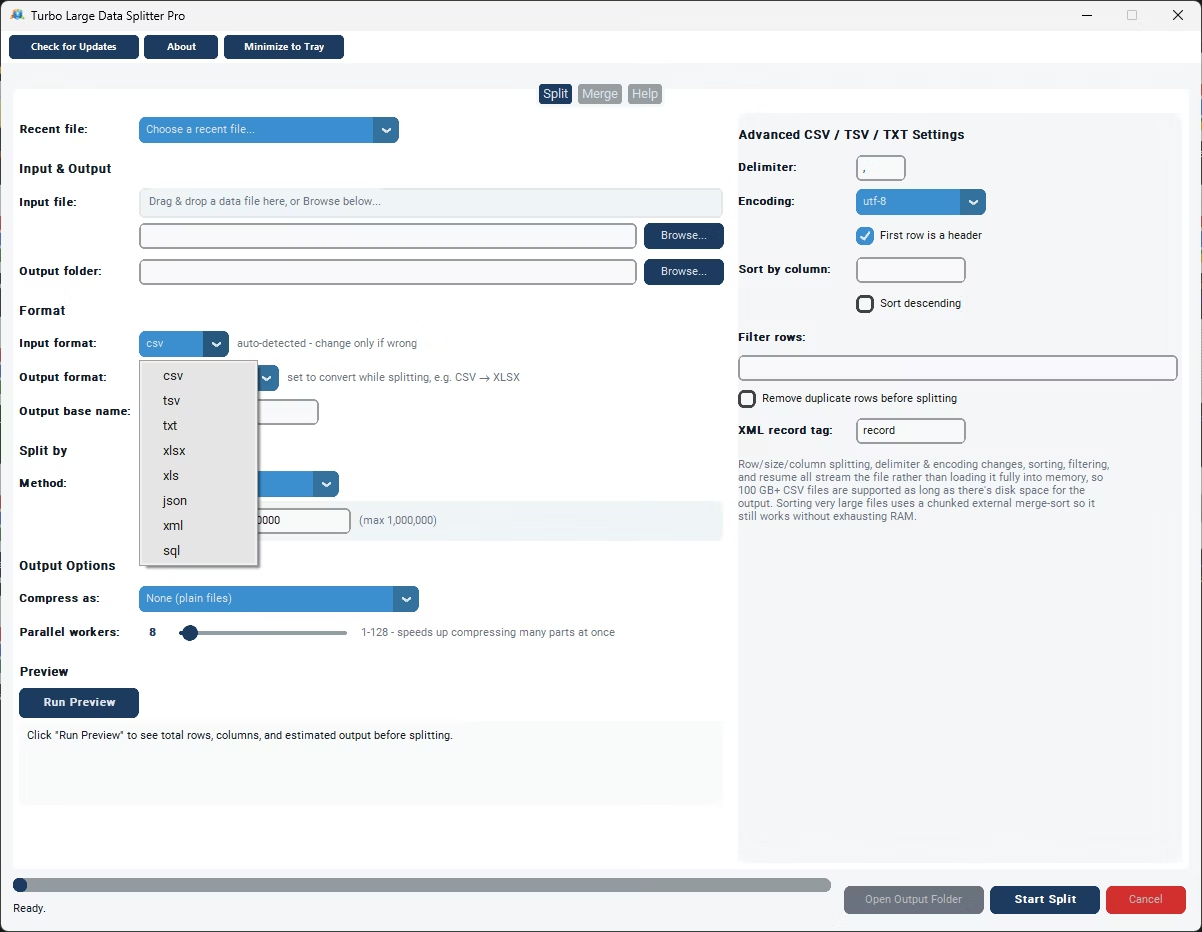
Supported Input Formats
SQL dump files are read line by line, so each line in the dump is treated as one row when splitting.
Supported Output Formats
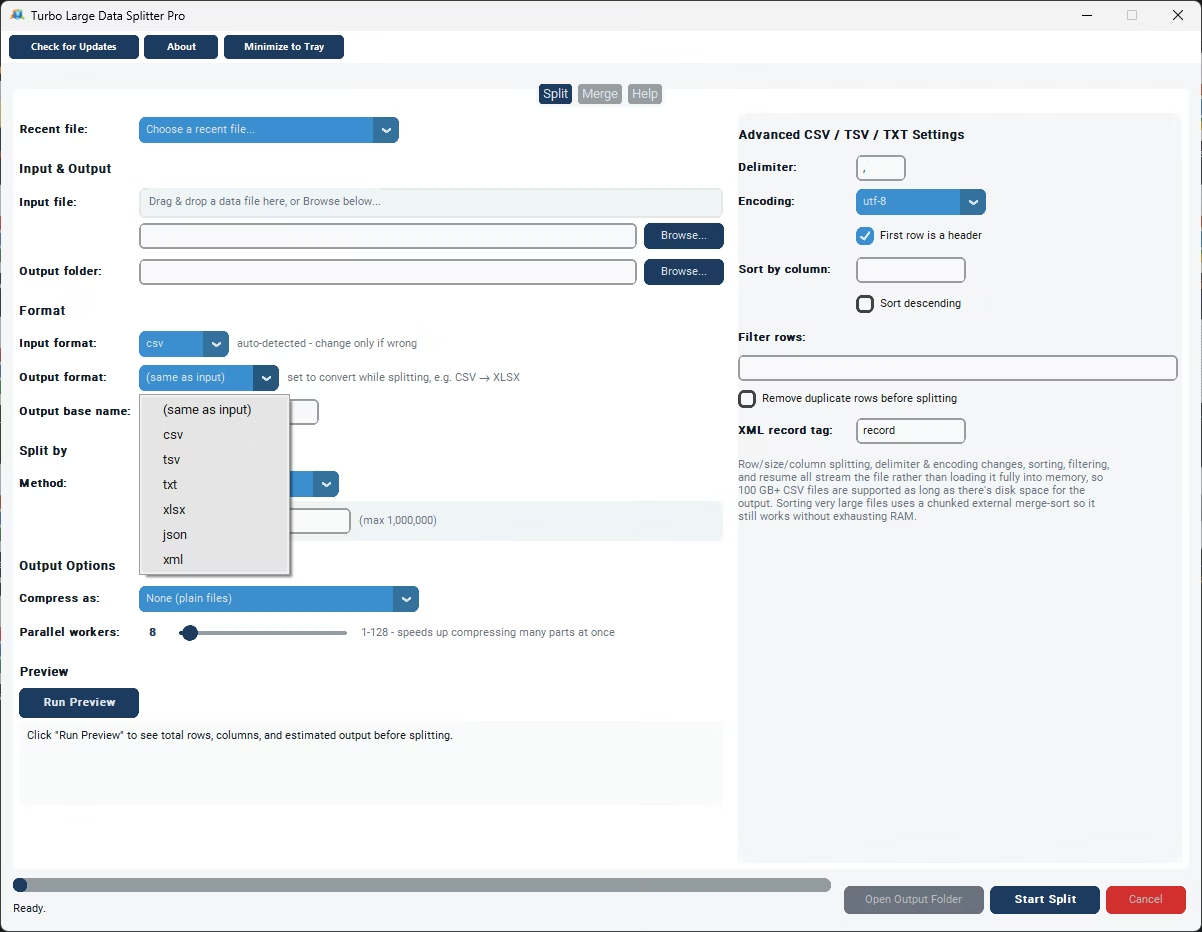
Input format and output format are independent settings, so converting CSV to XLSX, XLSX to CSV, JSON to CSV, and similar combinations all work in the same pass as the split or merge.
Key Features
▶ Split CSV and Excel Files Into Multiple Files
Split csv into multiple files, or split Excel file into multiple files, using whichever method fits your data: number of rows, target file size, a column's value, a date column, alphabet ranges, duplicates, or unique values. Everything streams row by row, so splitting a large CSV into multiple files never depends on how much memory your PC has.
▶ Merge and Combine Files Back Into One
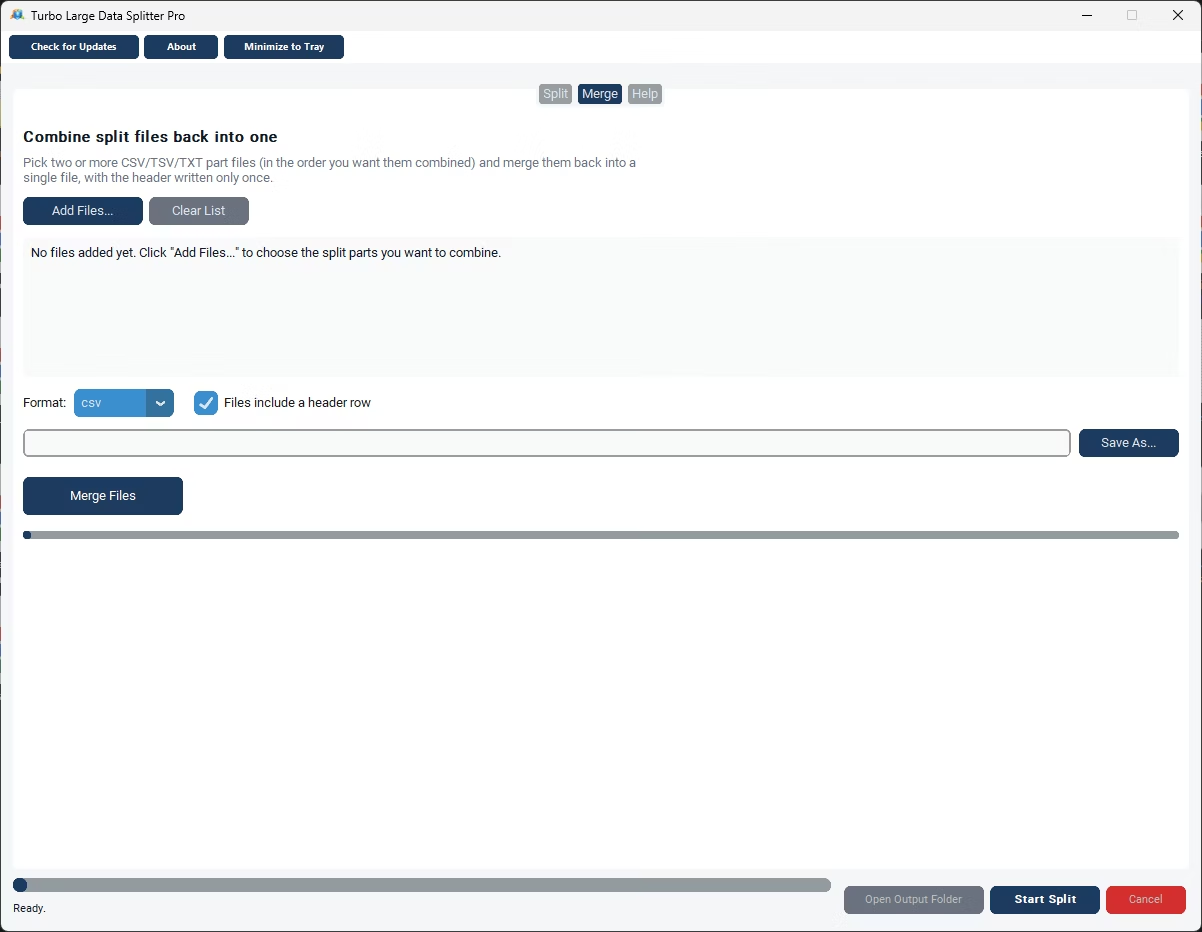
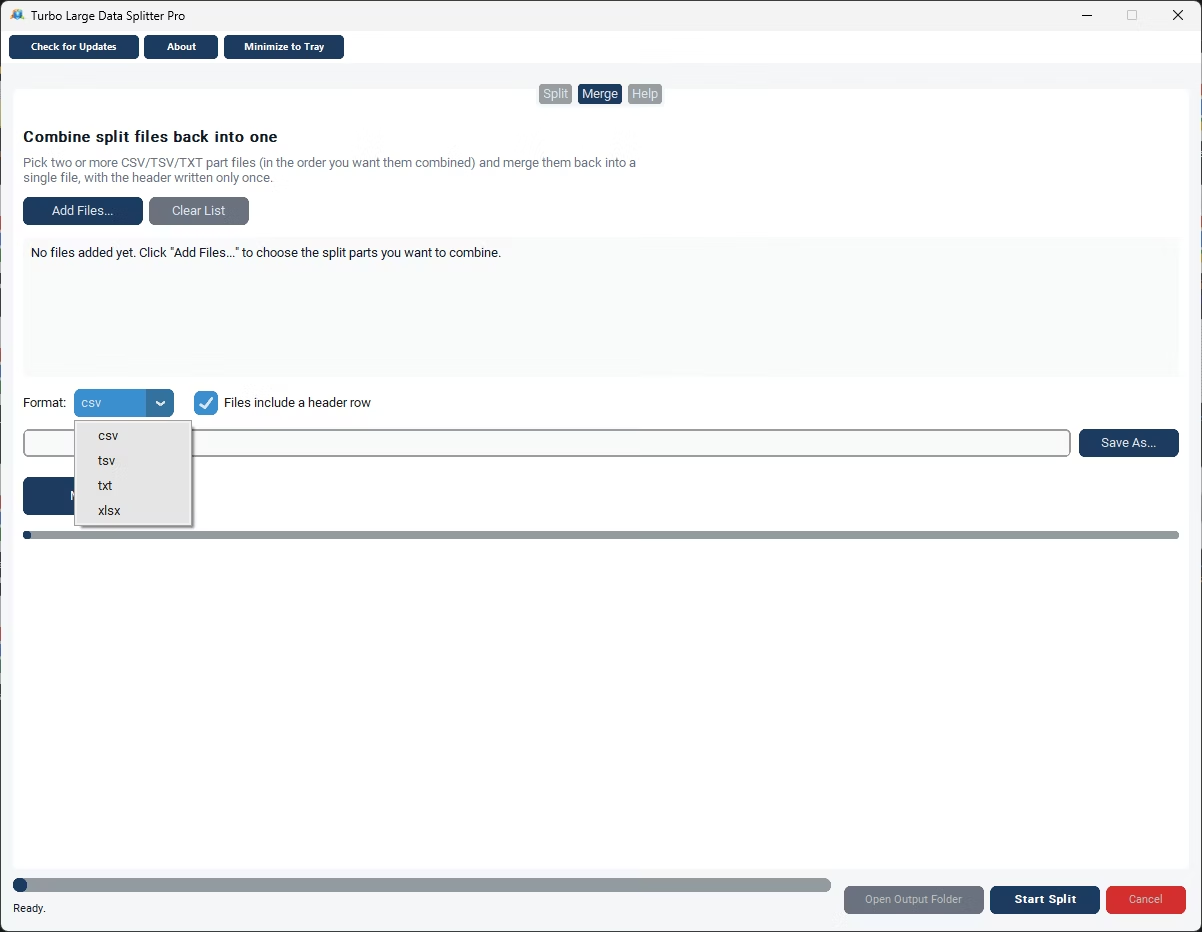
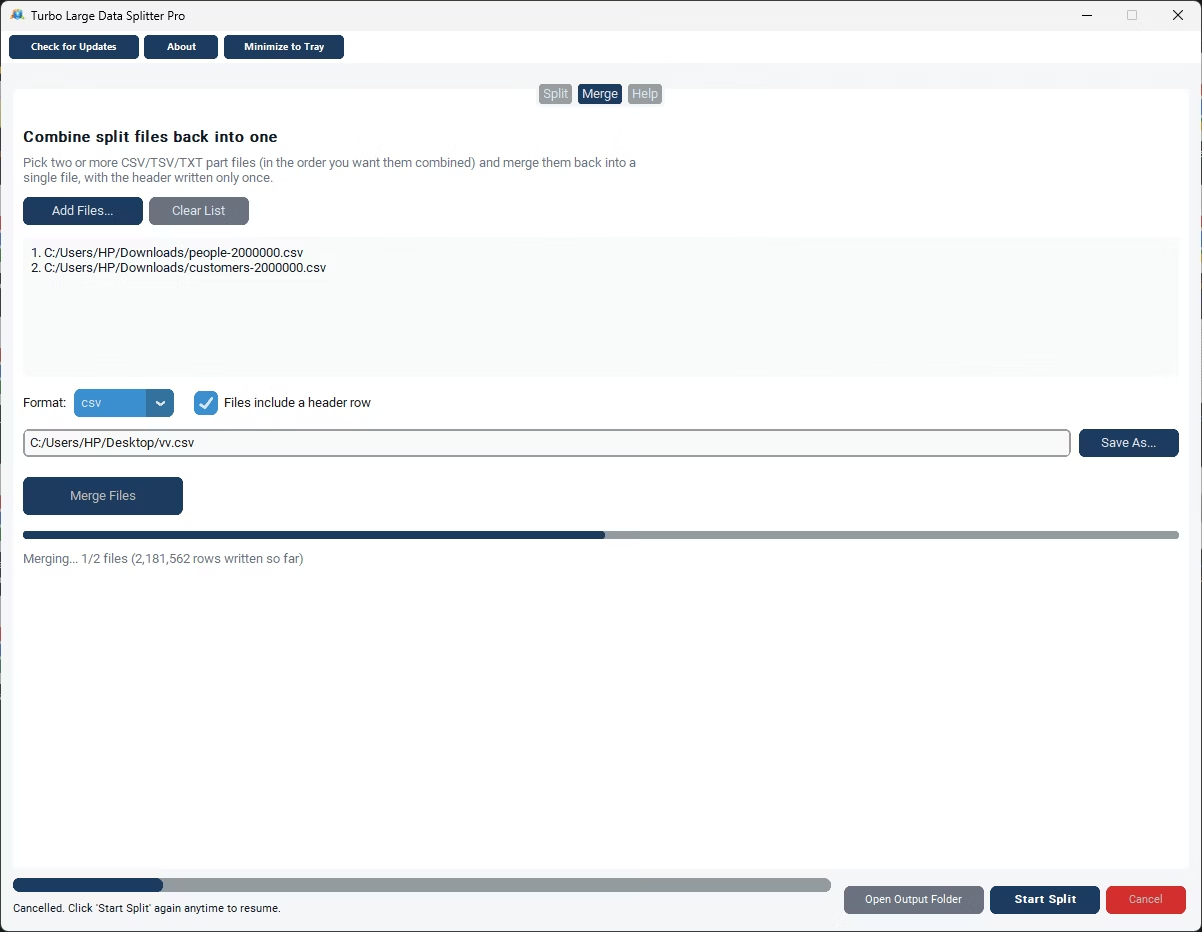
The Merge tab works as a csv merger and csv combiner: add the part files in the order you want them joined, and Turbo Large Data Splitter writes the header once and appends every row after it. Choose the XLSX output format to merge csv files into one Excel workbook, or merge xlsx files into one workbook directly.
Split by Number of Rows
Every output part gets the same number of rows - for example, 1,000,000 rows per file - which is the most common way to split a csv file into multiple files for import into another system.
Split by File Size
Rolls over to a new part whenever the current file reaches your target size in megabytes, keeping every output file under a size limit you set.
Split Excel File by Column Value
Writes one output file per distinct value found in a chosen column - for example, one file per Country or one file per Department - a direct way to split an Excel file into multiple files by column value.
Split Excel File Into Multiple Files by Row
Set the split method to Number of Rows to split excel file into multiple files by row, removing the roughly 1,048,576-row-per-sheet ceiling that Excel itself imposes on a single worksheet.
Split by Date Column
Groups rows by day, month, or year based on a date column, which is useful for splitting transaction logs, order histories, or sensor data into monthly or yearly files.
Alphabet Range Splitting
Buckets rows into ranges such as A-F, G-L, M-R, S-Z, 0-9, and Other, based on the first letter of a chosen column, for name-sorted or catalog-style datasets.
Duplicate and Unique Value Splitting
Splits rows into a duplicates file and a first-seen file, or keeps only the first occurrence of every row and drops the rest - handy for cleaning a file before splitting or merging it.
Multi-Sheet Excel Support
When an XLSX file has more than one sheet, choose the largest sheet automatically, always use the first sheet, or pick an exact sheet name - the same choice is available when you merge xlsx files into one workbook.
Advanced CSV / TSV / TXT Settings
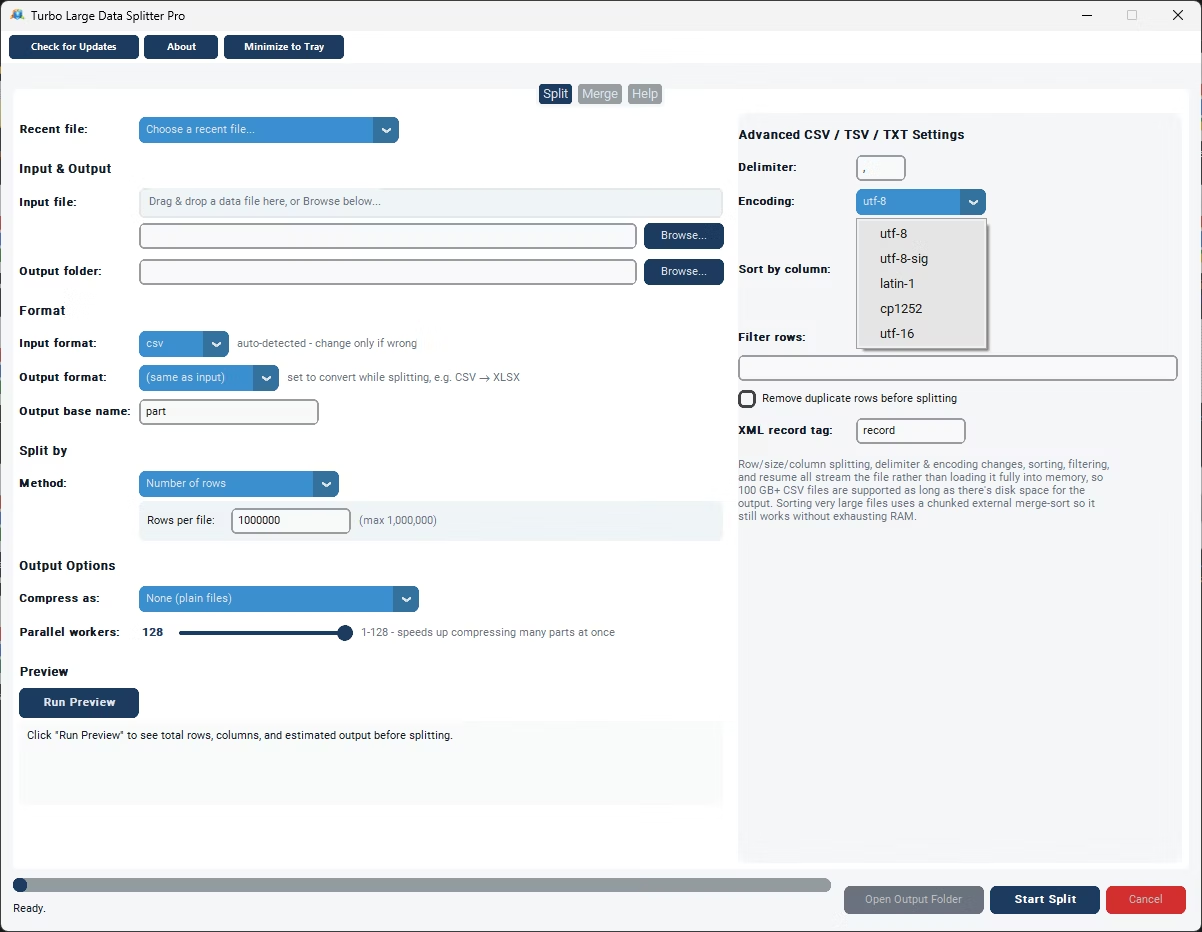
Set the delimiter, text encoding, and whether the first row is a header. Sort rows by a column using a disk-based merge sort that works on huge files, filter rows with a simple expression, and remove exact duplicate rows before splitting.
Compression Options
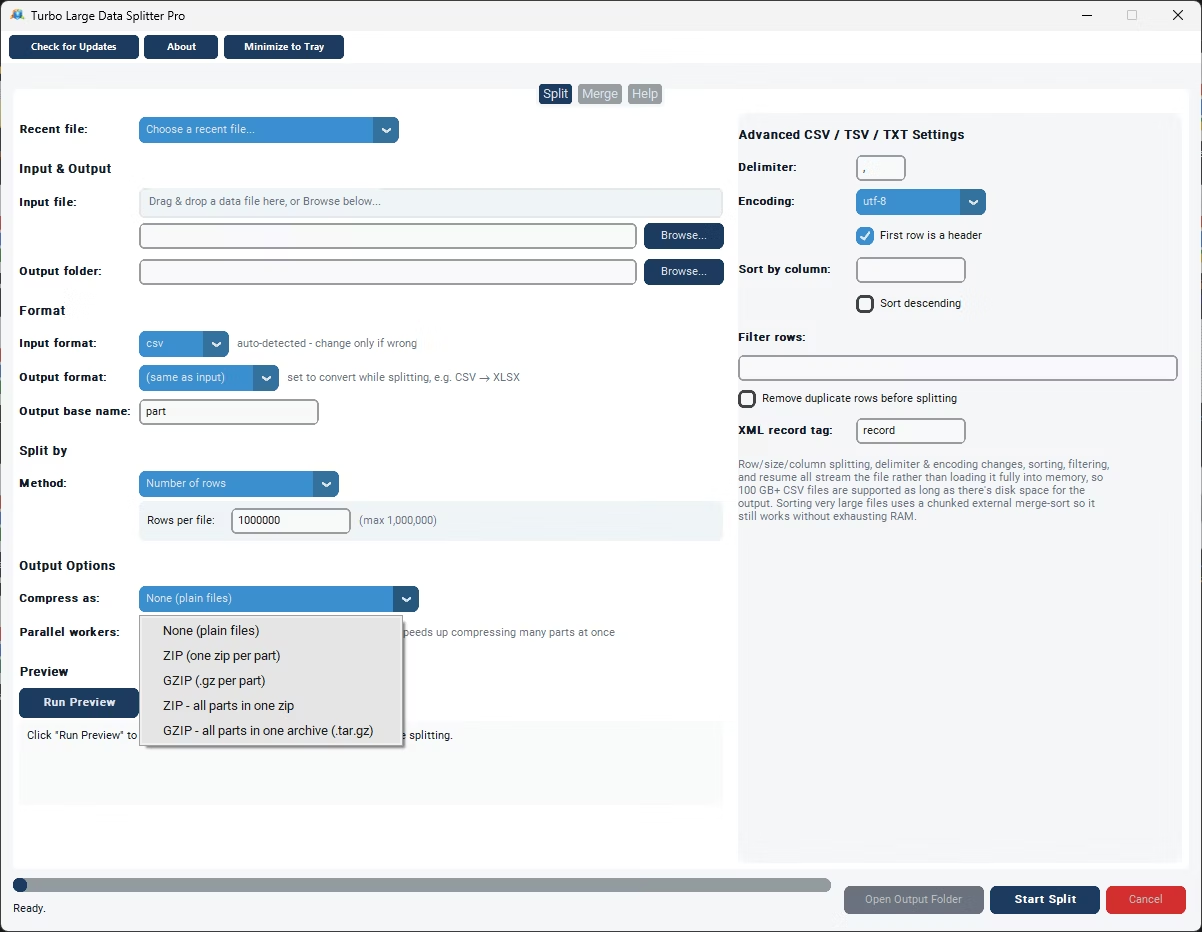
Leave output parts as plain files, or compress each one individually with ZIP or GZIP, or bundle every part into a single ZIP archive or a single GZIP tarball for easier sharing.
Parallel Compression Workers
Reading and splitting happens in one ordered pass to keep row order correct, but compressing the finished parts can run in parallel - up to 128 workers - for jobs that produce many output files.
Resume Interrupted Jobs
If a split job is cancelled, closed, or interrupted partway through, a checkpoint is saved automatically. Running the exact same job again picks up right where it left off instead of starting over.
Drag and Drop, Recent Files
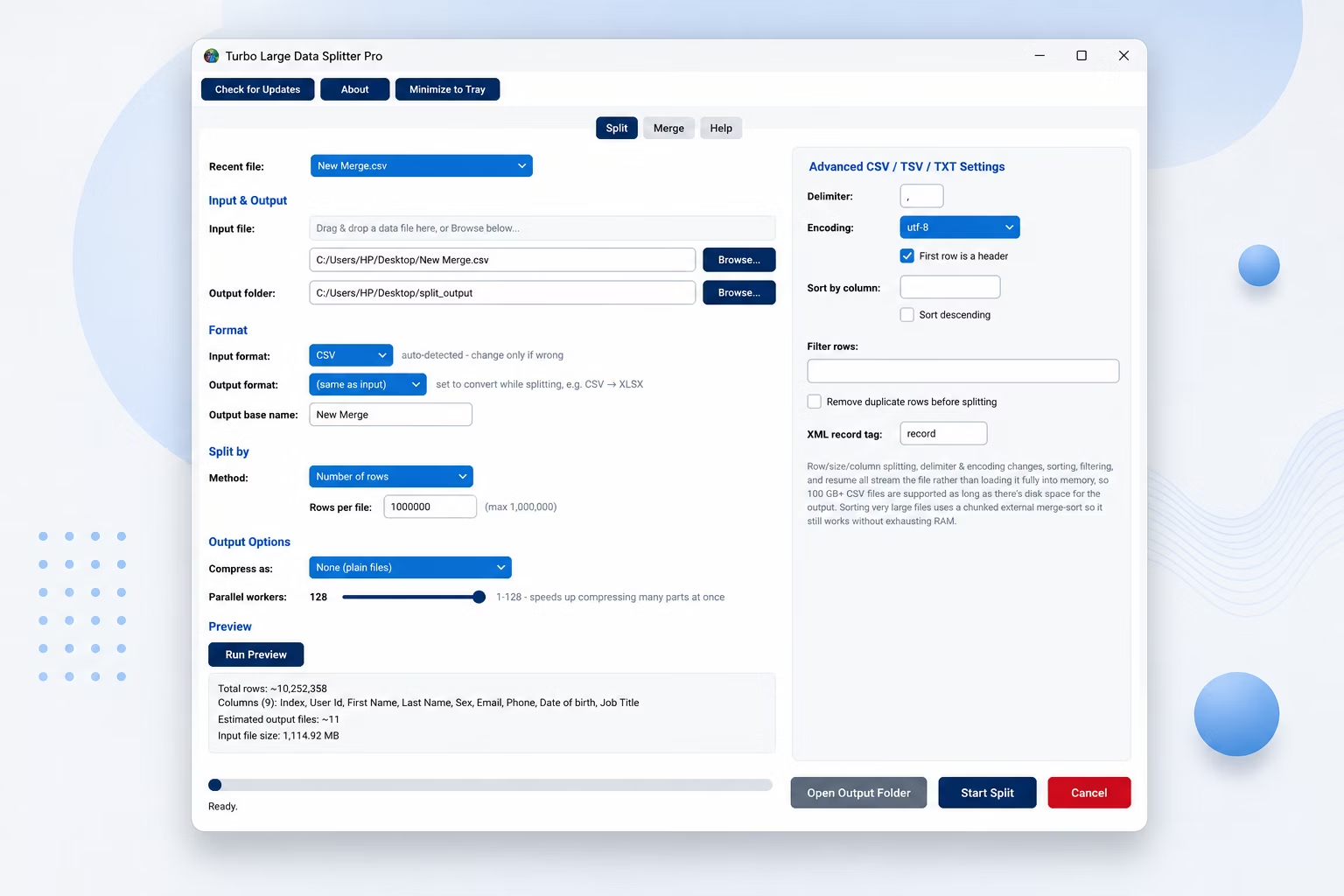
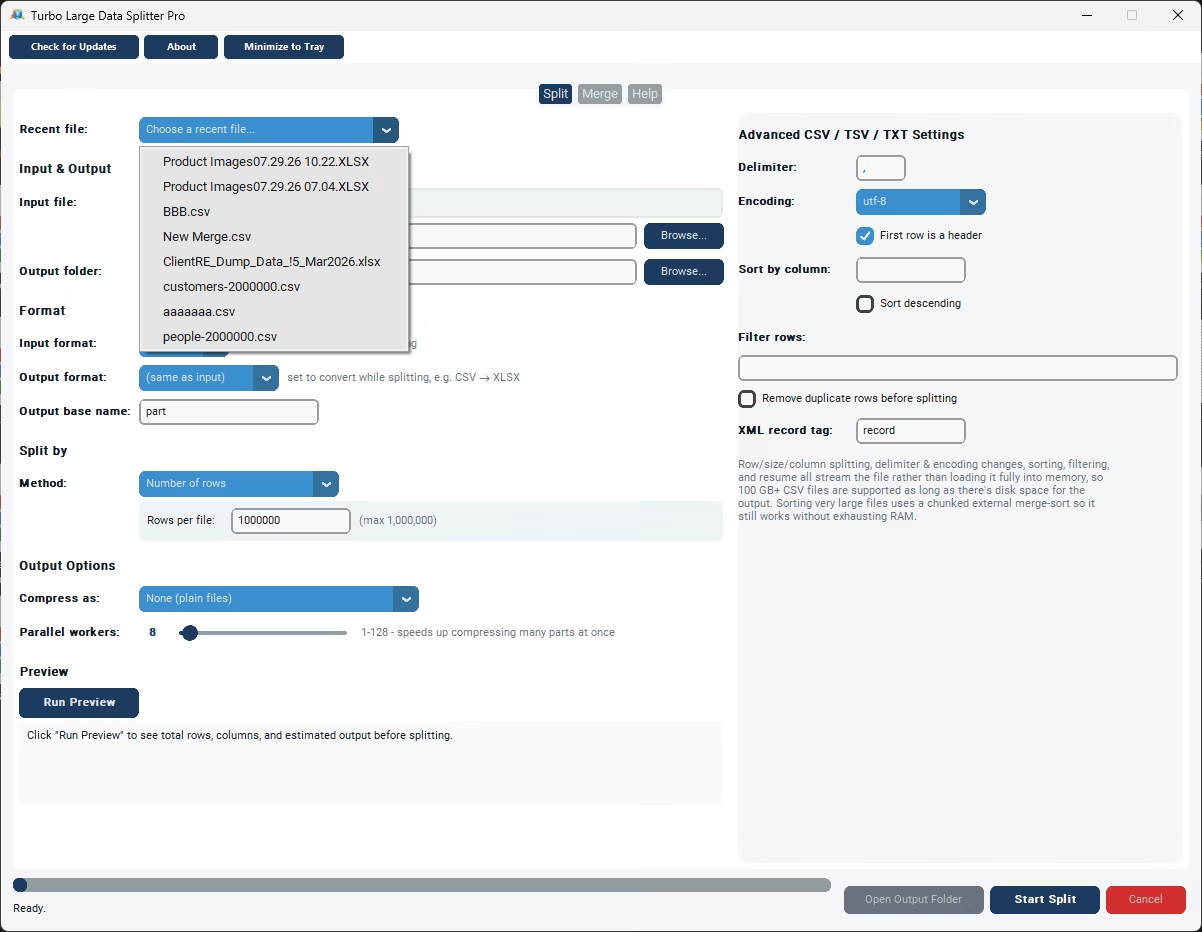
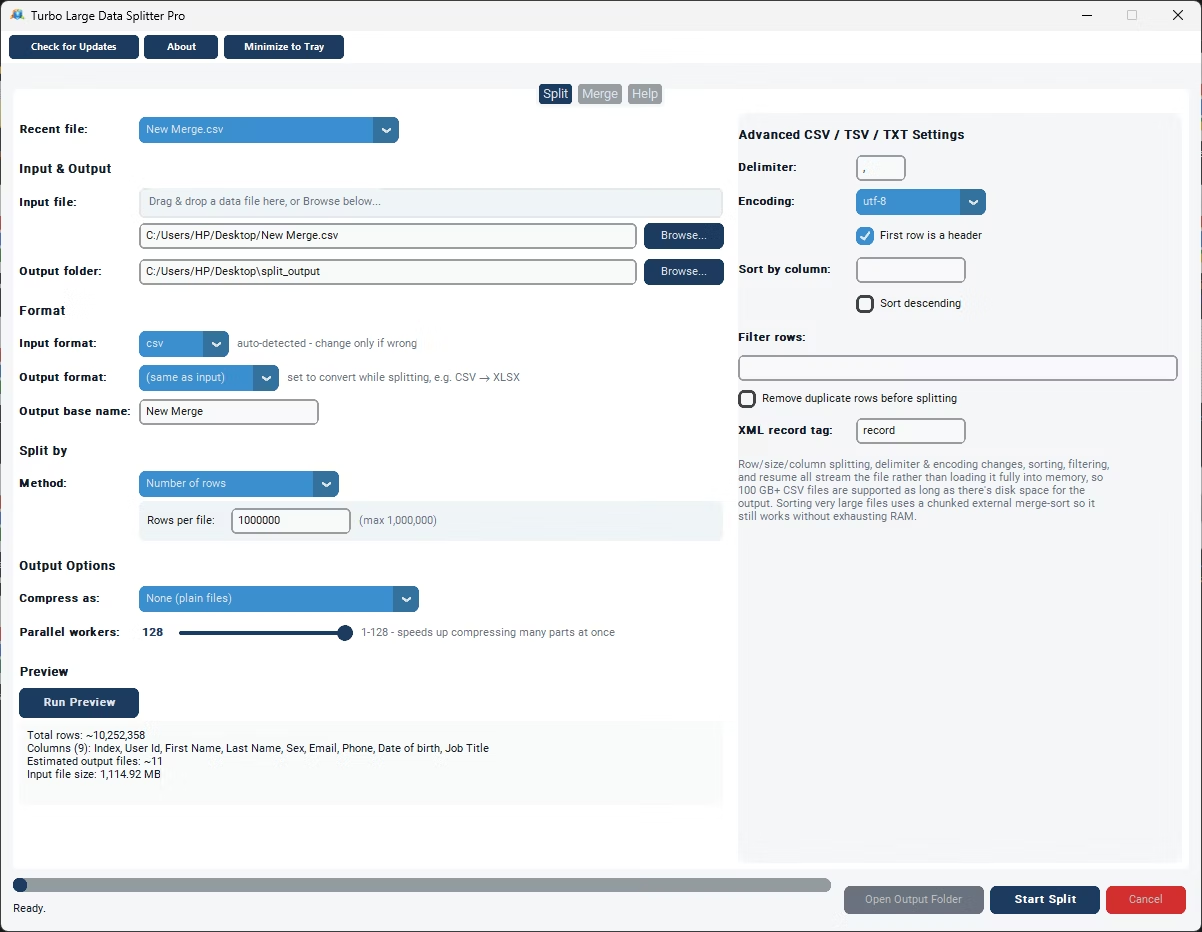
Drag a file straight onto the app window, or pick it from a list of recently used files. A live preview shows the total row count, detected columns, and an estimate of how many output files you'll get before you start.
Split Methods Explained
| Method | What It Does |
|---|---|
| Number of Rows | Every output part gets the same number of rows (up to 1,000,000 rows per file). |
| File Size | Starts a new part once the current one reaches your target size in MB. |
| Column Value | Writes one output file per distinct value in a chosen column. |
| Date Column | Groups rows by day, month, or year based on a date column. |
| Alphabet Ranges | Buckets rows into A-F, G-L, M-R, S-Z, 0-9, and Other, based on a column's first letter. |
| Duplicate Values | Splits rows into a "duplicates" file and a "first seen" file. |
| Unique Values | Keeps only the first occurrence of each row and drops later duplicates. |
Every Split Method Explained
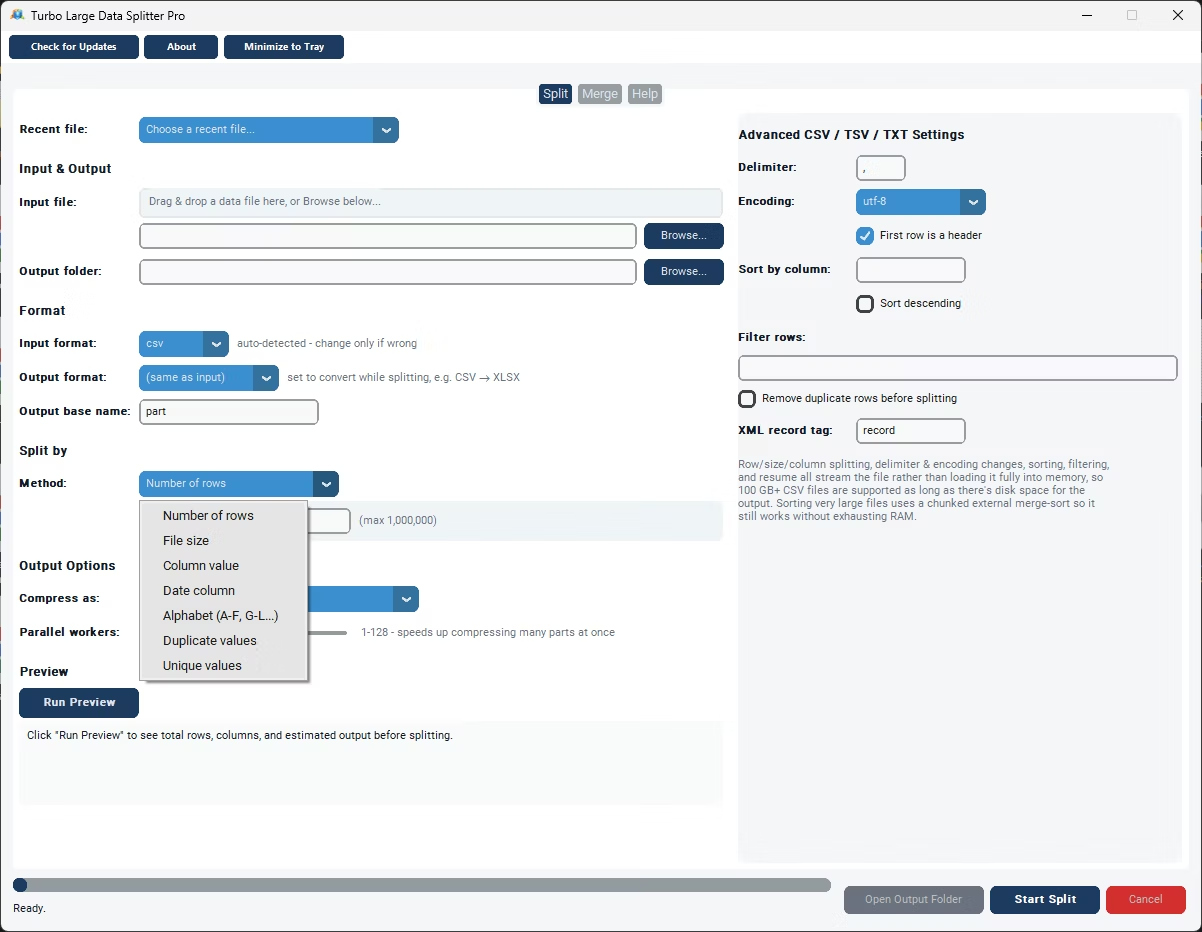
Turbo Large Data Splitter offers seven ways to divide a file, so the output maps to how you actually work rather than arbitrary chunks. Here is what each method does, when to use it, and an example.
Split by Number of Rows
The most common method: every output file gets the same number of data rows, up to a cap of 1,000,000 rows per file. Enter 500,000 and a five-million-row export becomes ten files. Choose this whenever you need pieces that open cleanly in Excel without hitting its worksheet ceiling, or that stay under another system's import row limit. The header is repeated at the top of every part, so each file stands on its own.
Split by File Size
Rolls over to a new part as soon as the current one reaches your target size in megabytes. Use it when the limiting factor is a size cap - an upload portal that rejects files over a certain size, or an attachment limit - rather than a row count. Because rows vary in width, size-based parts hold different numbers of rows but all stay near your chosen size.
Split by Column Value
Writes one output file per distinct value in a column you choose. Point it at a Country column and you get one file per country; point it at Department and you get one file per department. This turns a single blended export into a set of ready-to-distribute files, each holding only the rows for one group - ideal for handing regional data to regional teams or splitting a master list by category.
Split by Date Column
Groups rows by day, month, or year based on a date column. A year of transactions can become twelve monthly files, or a full set of daily files, in a single pass. This is the natural choice for time-series data, periodic reporting, or archiving records into period-based files without writing a single formula.
Split by Alphabet Range
Buckets rows into A-F, G-L, M-R, S-Z, 0-9, and Other based on the first letter of a chosen column's value. It is a quick way to break a large directory of names, products, or codes into predictable alphabetical sections - useful for reference lists and lookups where alphabetical grouping matches how people search.
Split by Duplicate Values
Separates rows into a duplicates file and a first-seen file, so you can isolate repeated records for review rather than deleting them outright. This is useful when duplicates might be meaningful - repeat submissions, resubmitted orders, or data-entry errors you want to inspect before deciding what to keep.
Split by Unique Values
Keeps only the first occurrence of each row and drops every later duplicate, producing a single de-duplicated file. Reach for this when duplicates are simply noise and you want one clean copy of each record. Because duplicate and unique detection remember every row seen, they are best suited to files up to tens of millions of rows; for very high-cardinality data, column or alphabet splitting scales further.
How It Works: A Step-by-Step Split
The workflow is linear, so even a first-time user can go from a giant file to clean output in a couple of minutes.
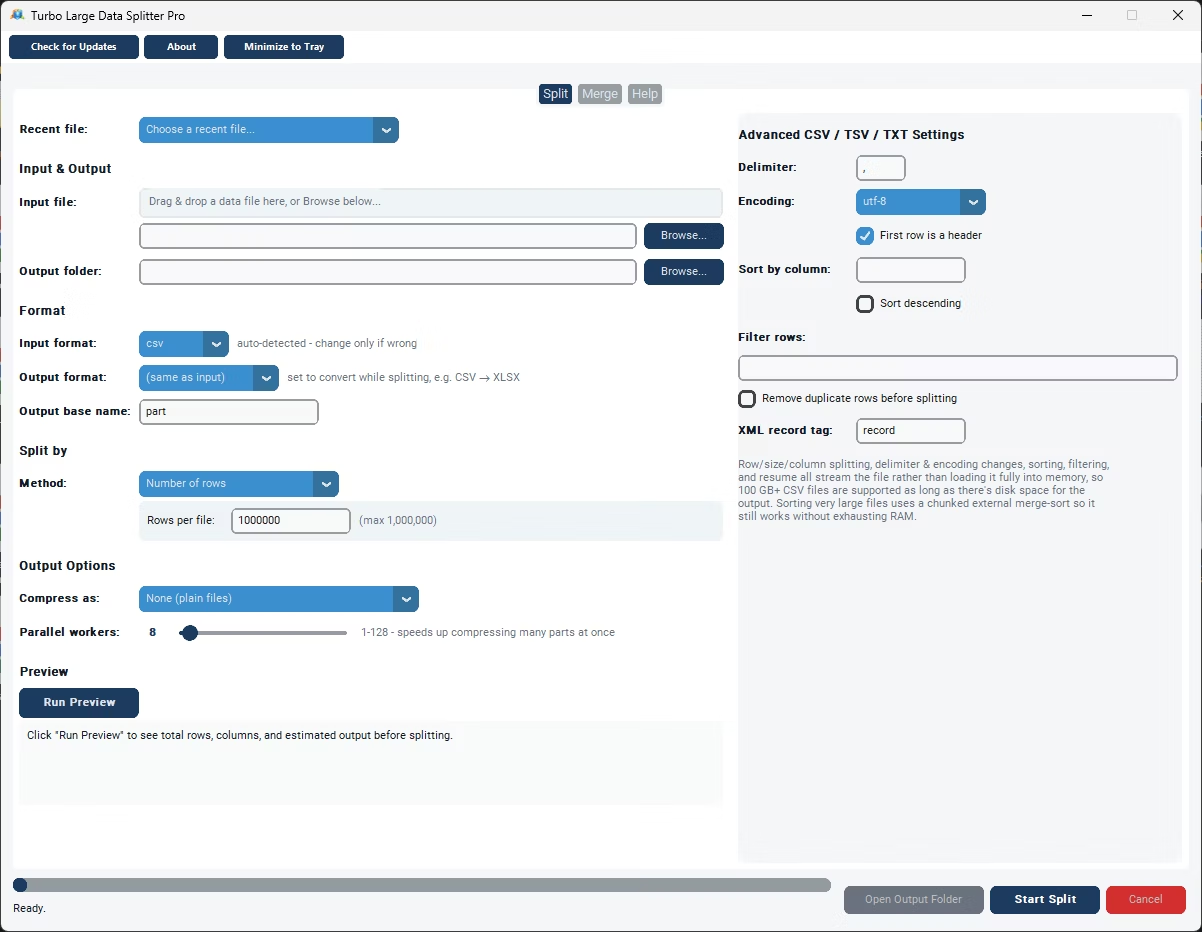
1. Add Your File
On the Split tab, browse to the file, drag and drop it onto the window, or pick it from the Recent Files list. The input format is detected from the extension.
2. Pick Input and Output Formats
Leave the output on "(same as input)" for a plain split, or choose a different target - CSV, TSV, TXT, XLSX, JSON, or XML - to convert while splitting.
3. Choose a Split Method
Select one of the seven methods and fill in its single setting: rows per file, target MB, the column to split on, the date granularity, and so on.
4. Set Output and Compression
Choose the output folder and, if you want, compress each part or bundle everything into one archive. Adjust advanced CSV settings only if needed.
5. Run Preview
Preview reports the total row count, detected columns, an estimate of how many output files you will get and their size, and a note when a format conversion is set.
6. Start Split
Click Start Split and watch progress, live speed, and an ETA in the status bar. When it finishes, Open Output Folder takes you straight to the results.
The Three Tabs: Split, Merge, Help
The app is organized into three clearly labelled tabs in a clean light theme, so you always know which job you are doing.
Split Tab
The heart of the app: input file, input and output format, the seven split methods, output folder, compression, the parallel-workers slider, and an "Advanced CSV / TSV / TXT Settings" section for delimiter, encoding, header handling, sort, filter, dedupe, and XML record tag - plus Preview and Start Split.
Merge Tab
Add previously split part files in the order you want them joined, choose where to save, and click Merge Files. The header is written once and every subsequent row is appended, reassembling a clean single file.
Help Tab
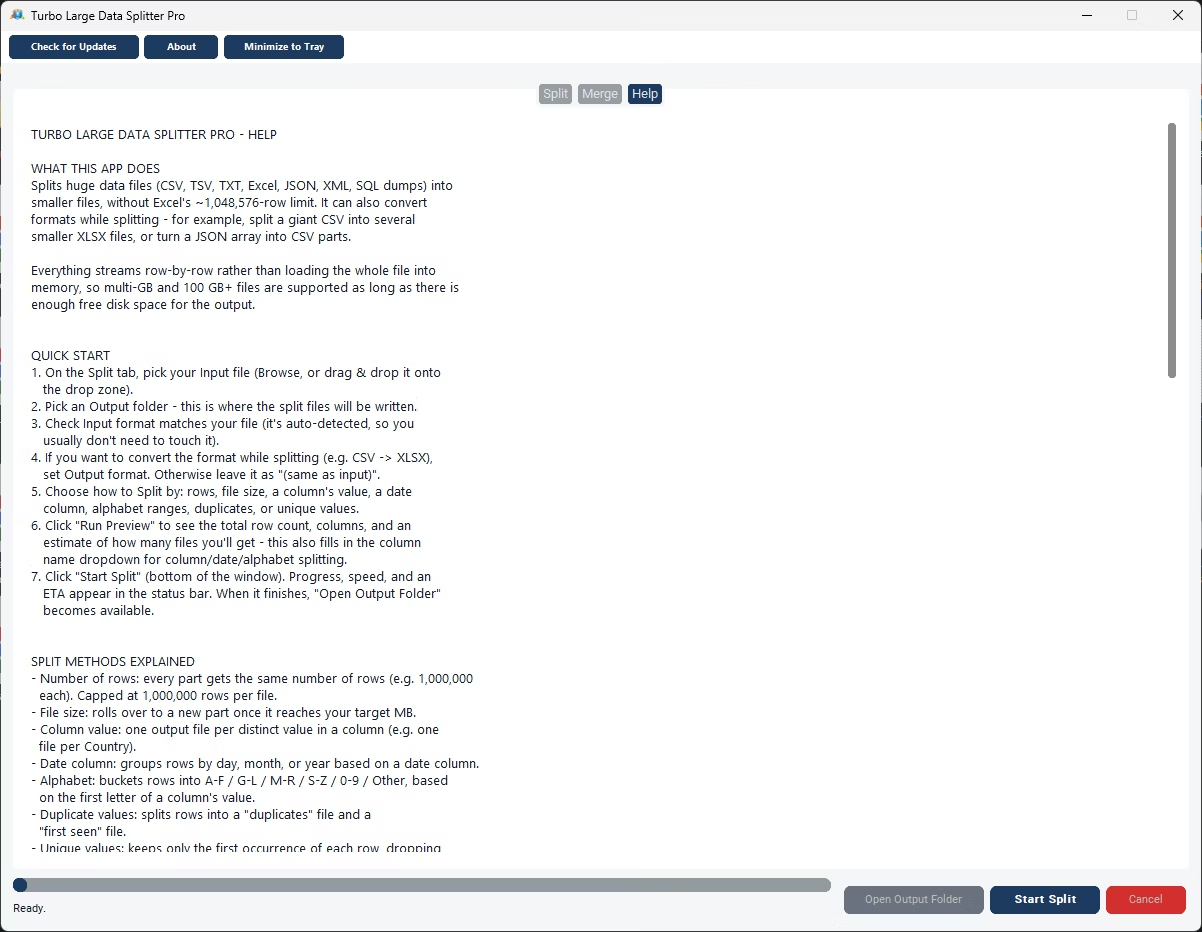
Built-in documentation covering the quick-start flow, every split method, format conversion, advanced settings, performance notes, resume behavior, and licensing - so guidance is always a click away inside the app.
Convert Formats While You Split
Input and output formats are independent settings, so a single run can both split and convert. Leave the output on "(same as input)" to keep the original format, or pick a different one from CSV, TSV, TXT, XLSX, JSON, or XML.
CSV to XLSX
Turn a giant CSV export into several Excel workbooks sized under the worksheet row limit, ready to open and share.
XLSX to CSV
Convert an Excel workbook - including a chosen sheet from a multi-sheet file - into lightweight CSV parts for import into another system.
JSON to CSV
Flatten a large JSON array into tabular CSV files that open in any spreadsheet, split into manageable pieces along the way.
SQL Dump to Rows
A line-oriented SQL dump is read line by line, so each line becomes one record that can be written out as CSV, JSON, XML, and more. SQL is an input only - it is not offered as an output target.
Because CSV, TSV, TXT, XLSX, JSON, and XML are all valid output targets regardless of the input, most common conversion pairs work directly in the same pass as the split.
Who Uses Turbo Large Data Splitter and How
Large data files turn up in almost every data-driven role. Because the split methods, conversion targets, and advanced settings combine freely, the same app adapts to very different jobs.
Data Analysts and Engineers
Chunk multi-gigabyte CSV, JSON, or XML exports into row-limited parts for tools that choke on huge files, convert between formats in the same pass, and sort or dedupe before splitting.
Finance and Accounting
Break a year of transactions into monthly files by date, split a ledger by account or cost centre using column value, and remove duplicate rows before importing into accounting software.
Marketing and CRM Teams
Segment a master contact list into per-region or per-segment files, filter to just the rows a campaign needs, and export the result as XLSX for colleagues who prefer Excel.
Sales Operations
Split a national pipeline export into one file per territory so each rep gets only their accounts, then merge the returned files back into a single reporting file.
Researchers and Academics
Divide a large dataset into period or alphabetical files for processing, convert a JSON or XML feed into tabular CSV, and keep resume enabled for very long jobs.
IT and System Administrators
Cut an oversized database or SQL dump into files that clear an import cap, convert a legacy XLS export into modern formats, and standardize delimiters and encodings on the way out.
Healthcare, Government, and Legal
Work entirely offline on sensitive records that must never be uploaded, split case or claim files by category or date, and keep every step local to the machine.
E-commerce and Retail
Split a product or order catalogue by category or first letter, convert supplier feeds between XML, JSON, and CSV, and produce Excel-ready files for merchandising teams.
Real-World Workflows
Make a Huge Export Open in Excel
A 12-million-row CSV refuses to open in Excel. Load it on the Split tab, choose Number of Rows, set 1,000,000, set the output format to XLSX to get Excel workbooks directly, run Preview, and Start Split. You get twelve workbooks that each open cleanly, every one carrying the header row.
Distribute Data by Region
A single national file needs to go to regional managers. Pick Column Value, choose the Region column, and the app writes one file per region. Apply a simple filter first if you only want the current quarter, and sort by a column so each regional file arrives in a sensible order.
Convert a JSON Feed to Spreadsheet Files
A large JSON array from an API needs to land in Excel. Load the JSON, set the output format to XLSX, choose Number of Rows, and split. The nested export becomes a set of tabular workbooks your team can open immediately.
Archive Transactions by Month
To archive a year of orders, choose Date Column, set the granularity to month, and point it at the order-date column. Twelve monthly files come out in one pass, ready to file away or hand to auditors.
Reassemble Split Parts
After processing individual parts, switch to the Merge tab, add the files in order, choose where to save, and click Merge Files. The combined file is written with a single header, ready for its next destination.
Best Practices and Tips
Always Preview First
Run Preview before a big job. The row count, column list, output-file estimate, and conversion note tell you whether the file and settings are what you expected before you commit.
Prefer Column or Alphabet for High Cardinality
Duplicate and Unique splitting remember every row seen. For files with enormous numbers of distinct rows, column-value or alphabet splitting scales more comfortably.
Convert in the Same Pass
If the destination needs XLSX or JSON, set the output format up front rather than splitting first and converting later - one pass does both.
Use Advanced Settings for Messy Delimited Files
Set the correct delimiter and encoding, sort by a key column, filter out rows you do not need, and remove exact duplicates before splitting, all from the Advanced CSV settings.
Keep Free Disk Space
Output is written to disk rather than held in memory, so make sure the output drive has room for all the parts and any archive you create.
Let Long Jobs Resume
If a huge job is interrupted, simply run the identical job again - the checkpoint in the output folder lets it pick up where it left off instead of restarting.
Scope and Limitations
Being clear about the boundaries helps you decide whether it fits your workflow.
- Row-based splitting is capped at 1,000,000 rows per output file, which keeps each part within Excel's worksheet ceiling.
- Legacy .xls is read by loading the whole workbook into memory, which is fine because .xls itself tops out at 65,536 rows.
- Previewing and counting rows in an XLSX file requires a full read of the sheet, so it is not instant on very large workbooks.
- Resume for CSV, TSV, TXT, and SQL uses instant byte offsets; for XLSX, JSON, and XML it resumes by row count instead.
- Duplicate and Unique splitting keep a hash of every row seen in memory - excellent up to tens of millions of rows, but column or alphabet splitting is better for extreme cardinalities.
- SQL dumps are split by treating each physical line as one row - it is not a full SQL parser - and SQL is an input format only, not an output target.
- The parallel-workers slider speeds up compressing the finished parts; the row reading and splitting itself is a single ordered streaming pass, which is what keeps order, resume, sort, and dedupe correct.
Turbo Large Data Splitter vs. Manual Methods
| Task | Manual / Spreadsheet Approach | Turbo Large Data Splitter |
|---|---|---|
| Open a 10 GB file | Freezes or refuses to open in Excel | Streams row by row; never loads the whole file into memory |
| Split into 1M-row files | Copy-paste in chunks, slow and error-prone | One setting, one click, header on every part |
| One file per category | Filter and Save As, repeated per value | Column Value method writes them all in a single pass |
| Monthly files from a date | Sort, filter, and export month by month | Date method groups by day, month, or year automatically |
| Convert CSV to XLSX (or back) | Open, Save As, repeat per file | Set the output format once; conversion happens during the split |
| Reassemble parts | Paste files together, clean up duplicate headers | Merge tab writes one header and appends the rest |
| Resume an interrupted job | Start over from the beginning | Checkpoint resumes where it stopped |
| Keep data private | Web splitters require uploading the file | 100% offline; nothing leaves your computer |
Safety and Reliability
- Streaming Architecture - Reads and writes files row by row instead of loading everything into memory, so multi-gigabyte files split and merge reliably.
- Automatic Checkpointing - A cancelled or interrupted split job resumes from where it stopped instead of starting from scratch.
- Format-Safe Merging - The Merge tab flags any file whose extension does not match the chosen format before combining, to prevent a mixed-format merge from failing partway through.
- Header Handled Once - When merging, the header row from the first file is written once and never repeated in the combined output.
- Disk-Based Sorting - Sorting rows by column before splitting uses a merge-sort on disk, so it does not run out of memory on very large files.
- Ideal for Sensitive Environments - Corporate offices, data teams, and air-gapped networks that cannot send data files to an online tool.
Performance and Speed
Single Streaming Pass
Reading and splitting happens in one continuous, ordered pass, which keeps row order correct and makes resuming an interrupted job possible.
Up to 128 Parallel Workers
Compression of finished output parts can run with up to 128 parallel workers, which speeds up jobs that produce many ZIP or GZIP files.
Handles 100 GB+ Files
Since files are streamed rather than loaded fully into memory, the practical limit is free disk space rather than RAM.
Fast XLSX Reading
Excel files are read with a high-speed engine, which keeps large XLSX-to-CSV and XLSX-to-XLSX splits quick even with hundreds of thousands of rows.
Security and Privacy
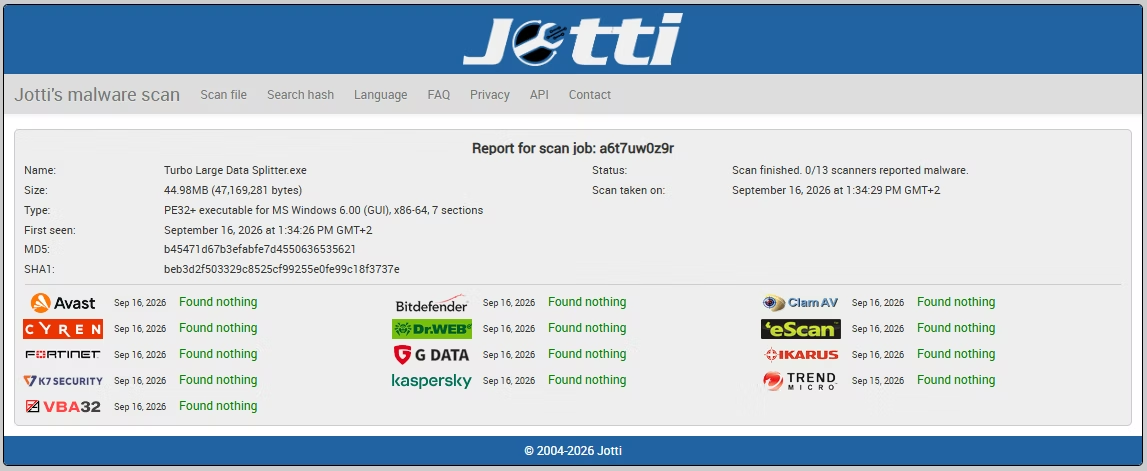
Turbo Large Data Splitter is a fully local desktop application. All splitting, merging, sorting, and filtering happen on your own computer. No files are uploaded, scanned remotely, or shared with third parties, which makes it a dependable alternative for anyone who searched for a csv splitter online or a csv merge online tool but needs to keep sensitive data on their own PC.
- Does not upload, log, or store your data files
- No file-size cap imposed by a server, unlike most online tools
- Internet is used only for license validation - the request contains no file names or file content
- Suitable for financial records, customer data, and other confidential datasets
Minimum System Requirements
| Operating System | Windows 8 (64-bit) |
| Processor | 1-2 CPU cores |
| Memory | 4 GB RAM |
| Storage | Free disk space at least equal to the size of the input file |
Recommended System Requirements
| Operating System | Windows 10 or later (64-bit) |
| Processor | 4 or more CPU cores |
| Memory | 8 GB RAM or more |
| Storage Type | SSD recommended for the fastest split and merge speeds |
| Free Disk Space | At least twice the size of the input file, for output and checkpoint files |
App Info
| App Name | Turbo Large Data Splitter |
| Platform | Windows |
| Category | Data File Tools |
| License Management | Gumroad |
Supported Conversions While Splitting
| CSV | → | TSV, TXT, XLSX, JSON, XML |
| TSV | → | CSV, TXT, XLSX, JSON, XML |
| TXT | → | CSV, TSV, XLSX, JSON, XML |
| XLSX | → | CSV, TSV, TXT, JSON, XML |
| XLS | → | CSV, TSV, TXT, XLSX, JSON, XML |
| JSON | → | CSV, TSV, TXT, XLSX, XML |
| XML | → | CSV, TSV, TXT, XLSX, JSON |
| SQL | → | CSV, TSV, TXT, XLSX, JSON, XML |
A Reliable CSV Splitter and CSV Merger for Large Files on Windows
Turbo Large Data Splitter is a dedicated csv splitter for Windows built for the moment a spreadsheet gets too big to open. Whether you need to split csv into multiple files for a database import, split csv file into multiple files windows-side before emailing them, or split an Excel file into multiple files by row or by column value for separate teams, the app streams each file instead of loading it whole, so it stays fast and stable well past the point where Excel itself would refuse to open the file. If you have been searching for a way to split csv into multiple files online, or looking for a csv splitter online or a csv split online service, it is worth knowing why the Windows download usually works better for large files: an online tool has to upload your data first, and most impose a file-size limit long before a real-world export gets interesting, while this csv splitter download runs entirely on your own PC with no upload step and no file-size ceiling of its own. The same app doubles as a csv merger and csv combiner - use the Merge tab to merge csv files into one file, merge csv files into one Excel workbook, or merge xlsx files into one workbook, picking up right where a split left off. For very large exports specifically, take a look at Million by Million Rows Copier, a companion TurboSoft tool built for copying tens of millions of rows between spreadsheets. And if the files you are working with are images rather than data, Turbo Batch Image Converter Pro handles batch image conversion and resizing with the same offline, no-upload approach.
Frequently Asked Questions
How to split CSV into multiple files on Windows?
Open Turbo Large Data Splitter, browse to your CSV file or drag and drop it in, pick an output folder, choose a split method such as Number of Rows or File Size, then click Start Split. The app streams the file row by row, so it works as a reliable csv splitter for Windows even on multi-gigabyte files.
How to split a large CSV into multiple files without running out of memory?
Turbo Large Data Splitter never loads the whole file into memory - it reads and writes in a single streaming pass, so splitting a large CSV into multiple files only needs enough free disk space, not enough RAM. Jobs also checkpoint automatically, so an interrupted split can resume instead of starting over.
Can I split an Excel file into multiple files by row?
Yes. Choose Number of Rows as the split method and set how many rows each part should contain. This is a common way to split an Excel file into multiple files by row, and it also removes Excel's 1,048,576-row-per-sheet limit, since each part becomes its own workbook.
Can I split an Excel file into multiple files by column value?
Yes. Select Column Value as the split method and choose the column to group by, such as Country or Department. Turbo Large Data Splitter then writes one output file for every distinct value found in that column.
Is there a CSV splitter online, or only a Windows download?
Turbo Large Data Splitter is a Windows download rather than a csv splitter online tool, and that is by design: an online csv split tool has to upload your file to a server first, which is slow and often capped at a small file size. The Windows version processes everything locally, so there is no upload step and no practical size limit.
Can I merge CSV files into one, or combine them into a single Excel workbook?
Yes. The Merge tab works as a csv combiner and csv merger: add the part files in order, choose an output format, and the app writes the header once and appends every row after it. Set the output format to XLSX to merge csv files into one Excel workbook instead of a plain CSV.
Can I merge multiple XLSX files into one workbook?
Yes. Set Format to xlsx on the Merge tab, add the XLSX files you want combined, and choose whether each file's largest sheet or first sheet should be used. Turbo Large Data Splitter will merge xlsx files into one workbook, in the order you added them.
Is there a CSV merge online tool?
Turbo Large Data Splitter's Merge tab covers the same job a csv merge online tool would, but without the upload step or the file-size limits that online tools tend to enforce, since the merge runs locally on your PC.
Where can I get Turbo Large Data Splitter?
It is available through Gumroad. Click Buy Now above to purchase a license; activation only needs the purchase email and license key shown on your Gumroad receipt. The app is licensed per the standard TurboSoft Gumroad flow and runs once activated.
Which file formats can it open?
Eight input formats: CSV, TSV, TXT, XLSX, XLS, JSON arrays, XML, and line-oriented SQL dumps. XLSX workbooks with multiple sheets show a sheet selector so you can pick which sheet to split.
Which formats can it write out?
Six output formats: CSV, TSV, TXT, XLSX, JSON, and XML. Any of these can be chosen regardless of the input format, so you can convert while splitting. SQL is an input only - the app does not write SQL dumps back out.
Can it convert a file to another format while splitting?
Yes. Input and output formats are independent settings. Leave the output on "(same as input)" for a plain split, or pick a different target such as XLSX or JSON to convert in the same pass - for example CSV to XLSX, XLSX to CSV, or JSON to CSV.
Can it split a file larger than my RAM?
Yes. Files are read and written in a single streaming pass rather than loaded into memory, so multi-gigabyte and 100 GB+ files are supported as long as there is free disk space for the output. The exception is legacy .xls, which is read whole - fine because .xls caps at 65,536 rows.
What is the maximum number of rows per output file?
Row-based splitting is capped at 1,000,000 rows per file, which keeps every part within Excel's worksheet ceiling. The field enforces the cap live as you type. If you need larger parts, use the file-size method instead.
How many ways can it split a file?
Seven: by number of rows, by file size, by column value, by date column (day, month, or year), by alphabet range, by duplicate values, and by unique values.
Can I split an Excel file into multiple files?
Yes. Load an XLSX or XLS file, pick a sheet if the workbook has several, and split by rows, column value, date, or any other method. Choose XLSX output to get Excel workbooks, or convert to CSV or JSON on the way out.
Can I split one file into a file per value in a column?
Yes. Choose the Column Value method and pick the column, and the app writes one output file per distinct value - for example one file per country, department, or category.
Can I split by date into monthly or yearly files?
Yes. The Date Column method groups rows by day, month, or year based on a date column, so a year of records can become twelve monthly files in one pass.
Can I merge files back together?
Yes. The Merge tab combines previously split part files into one, writing the header a single time and appending every following row. Add the files in the order you want them joined and click Merge Files.
Does each split file keep the header row?
Yes. When the source has a header, every output part is written with that header at the top so it is independently valid and opens correctly on its own.
Can I sort, filter, or dedupe before splitting?
Yes, for delimited files. The Advanced CSV / TSV / TXT settings let you sort rows by a column using a disk-based external merge-sort that handles huge files, filter rows with a simple expression, and remove exact duplicate rows before the split.
Can I compress the output files?
Yes. Leave parts uncompressed, zip or gzip each part individually, or bundle every part into a single ZIP archive or a single gzip tarball. Compressing many parts is sped up by the parallel-workers slider.
What does the parallel-workers slider do?
It controls how many finished output parts are compressed at once, from 1 to 128 (default 8). Reading and splitting always run as one ordered streaming pass to keep row order, resume, sort, and dedupe correct, so the slider only affects the compression stage.
What happens if a job is interrupted?
A checkpoint file is written to the output folder during the job. If it is cancelled or the app closes partway through, running the identical job again resumes from where it stopped. CSV, TSV, TXT, and SQL resume by byte offset; XLSX, JSON, and XML resume by row count.
Does it work completely offline?
Yes. All reading, splitting, converting, and merging happen locally on your PC. Nothing is uploaded, which makes it suitable for confidential and regulated data. The only internet use is a one-time license check.
Does it handle multi-sheet Excel workbooks?
Yes. When an XLSX file has more than one sheet, you can let it use the first sheet, choose the largest sheet, or pick an exact sheet by name - and the same choice applies when merging into an Excel workbook.
Can it remember files I have used recently?
Yes. A Recent Files dropdown keeps the last eight files you worked with and remembers them across launches, so returning to a file is a single click.
Which operating systems are supported?
It is a Windows desktop application with a light, clean interface, built for Windows 10 and Windows 11. It does not require a browser or an online account to run.
Getting Started and Licensing
Turbo Large Data Splitter is distributed through Gumroad and activated with the email and license key from your purchase receipt. Activation happens at first launch, and the app runs once activated - there is no separate account to create and no data to upload. If you ever move to a new machine, reinstalling and entering your key again at first launch reactivates it.
1. Purchase and Download
Buy a license through Gumroad using the Buy Now button on this page. You receive the download along with your license email and key.
2. Install on Windows
Run the installer or the packaged executable on Windows 10 or 11. No browser, server, or online account is required to use it.
3. Activate Once
At first launch, enter the purchase email and license key from your Gumroad receipt to activate. After that, the app opens straight to the Split tab.
4. Split Your First File
Drag a file onto the window, pick a split method, run Preview to confirm, and click Start Split. Open Output Folder takes you to the results.
Why Choose Turbo Large Data Splitter
It brings splitting, converting, and merging into one focused Windows tool that respects the realities of large data: streaming rather than loading, ordered output you can trust, and resume for the jobs that take a while. Instead of stitching together a text editor, a converter, and a spreadsheet, one pass handles the whole job.
- Seven split methods that match how data is actually organized - by rows, size, value, date, alphabet, duplicates, and unique records.
- Eight input formats and six output formats, with conversion built into the same pass as the split.
- Streaming architecture that handles multi-gigabyte and 100 GB+ files without exhausting memory.
- A Merge tab that reassembles parts cleanly with a single header.
- Checkpoint-based resume so interrupted jobs pick up where they left off.
- Fully offline processing that keeps confidential data on your own machine.
If your work regularly runs into files that are too big to open or in the wrong format for the next step, Turbo Large Data Splitter turns that recurring headache into a couple of clicks. Purchase a license through Gumroad above and start splitting, converting, and merging large data files today.