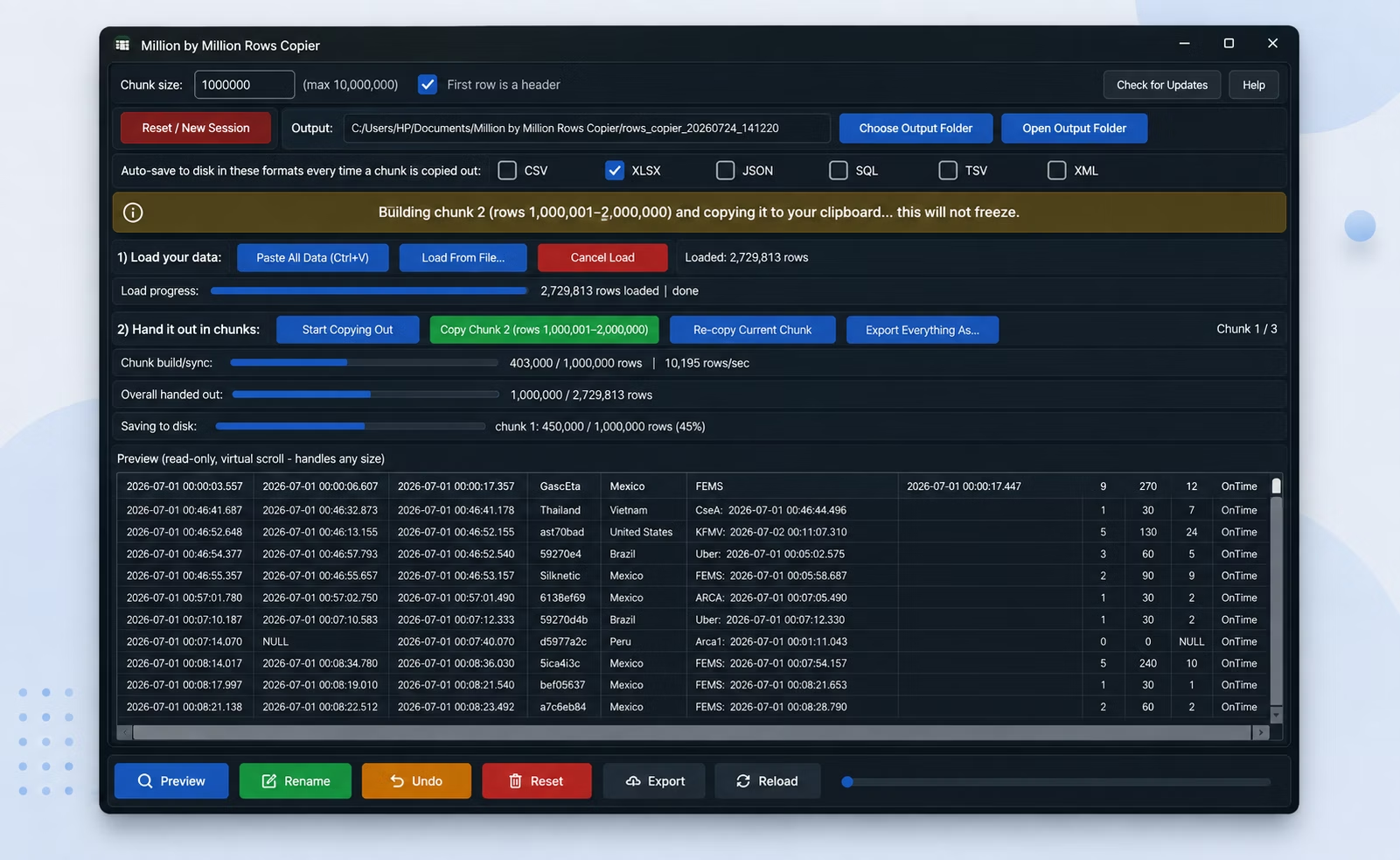
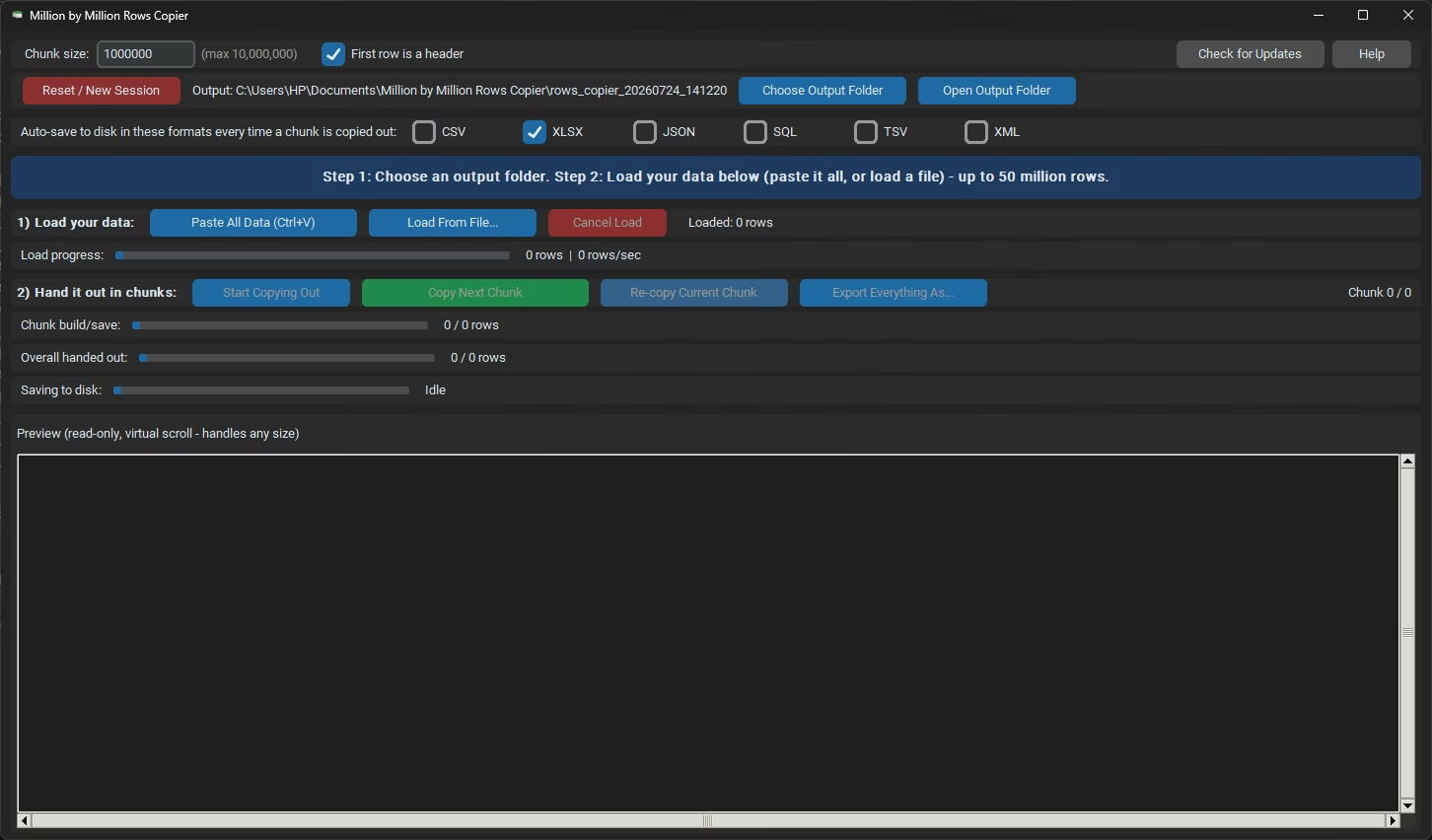
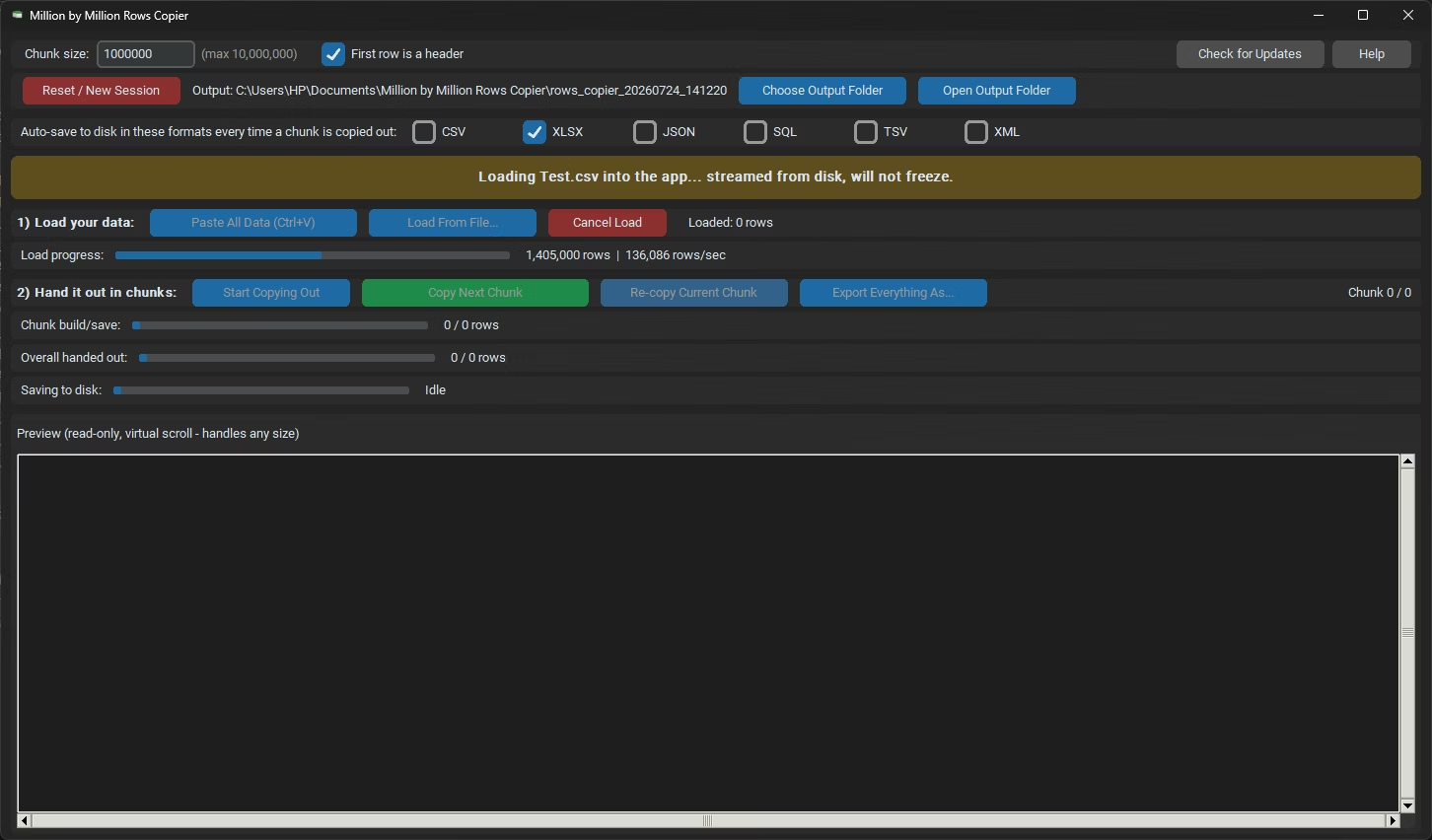
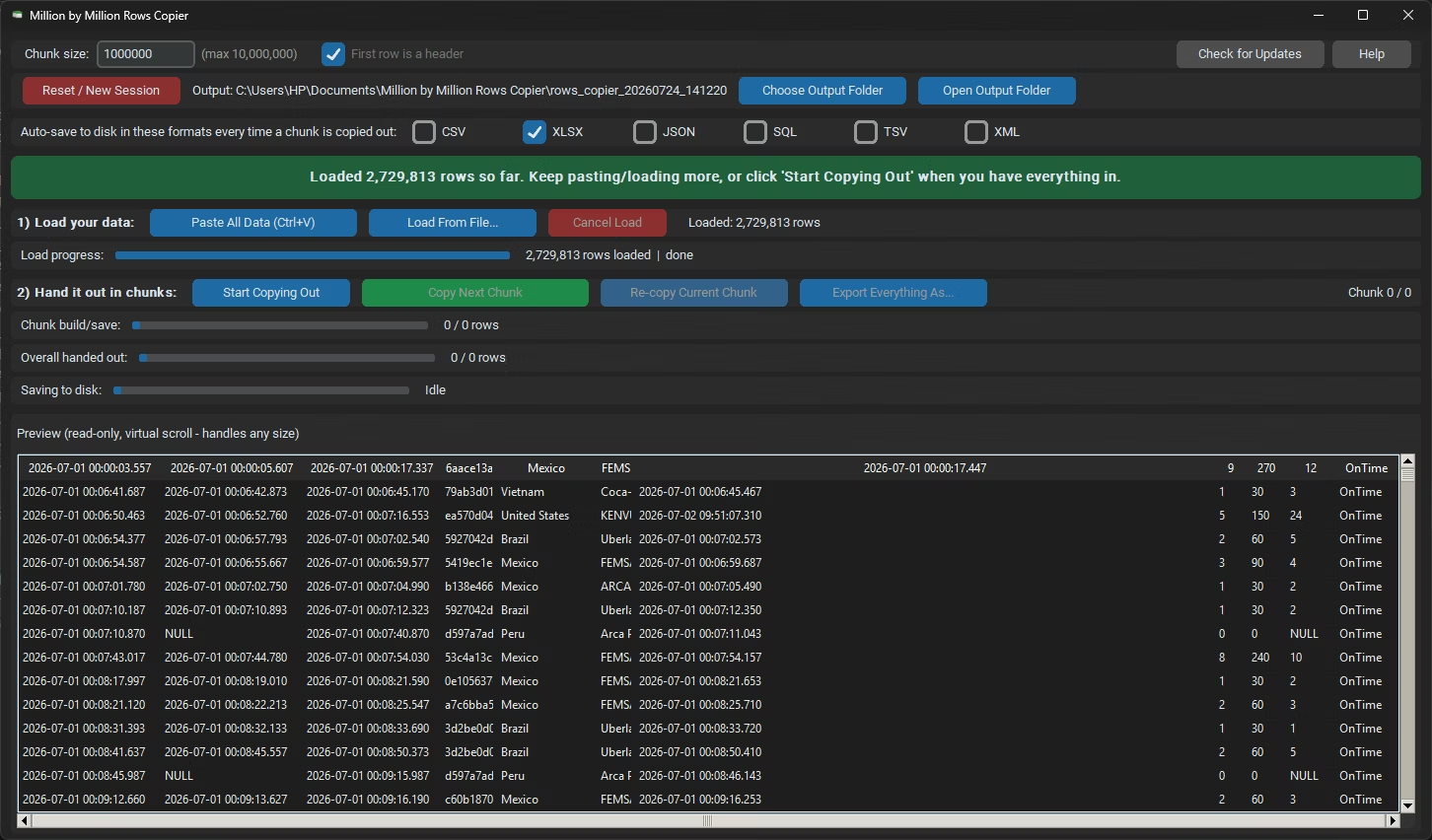
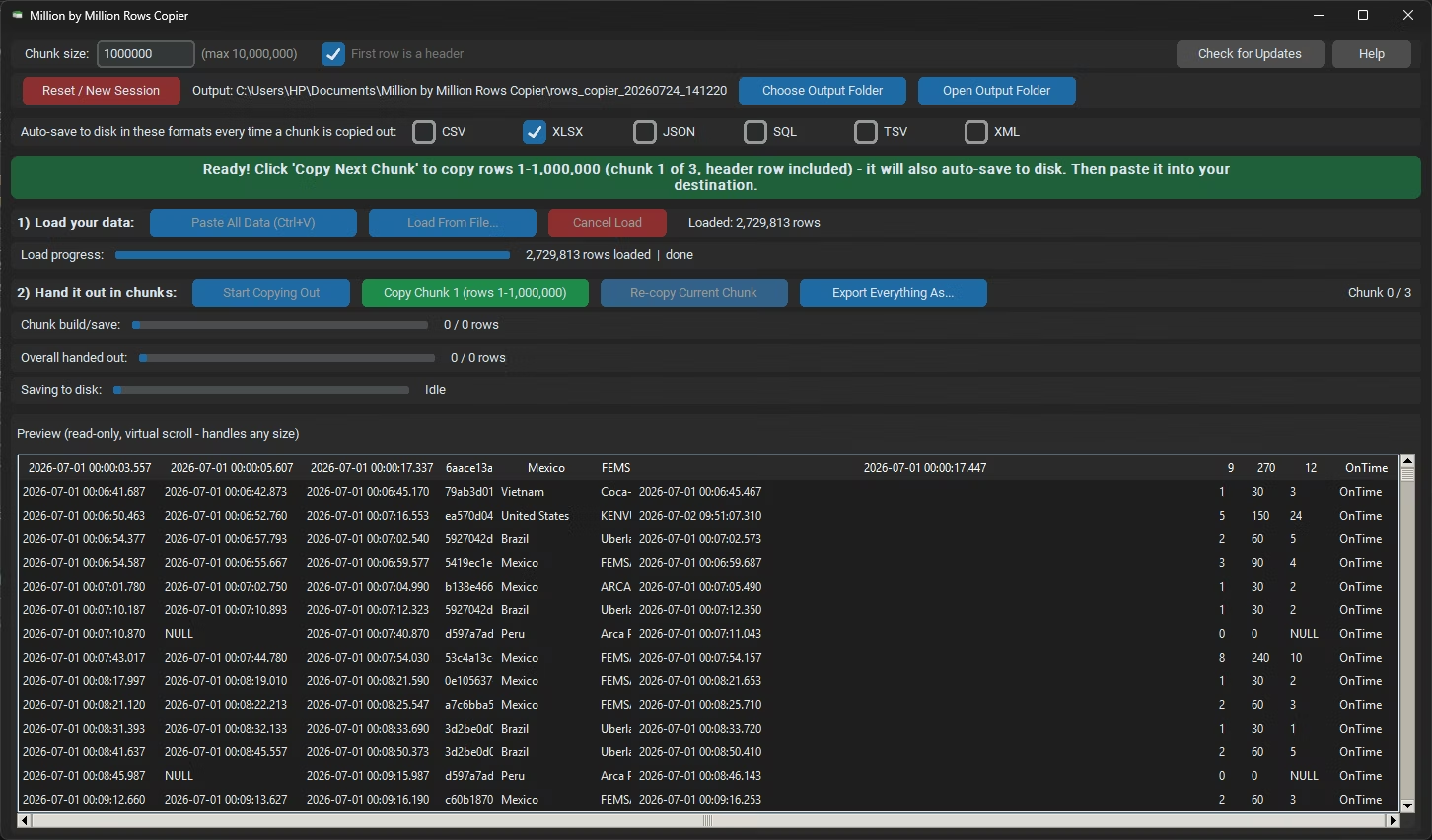
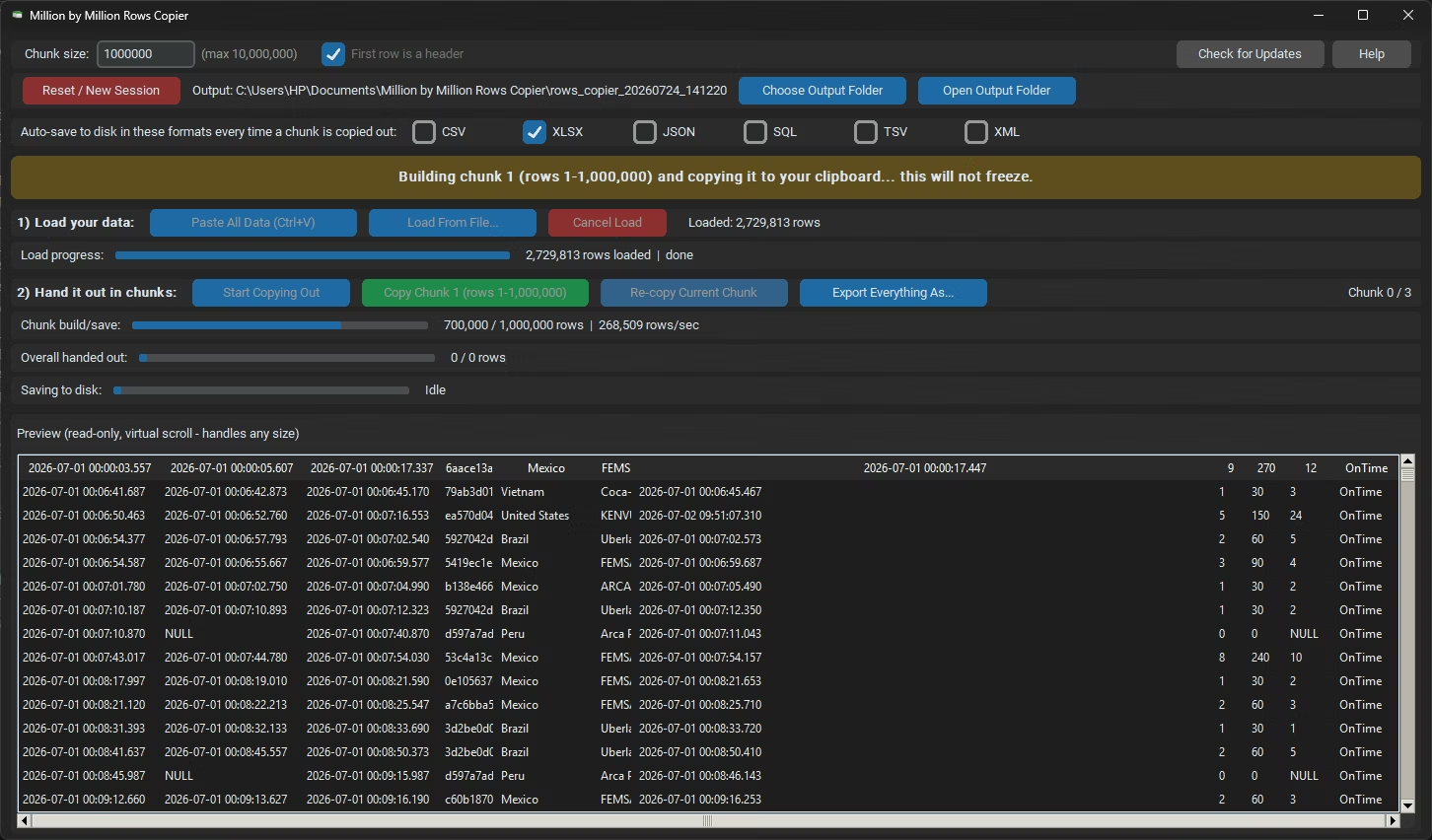
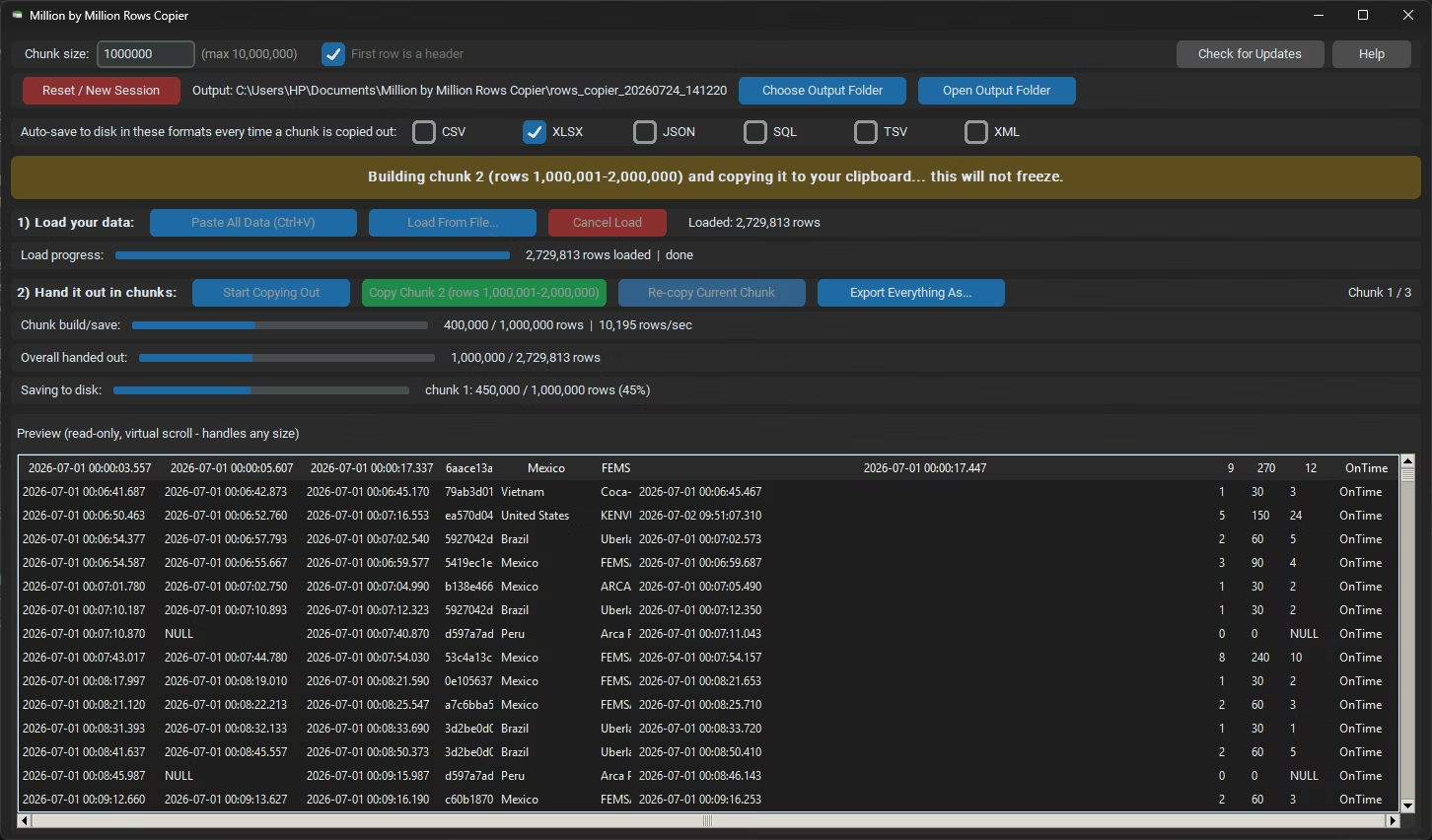
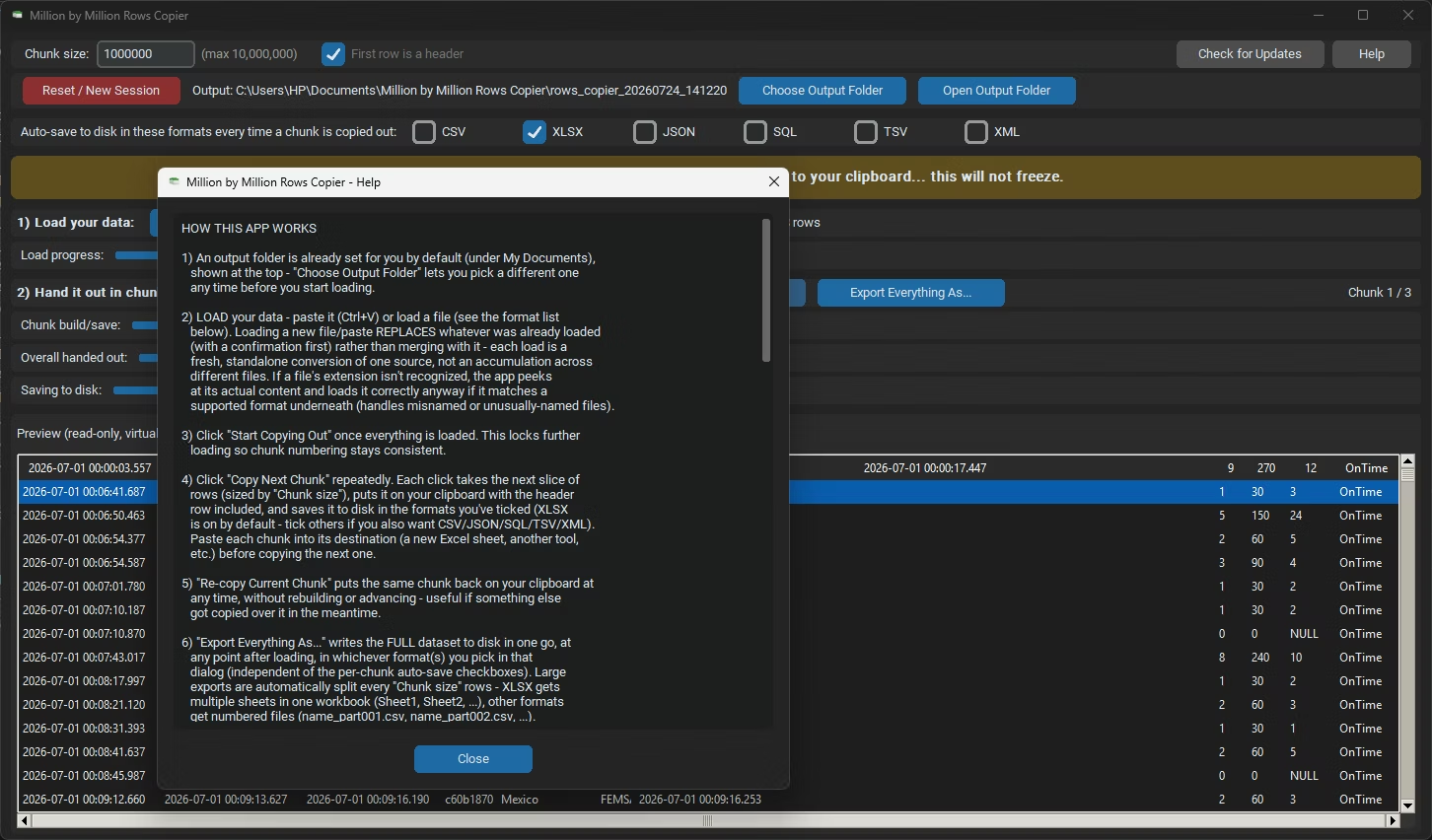
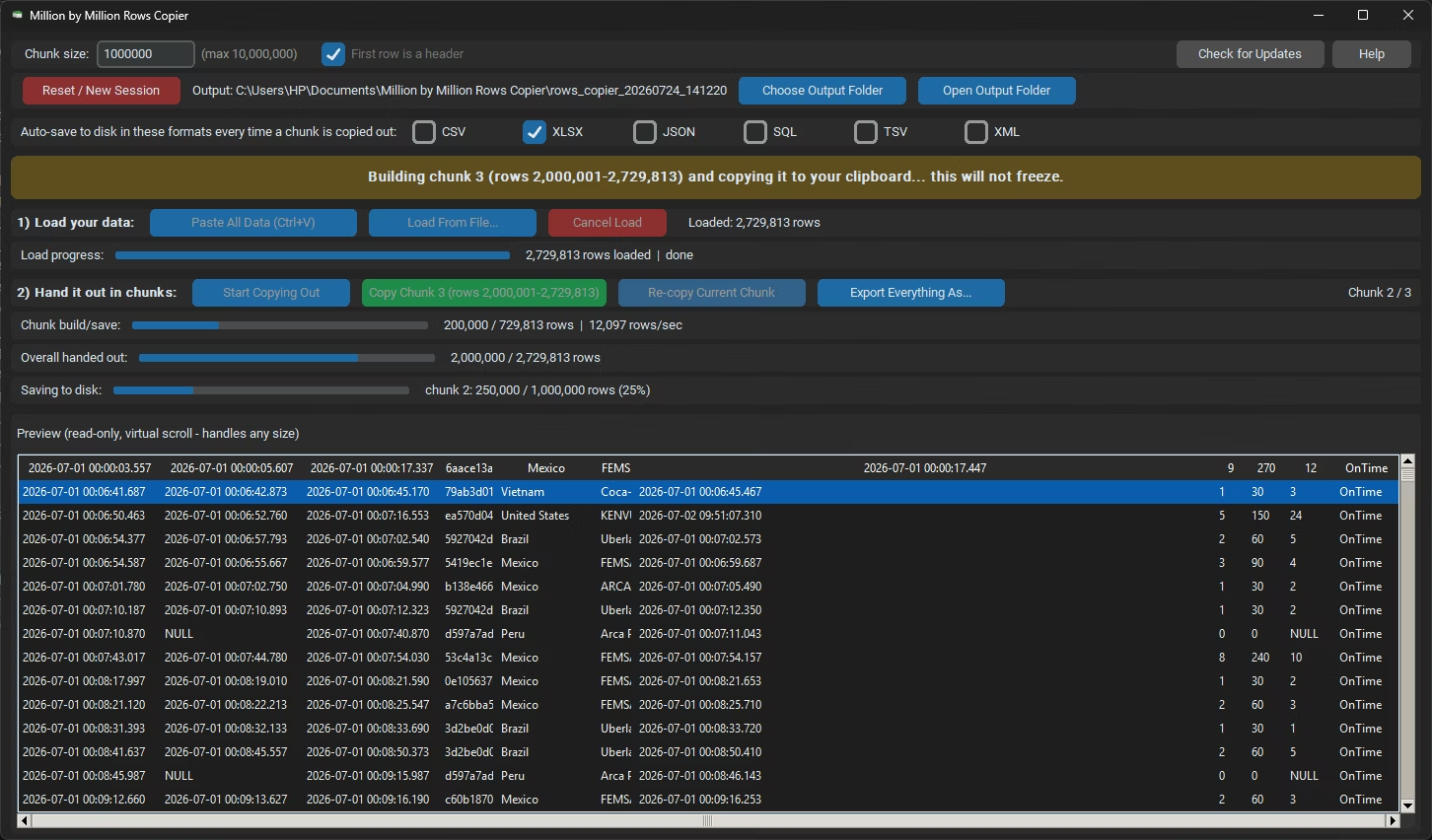
Million by Million Rows Copier is a windows desktop application which loads millions of rows into a high-performance local database, then copies and exports them in configurable million-row chunks for easy pasting into Excel, database tools, or other applications. With virtual rendering, background processing, and support for numerous file formats, it delivers smooth, reliable performance even with extremely large datasets.
Move Millions of Rows Through the Clipboard Without Freezing
Million by Million Rows Copier is a lightweight Windows desktop app for moving very large datasets - up to 50,000,000 rows - through the clipboard in safe, evenly sized chunks. Instead of trying to paste an enormous table in one go and watching Excel freeze or crash, you load everything once, then hand out the data a million rows at a time, with each chunk copied to your clipboard and saved to disk automatically. Everything runs locally on your PC, backed by an on-disk database rather than memory, so the app stays responsive whether you loaded a thousand rows or fifty million.
Why This Tool Exists
A single Excel worksheet holds about 1,048,576 rows, and long before you reach that ceiling, pasting hundreds of thousands of rows at once can lock up the application. Database exports, analytics dumps, and system extracts routinely produce far more rows than a spreadsheet can accept in one paste. Million by Million Rows Copier exists to bridge that gap: it takes a dataset that is too big to paste in one shot and breaks it into clipboard-sized pieces that any destination can accept, one after another, until the whole thing has been transferred.
What Problems It Solves
- Excel freezing or crashing when you paste hundreds of thousands - or millions - of rows at once.
- Datasets that exceed the roughly 1,048,576-row-per-sheet limit of the XLSX format.
- Moving large tables between tools that only exchange data through copy and paste.
- Extracting tabular data out of documents - Word tables, HTML tables, JSON, XML, and more - not just spreadsheets.
- Saving a huge dataset to disk in a clean, split, format-correct way without a script.
- Doing all of this offline, on data that cannot be uploaded to a web service.
Who Should Use It
Data analysts and engineers moving large extracts between tools, database administrators handing off query results, finance and accounting teams transferring big ledgers, operations and reporting staff assembling data from many sources, and anyone who has ever tried to paste more rows into Excel than it was willing to accept. If your work involves datasets that are simply too large to copy and paste in one move, this app is built for exactly that.
How to Copy 1 Million Rows (or More) and Paste Them, Step by Step
- Step 1 - Load everything into the app. Paste your data with Ctrl+V or load a file. It goes straight into a local SQLite file on disk, never into one giant list in memory, so the app stays light no matter the size. Loading a new file or paste replaces whatever was loaded before, after a confirmation prompt, so each load is a fresh, standalone conversion rather than a merge.
- Step 2 - Click "Start Copying Out." This locks the loaded dataset in place, so chunk numbering stays consistent from the first chunk to the last.
- Step 3 - The app builds the first chunk. It takes the first 1,000,000 rows, puts them on your clipboard with the header row included, and saves them to disk in your chosen format (CSV, XLSX, JSON, SQL, TSV, or XML) right after.
- Step 4 - Paste that chunk wherever it needs to go - Excel, another database tool, or any destination that accepts pasted data. This is where you copy and paste 1 million rows at a time, which is exactly why this app exists: Excel itself only holds about 1,048,576 rows per sheet.
- Step 5 - Click "Copy Next Chunk." The app puts rows 1,000,001-2,000,000 on your clipboard and saves that chunk too. "Re-copy Current Chunk" is always available if something else overwrites your clipboard first.
- Step 6 - Repeat until every row has been handed out, million by million, until the full dataset, however large, has been copied and pasted in full.
Why It Doesn't Lag or Freeze at 50 Million Rows
▶ Rows Live on Disk, Not in Memory
Rows are never all held in memory at once. Everything lives in a local SQLite file on disk, which comfortably pages through tens of millions of rows on a normal laptop - the same design that makes this a reliable Excel copier for oversized datasets.
▶ A Truly Virtual Preview Grid
The on-screen grid only ever creates around 60 row widgets, whether the table holds 1,000 rows or 50,000,000. Scrolling simply re-queries SQLite for the rows currently in view, so the preview never slows down as your data grows.
Background Threads for Every Slow Task
Parsing pasted or loaded text, inserting into SQLite, building clipboard chunks, and exporting all happen on background threads. The window itself only reads a thread-safe queue and updates labels and progress bars, which is what keeps this copy and paste software from ever freezing.
Rowid Seeking Instead of Slow Offsets
Later chunks are fetched with a direct rowid seek rather than a slow row-by-row scan, so copying rows 40,000,001-41,000,000 is just as fast as copying rows 1-1,000,000. Copying large data and pasting it one by one never gets slower the deeper you go into the dataset.
Each Chunk Is Saved the Moment It's Copied
Every 1,000,000-row chunk you hand out is written to disk immediately after it lands on your clipboard, so a crash or an accidental close never loses more than whatever chunk was still in progress.
One Connection Per Thread
Each worker thread gets its own SQLite connection running in WAL mode, so building the next clipboard chunk and auto-saving the previous one to disk genuinely run in parallel instead of queueing behind each other.
Under the Hood: The Engineering That Keeps It Fast
The responsiveness at fifty million rows is not luck - it comes from a handful of deliberate design choices in how data is stored, read, and moved.
SQLite in WAL Mode
The on-disk database runs in write-ahead-logging mode with tuned synchronous settings, so writing the next chunk to disk and reading rows for the clipboard can happen at the same time instead of blocking each other.
Batched Inserts on Load
Incoming rows are inserted in transactions of several thousand rows at a time rather than one row per commit, which is what lets the app absorb millions of rows quickly without thrashing the disk.
Batched Clipboard Assembly
When building a chunk, the clipboard text is assembled in large row batches, keeping memory steady and the operation fast even for a million-row chunk.
Rowid Seeking, Not Offsets
Each chunk is fetched by seeking directly to a rowid rather than walking the table with LIMIT and OFFSET, so deep chunks never get slower - a fundamental reason the app scales.
Per-Thread Connections
Each worker thread uses its own database connection, so background tasks genuinely run in parallel rather than serializing behind a single shared connection.
Smart Text Decoding
Delimited text loading auto-detects UTF-16 "Unicode Text" as well as UTF-8, so files exported by Windows tools load with the correct characters rather than mojibake.
Supported Input Formats (33 Formats)
Most of these are document formats, not just spreadsheets - loading one pulls out whatever looks like tabular data, whether that is an Excel sheet, a Word table, an HTML table, or plain delimited text.
If a file's extension is not recognized, the app checks its actual content and loads it correctly anyway, which is handy for misnamed or unusually named exports coming out of SQL tools.
Supported Export / Auto-Save Formats
Every chunk can auto-save to disk in any combination of these formats the moment it is copied. Exports larger than one chunk are split automatically: XLSX gets multiple sheets in one workbook, while CSV, JSON, SQL, TSV and XML get numbered files, such as name_part001.csv and name_part002.csv, so nothing ever exceeds a format's row limit.
Key Features
▶ 1,000,000-Row Chunked Copying
The core of this copy and paste app: data is handed out in clean, Excel-safe chunks of 1,000,000 rows, adjustable up to 10,000,000, each copied to the clipboard with its header row included and ready to paste immediately.
▶ Handles Up to 50 Million Rows
Built for anyone who needs to copy paste more than 1 million rows in Excel, this app breaks a 50-million-row dataset into fifty manageable, one-at-a-time paste operations, with nothing ever held entirely in memory.
Adjustable Chunk Size
Set the chunk size anywhere from 1 to 10,000,000 rows to match the row limit of your destination tool, not just Excel's.
Re-copy Current Chunk
Puts the same chunk back on your clipboard at any time, without rebuilding or advancing, which is useful the moment something else gets copied over it.
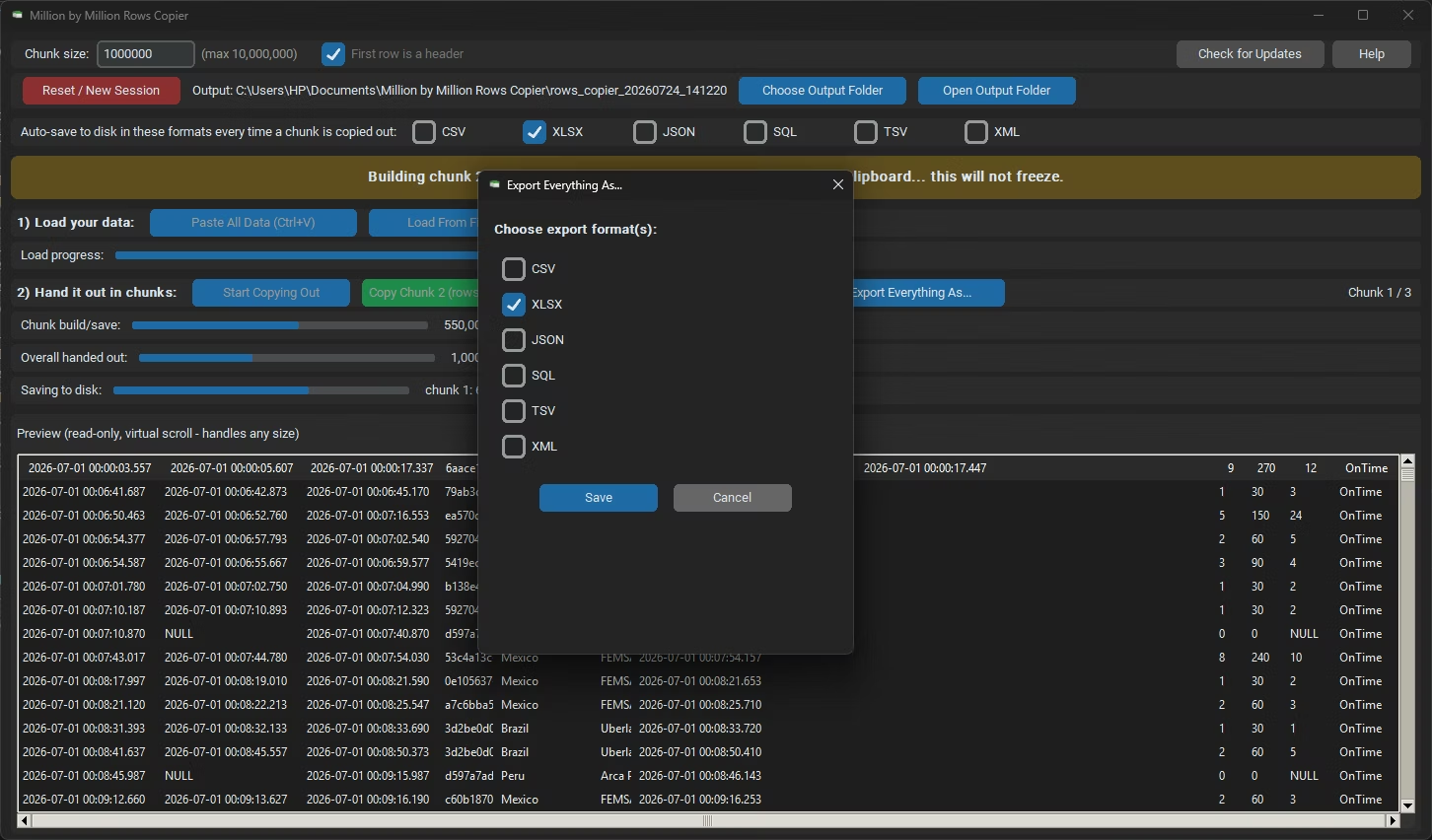
Export Everything As...
Writes the full dataset to disk in one go, in any combination of CSV, XLSX, JSON, SQL, TSV or XML, independent of the per-chunk auto-save settings.
Cancel Load, Keep What's Loaded
Cancelling a load part-way through keeps every row already read and simply stops before adding more, so a long paste or file load is never all-or-nothing.
Automatic Header Row Detection
"First row is a header" applies wherever the source data genuinely has one, including CSV, TXT, the Excel family, ODS, DBF, PRN and DIF, and every copied chunk repeats that header row so a fresh destination sheet always shows column names.
Live Load, Copy and Export Progress
Rows-per-second, percentage complete, and an overall "handed out so far" bar are all shown live, so you always know exactly where a multi-million-row job stands.
Choose Your Own Output Folder
A default output folder under My Documents is set automatically, though you can choose a different folder of your own before loading begins.
Session Manifest and Summary
Once every chunk has been copied, the app writes a manifest.json file and a summary.txt file listing every file produced during the session, for an easy audit trail.
Gumroad License Verification
Licensing is handled through Gumroad, the same activation system used across every TurboSoft app.
100% Offline - No Internet Required
Loading, copying, and exporting all happen locally on your PC. An internet connection is used only for one-time license activation.
The Interface: Every Button Explained
The app keeps its controls in plain sight, so the whole load-then-hand-out workflow is driven by a handful of clearly labelled buttons. Here is what each one does.
Choose Output Folder
Pick where the session's saved files go. A sensible default under My Documents is set for you automatically at startup, so you can start immediately if you like.
Open Output Folder
Opens that destination folder in Windows File Explorer, so the chunks and exports you have saved are one click away.
Paste All Data (Ctrl+V)
Loads whatever is currently on your clipboard into the app. You can paste in several pieces; each paste appends until you start a fresh session.
Load From File...
Loads one file in any of the supported formats. If the extension is misleading, the app inspects the file's actual content and loads it correctly anyway.
Cancel Load
Stops a load that is in progress. Rows already read stay loaded; nothing after the cancel point is added, so you keep the part that finished.
Start Copying Out
Locks the loaded dataset so chunk numbering stays consistent, and gets the app ready to hand out chunks one at a time.
Copy Next Chunk
Takes the next slice of rows - sized by your Chunk size setting - puts it on the clipboard with the header row included, saves it to disk in your ticked formats, and advances.
Re-copy Current Chunk
Puts the same chunk back on your clipboard without rebuilding or advancing - handy when something else overwrote the clipboard before you could paste.
Export Everything As...
Writes the full dataset to disk in one go, in whichever formats you pick in its own dialog, independent of the per-chunk auto-save checkboxes.
Reset / New Session
Clears everything currently loaded so you can start over. Anything already saved to disk is left untouched.
Check for Updates
Opens the app's update page in your browser so you can grab the latest version.
Help
Opens a built-in Help window documenting the workflow, every button, all supported formats, and tips.
Export Everything As... - Save the Whole Dataset at Once
Handing out chunks through the clipboard is one way to use the app; the other is exporting the entire loaded dataset to disk in a single operation. Export Everything As... does exactly that, at any point after loading, and it handles the size problem for you automatically.
Pick Any Combination of Formats
Choose CSV, XLSX, JSON, SQL, TSV, or XML - individually or several at once - in the export dialog, independent of whatever you have ticked for per-chunk auto-save.
Automatic Splitting by Chunk Size
Large exports are split every "Chunk size" rows, so no single file ever exceeds a format's practical limits and each piece stays a comfortable size to open.
Multi-Sheet XLSX
For XLSX output, the split becomes multiple sheets inside one workbook - Sheet1, Sheet2, and so on - keeping everything in a single file.
Numbered Files for Other Formats
CSV, JSON, SQL, TSV, and XML exports are written as numbered files such as name_part001.csv and name_part002.csv, so the sequence is obvious and easy to reassemble.
How It Reads So Many Different Files
Most of the supported formats are documents rather than spreadsheets, so the app does not assume rows and columns already exist. Instead it extracts whatever looks like tabular data from each file type.
- Spreadsheets (XLSX, XLS, XLSM, XLTX, XLTM, XLSB, XLT, ODS) load directly with all rows and columns. The Excel-family formats use a much faster engine when available, with an automatic fallback if it is not.
- DBF database tables are loaded directly as the real tables they are.
- CSV and TXT load as delimited text, or one row per line when there is no delimiter, and auto-detect UTF-16 "Unicode Text" as well as UTF-8.
- JSON loads from an array of objects or lists; XML becomes one row per top-level child element.
- Markdown (MD) uses the first pipe-table found, otherwise one row per line.
- HTML, HTM, MHT, MHTML use the first table found, otherwise one row per block of visible text - the archive formats are unpacked to their HTML first.
- DOCX, DOTX, DOTM, ODT use the first table in the document, otherwise one row per paragraph in a single text column.
- RTF is converted to plain text then split one row per line; PRN is parsed as fixed-width text; DIF is the classic Data Interchange Format.
- Legacy DOC and DOT use Microsoft Word's own automation, so Word must be installed; otherwise re-save as DOCX. WPS Office formats are best-effort, with a clear prompt to re-save if they cannot be read.
If an extension is misleading, the app checks the file's real content and loads it correctly anyway - useful for oddly named exports from SQL and reporting tools.
Who Uses It and How
Oversized datasets show up in almost every data-driven role. Because the app is format-agnostic on input and flexible on output, the same tool fits many jobs.
Data Analysts
Move a multi-million-row query result into Excel a sheet at a time, or export the whole thing to split CSVs, without a script or a frozen spreadsheet.
Database Administrators
Hand off large table extracts to colleagues as clean, numbered files, or paste them into another database tool chunk by chunk.
Finance and Accounting
Transfer big ledgers and transaction dumps between systems, keeping each pasted block under Excel's per-sheet ceiling.
Operations and Reporting
Assemble data pulled from Word tables, HTML pages, and spreadsheets into one dataset, then export it in a consistent format.
Researchers
Chunk a large dataset into evenly sized pieces for processing, or convert an awkward JSON or XML export into tabular CSV.
IT and Migration Teams
Bridge tools that only exchange data through copy and paste, moving huge tables across the clipboard reliably instead of hoping a single giant paste survives.
Administrative Staff
Pull tabular content out of documents that were never meant to be spreadsheets - Word tables, web pages - and turn it into usable rows.
Anyone Fighting Excel's Row Limit
If you have ever seen Excel refuse a paste because there were too many rows, this app is the missing step between the export and the spreadsheet.
Real-World Workflows
Paste a 5-Million-Row Export Into Excel
A reporting tool produced five million rows. Load the file, click Start Copying Out, then Copy Next Chunk and paste into a fresh Excel sheet - repeat five times, one sheet per million rows. Each chunk carries the header, and each is also auto-saved to disk as a backup.
Split a Giant CSV Into Numbered Files
You need a huge CSV broken into manageable pieces. Load it, set your chunk size, and use Export Everything As... with CSV ticked. The app writes name_part001.csv, name_part002.csv, and so on, each sized to your chunk setting.
Turn a JSON or XML Dump Into a Spreadsheet
An API returned a large JSON array or an XML feed. Load it directly, then Export Everything As... with XLSX selected. The dataset lands in a multi-sheet workbook, each sheet a chunk, ready to open.
Extract a Table From a Document
A Word document or web page contains the table you need. Load the DOCX or HTML file and the app pulls out the first table it finds, so you can then chunk it, paste it, or export it like any other dataset.
Best Practices and Tips
Load Everything First
Finish loading before you click Start Copying Out. Loading locks once copying begins, which is what keeps chunk numbering consistent from first to last.
Set the Header Option Correctly
The "First row is a header" setting applies to formats that genuinely have a first data row - CSV, TXT, the Excel family, ODS, DBF, PRN, DIF. Document formats ignore it.
Match Chunk Size to the Destination
Keep the chunk size at or below your destination's comfortable paste limit. For Excel, the default one million rows fits neatly under the per-sheet ceiling.
Paste Before Copying the Next Chunk
Paste each chunk into its destination before advancing, since Copy Next Chunk replaces what is on the clipboard. Re-copy Current Chunk is there if you lose it.
Tick Only the Formats You Need
Each ticked auto-save format writes a file per chunk. Enable just the ones you want so you are not generating files you will never use.
Use Export Everything for Bulk Saves
When you just want the whole dataset on disk rather than pasted somewhere, Export Everything As... is faster than stepping through chunks by hand.
Scope and Limitations
Knowing the boundaries up front helps you decide whether it fits your workflow.
- It is designed for moving and exporting data, not editing it - the preview grid is read-only and virtually scrolled, so you cannot change cell values inside the app.
- The supported dataset size is up to 50,000,000 rows, and chunk size can be set anywhere from 1 to 10,000,000 rows.
- Loading a new file or paste replaces the current dataset after a confirmation rather than merging with it - each load is a fresh, standalone session.
- Legacy .doc and .dot files need Microsoft Word installed, because they are read through Word's own automation; otherwise re-save as .docx.
- WPS Office's native .et, .ett, .wps, and .wpt formats are best-effort; if they cannot be read, the app asks you to re-save them as .xlsx, .csv, or .docx.
- Document formats do not have a "first row is a header" concept, so that option only affects true row-and-column formats.
Compared to Pasting Directly Into Excel
| Task | Pasting Directly / Manual | Million by Million Rows Copier |
|---|---|---|
| Paste 5 million rows | Excel freezes, crashes, or rejects the paste | Hand it out in one-million-row chunks that paste cleanly |
| Hold the dataset | Everything sits in memory and bogs the app down | Rows live in an on-disk database; memory stays flat |
| Scroll a huge table | The grid slows to a crawl | Virtual grid re-queries only the rows in view |
| Deep chunks | Later slices get progressively slower | Rowid seeking keeps every chunk equally fast |
| Save while transferring | Manual Save As after each paste | Each chunk auto-saves to disk the moment it is copied |
| Non-spreadsheet sources | Copy tables out of documents by hand | Loads 33 formats and extracts the tabular data for you |
| Keep data private | Web tools require uploading the file | 100% offline; nothing leaves your computer |
The Benefits: Speed, Stability, and Peace of Mind
Beyond simply getting past Excel's row limit, the design of the app changes how large-data transfers feel - from a fragile, crash-prone chore into a steady, predictable process. When a transfer that used to risk a frozen window and a lost afternoon becomes a series of small, safe, auto-saved steps, the difference is not just technical - it is the confidence to take on datasets you would previously have avoided or split up by hand.
No More Frozen Spreadsheets
Because you paste one manageable chunk at a time instead of one giant block, the destination application stays responsive throughout - no more waiting on a spinning cursor or force-quitting a hung Excel.
Flat Memory Use at Any Size
Rows live in an on-disk database, so loading fifty million rows uses roughly the same memory as loading fifty thousand. The app does not balloon or slow down as the dataset grows.
Consistent Speed to the Last Chunk
Rowid seeking means the final chunk copies just as quickly as the first, so a long transfer does not drag toward the end the way offset-based approaches do.
Built-In Backup
Every chunk is written to disk the instant it is copied, so your progress is never only on the clipboard. A crash or accidental close costs you at most the chunk in flight.
One Tool for Many Sources
Loading 33 formats - spreadsheets, documents, web pages, JSON, XML, and more - means you rarely need a separate converter first. The tabular data is extracted for you.
Complete Privacy
Nothing is uploaded. Sensitive exports stay on your machine from load to paste to export, which matters for regulated and confidential work.
Safety and Reliability
- Nothing Lost on a Crash - Each chunk is saved to disk the instant it is copied, so an accidental close never loses more than the chunk currently in progress.
- No Silent Merging - Loading a new file or paste always asks for confirmation before replacing existing data, so a source is never accidentally merged with a different one.
- Excel-Safe by Design - Chunk size and export splitting keep every output file within its format's real row limits, including Excel's 1,048,576-rows-per-sheet cap.
- Cancel-Safe Loading - Cancelling a load keeps everything already read; nothing after the cancel point is added, and nothing before it is lost.
- Stable at Extreme Row Counts - Behavior stays consistent whether a dataset is 10,000 rows or 50,000,000 rows.
- Ideal for SQL Exports - Purpose-built for the common case of pulling a large query result out of SQL and then pasting it into Excel or another tool, chunk by chunk.
Security and Privacy
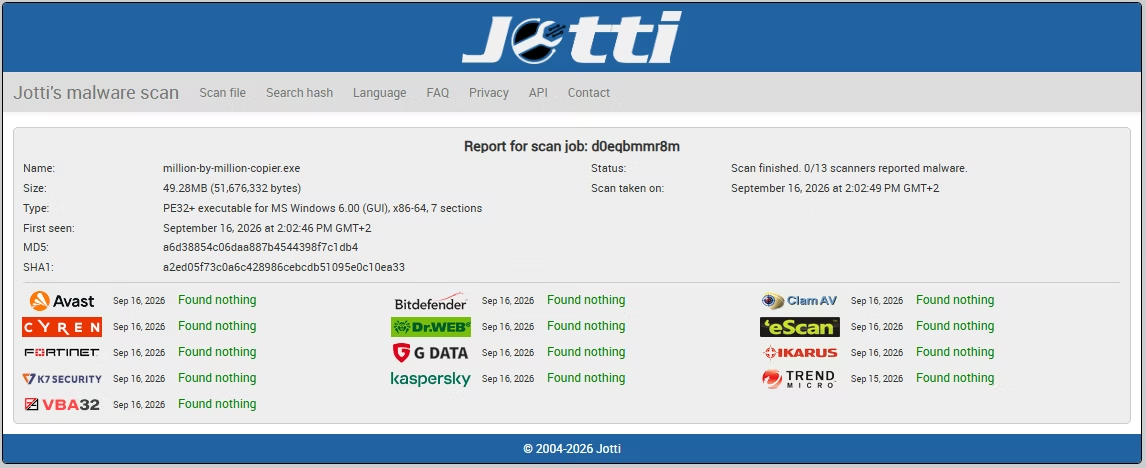
Million by Million Rows Copier is a fully local desktop application. Every row you load, copy, or export is processed entirely on your own computer. No data is uploaded, scanned remotely, or shared with third parties.
- Does not log, analyze, track, or store the contents of your data
- No integration with third-party analytics, advertising trackers, or background telemetry
- Internet is used only for license validation, and that request contains no data content whatsoever
- Well suited to confidential exports from SQL databases, HR systems, and financial spreadsheets
- Complete confidentiality for personal, professional, and enterprise data-handling workflows
Minimum System Requirements
| Operating System | Windows 8 (64-bit) |
| Processor | 1-2 CPU cores |
| Memory | 2 GB RAM |
| Storage | 500 MB free disk space, plus room for exported chunks |
Recommended System Requirements
| Operating System | Windows 10 or later (64-bit) |
| Processor | 4 or more CPU cores |
| Memory | 8 GB RAM or more for datasets above 10 million rows |
| Storage Type | SSD recommended for the fastest chunk copy and export speed |
| Free Disk Space | 2 GB or more, plus space for every exported chunk |
App Info
| App Name | Million by Million Rows Copier |
| Platform | Windows 10, Windows 11 |
| Category | Data Tools |
| Max Rows Supported | 50,000,000 |
| Default Chunk Size | 1,000,000 rows (adjustable, up to a maximum of 10,000,000) |
| Input Formats | 33 (Word, Excel family, and other data formats) |
| Export Formats | CSV, XLSX, JSON, SQL, TSV, XML |
| Storage | Local on-disk SQLite (data never held fully in memory) |
| Processing | 100% offline / local |
| License Management | Gumroad |
Getting Started and Why Choose It
Getting up and running takes only a moment, and once activated the app works entirely offline on your Windows PC.
1. Install and Activate
Purchase through Gumroad, install on Windows, and activate once with your purchase email and license key. The license is cached locally so it keeps working offline afterward.
2. Load Your Data
Paste with Ctrl+V or load a file in any of the 33 supported formats. A default output folder under My Documents is set for you automatically.
3. Hand It Out or Export It
Click Start Copying Out and step through chunks with Copy Next Chunk, or use Export Everything As... to write the whole dataset to disk in one go.
4. Keep Working Without Fear
Each chunk is auto-saved as you go, so you can transfer tens of millions of rows confidently, knowing your progress is on disk.
If you regularly wrestle with datasets that are too big to paste in one move, Million by Million Rows Copier turns that recurring struggle into a calm, repeatable routine: load once, hand out million by million, and let every chunk save itself along the way. Purchase a license through Gumroad above and move your next oversized dataset without the freeze.
A Copy and Paste App Built for Rows Excel Was Never Meant to Hold
Million by Million Rows Copier is copy and paste software made for one specific, everyday problem: how to copy 1 million rows out of a database or spreadsheet and get them into Excel in one piece. Excel itself caps every sheet at roughly 1,048,576 rows, so trying to copy and paste 1 million rows - or more than 1 million rows - into Excel the normal way usually ends in a frozen window, a truncated paste, or a crash. This app solves that problem by acting as a dedicated tool to copy million rows and paste them, one clean chunk at a time, so the Excel 1 million rows limit stops being a blocker for your workflow. As an Excel copier, it treats Excel's row ceiling as a starting point rather than a hard limit, letting you work with genuinely large tables, whether that means 5 million rows, 20 million rows, or the full 50 million rows the app supports, without ever exceeding what a single sheet can hold. It is equally useful as a way to copy large data and paste it one by one from any source, and it is a natural fit for anyone who regularly needs to copy large data from SQL and paste it in Excel: run your query, paste or export the results into the app, and let it manage the chunking, the clipboard, and the disk-safe exports for you.
Frequently Asked Questions
Common Questions About Million by Million Rows Copier
How do I copy 1 million rows and paste them into Excel?
Load your data into Million by Million Rows Copier by pasting it or loading a file, click "Start Copying Out," then click "Copy Next Chunk." The app copies exactly one million rows to your clipboard with the header row included, ready to paste straight into Excel.
Can I copy and paste more than 1 million rows in Excel?
A single Excel sheet is capped at 1,048,576 rows, so more than 1 million rows can never fit on a single sheet. Million by Million Rows Copier works around this by handing data out in 1,000,000-row chunks that you paste into separate sheets or workbooks, one after another, until the whole dataset has been delivered.
Is this a copy and paste app for datasets larger than Excel can hold?
Yes. Million by Million Rows Copier is copy and paste software built specifically for datasets between 1 million and 50 million rows, well beyond what Excel, the Windows clipboard, or most spreadsheet tools can move in one go.
How do I copy large data from SQL and paste it in Excel?
Export or paste your SQL query results directly into Million by Million Rows Copier, then use "Copy Next Chunk" to hand the data out in 1,000,000-row pieces. Each chunk is saved to disk automatically and copied to your clipboard, so you can paste it directly into Excel.
Does this work as an Excel copier for files with more than 1 million rows?
Yes. As an Excel copier for oversized datasets, Million by Million Rows Copier loads XLSX, XLS, CSV and more than 25 other formats, then copies the data out in Excel-safe, 1,000,000-row chunks that never exceed a single sheet's row limit.
How do I copy large data and paste it one by one without the app freezing?
Million by Million Rows Copier stores your data in a local SQLite file instead of holding it all in memory, and every slow task runs on a background thread. This is what lets you copy large data and paste it one by one, chunk by chunk, without the window ever freezing.
What is the largest dataset this copy and paste software can handle?
Up to 50,000,000 rows in a single session. Chunk size can be set anywhere from 1 to 10,000,000 rows, so you can match it to whatever tool you are pasting into.
Does it work with data pasted straight from the clipboard, not just files?
Yes. "Paste All Data (Ctrl+V)" loads whatever is currently on your clipboard directly into the app, which is often the fastest route when copying results out of a SQL client or another spreadsheet.
How many rows can it handle at once?
Up to 50,000,000 rows in a single loaded dataset. Because the rows live in an on-disk database rather than in memory, that size does not slow the app down the way a giant in-memory table would.
Why does Excel freeze when I paste too many rows, and how does this help?
A single Excel worksheet holds about 1,048,576 rows, and pasting hundreds of thousands at once can lock up the app well before that. This tool hands your data out in chunks that fit comfortably in a sheet, so each paste is small enough for Excel to accept without freezing.
Can I change the chunk size?
Yes. The default chunk size is 1,000,000 rows, and you can set it anywhere from 1 to 10,000,000. Match it to your destination - one million fits neatly under Excel's per-sheet limit, for example.
Does each chunk include the header row?
Yes. When you copy a chunk, the header row is placed on the clipboard along with the rows, so every chunk you paste is self-describing.
What if something overwrites my clipboard before I paste?
Use "Re-copy Current Chunk." It puts the same chunk back on your clipboard without rebuilding or advancing, so you never lose your place if another copy operation gets in the way.
Are the chunks saved to disk, or only put on the clipboard?
Both. Each chunk is placed on your clipboard and saved to disk in the formats you have ticked, the moment it is copied. That means a crash or accidental close never loses more than whatever chunk was in progress.
Which formats can it save or export to?
Six: CSV, XLSX, JSON, SQL, TSV, and XML. These are available both for the per-chunk auto-save and for the separate "Export Everything As..." dialog, where you can pick any combination.
Can I export the whole dataset at once instead of chunk by chunk?
Yes. "Export Everything As..." writes the full dataset to disk in one go, in whichever formats you choose. Large exports are split automatically by your chunk size.
How are large exports split across files?
XLSX exports become multiple sheets in one workbook - Sheet1, Sheet2, and so on. CSV, JSON, SQL, TSV, and XML exports become numbered files such as name_part001.csv and name_part002.csv, so nothing exceeds a format's practical limits.
Which input formats can it read?
33 in total, spanning Word (DOCX, DOC, DOTX, DOTM, DOT), the Excel family (XLSX, XLS, XLSM, XLSB, XLTX, XLTM, XLAM, XLA, XLT), and other data formats including DBF, CSV, TXT, RTF, ODT, ODS, HTML, HTM, MHT, MHTML, XML, JSON, MD, PRN, DIF, plus WPS Office's ET, ETT, WPS, and WPT.
Can it pull a table out of a Word document or web page?
Yes. For DOCX and ODT it loads the first table in the document, or one row per paragraph if there is no table. For HTML and MHT archives it loads the first table, or one row per block of visible text.
What happens if a file has the wrong extension?
The app inspects the file's actual content and loads it correctly anyway, which is handy for misnamed or unusually named exports coming out of SQL and reporting tools.
Do legacy .doc files work?
Reading .doc and .dot uses Microsoft Word's own automation, so Word must be installed. If it is not available, re-save the file as .docx and load that instead.
Does it work with WPS Office files?
It makes a best-effort attempt at WPS Office's native .et, .ett, .wps, and .wpt formats. If those cannot be read, the app tells you to re-save the file as .xlsx, .csv, or .docx from within WPS Office and load that instead.
Can I edit the data inside the app?
No. The preview grid is read-only and virtually scrolled so it stays fast at any size. The app is built for moving and exporting data, not editing it - make edits in your destination tool after pasting.
Does loading a new file merge with what I already loaded?
No. Loading a new file or paste replaces the current dataset after a confirmation prompt, so each load is a fresh, standalone session rather than a merge.
Does it work completely offline?
Yes. All loading, chunking, and exporting happen locally on your PC. Nothing is uploaded, which makes it suitable for confidential and regulated data. The only internet use is a one-time license check.
How is it licensed?
It is licensed through Gumroad. Activate once with your purchase email and license key; the license is then cached locally so the tool keeps working offline afterward.
Which operating systems are supported?
It is a Windows desktop application. It runs locally without a browser or an online account.