Clean Excel Files Automatically, in One Click
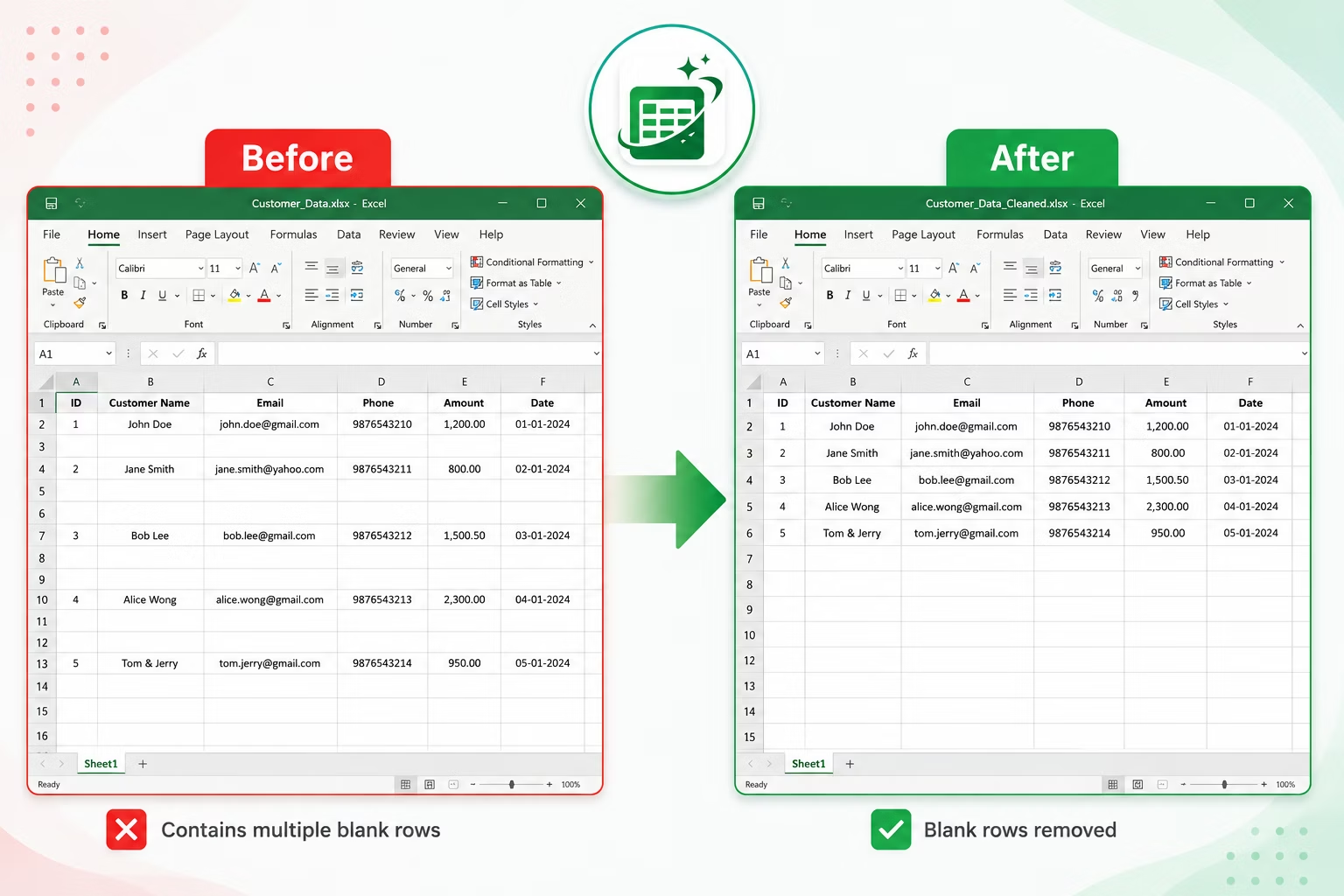
Blank rows left by an export, duplicated records from two systems merged into one sheet, dates written four different ways, trailing spaces that break every lookup formula, a header row repeated eleven times because someone concatenated eleven CSV files. Fixing that by hand means Find & Replace, Go To Special and sort-then-delete, one workbook at a time.
Turbo Excel Cleaner turns the job into a checklist. Load one file or a queue of exports, tick the operations you want from a list of 43, and the app applies them to every sheet in every file. Originals are never modified; each result is a separate cleaned copy.
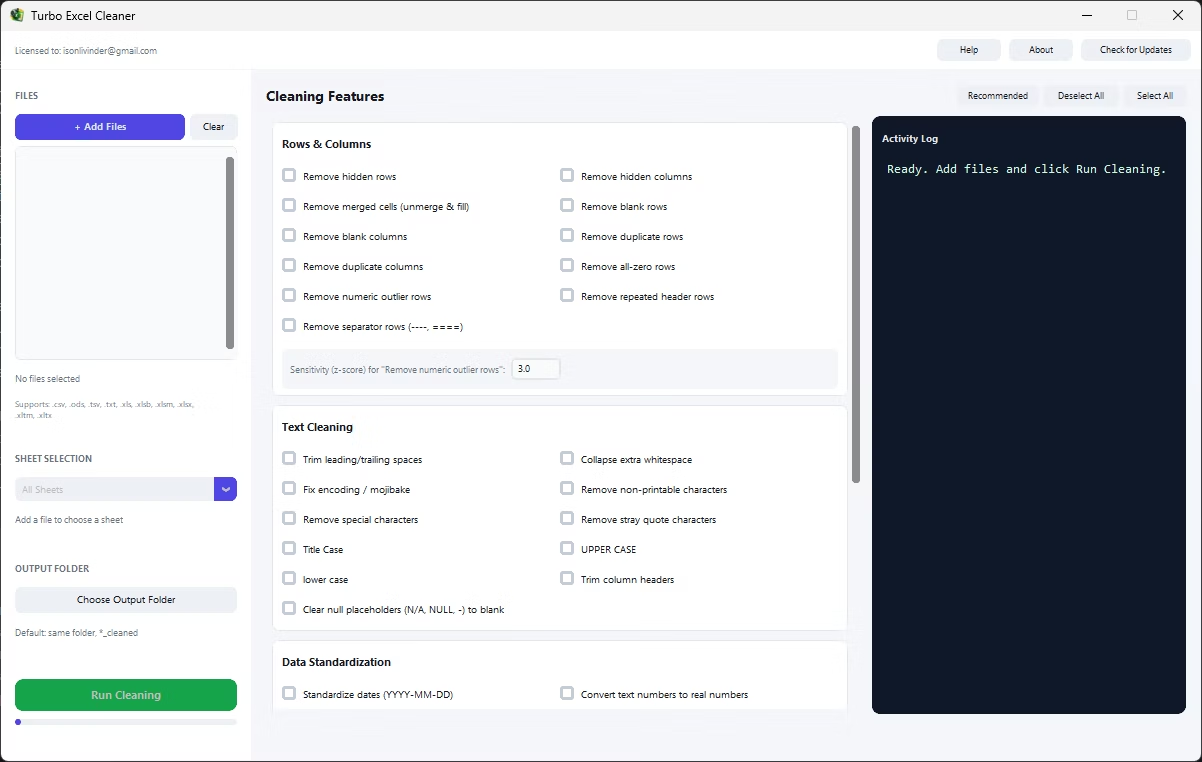
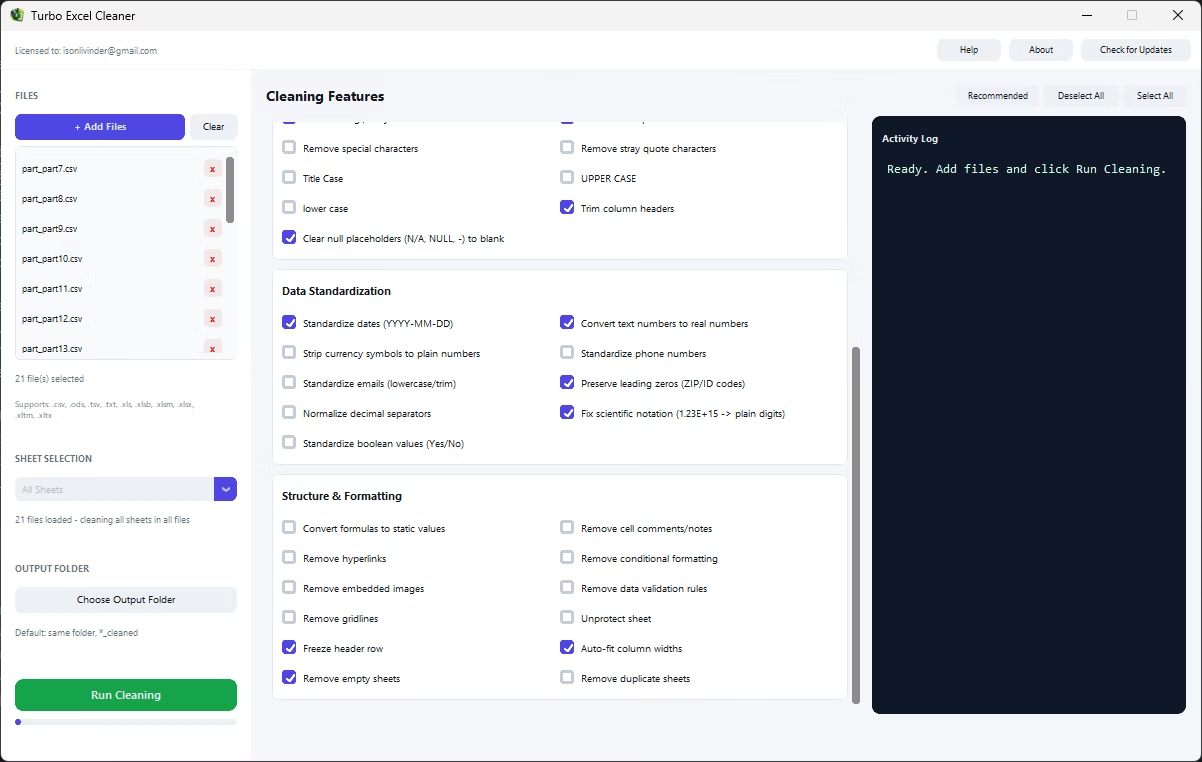
The 43 features sit in four categories matching the four kinds of mess a spreadsheet accumulates. Rows & Columns handles structural junk. Text Cleaning handles what is inside the cells. Data Standardization makes values consistent. Structure & Formatting deals with the workbook itself — formulas, comments, hyperlinks, formatting rules, images, sheets.
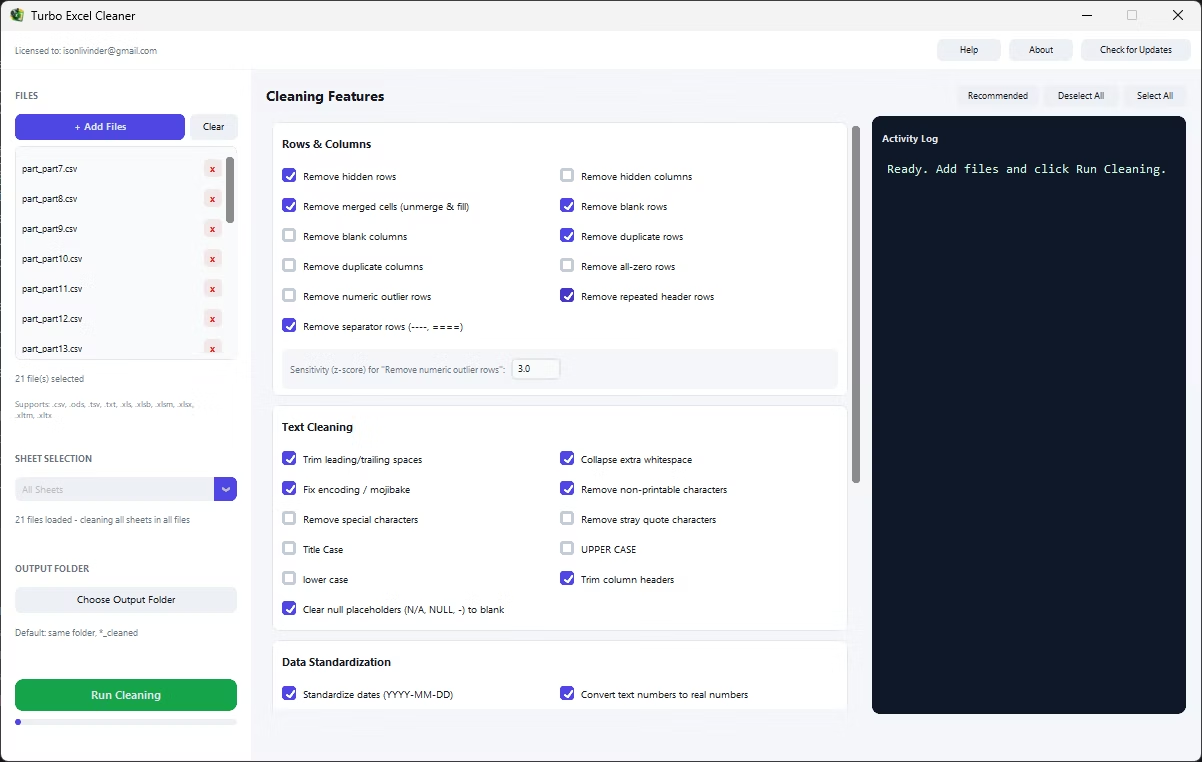
Every feature starts unchecked, so nothing runs until you opt in. One Recommended button applies a curated set of 19 safe, non-destructive features, chosen so they are safe on data you have not reviewed yet. Everything runs locally, so workbooks of financial or customer records never leave the machine.
Supported Spreadsheet Formats (10 Input Types)
The engine works on rows, columns and cells rather than assuming a source, so the same feature list applies whether the file came from an accounting package, a CRM, a survey platform or an internal template.
| Format | Extensions | How it is handled |
|---|---|---|
| Excel Workbook | .xlsx | Native read and write, full feature support |
| Excel Macro-Enabled | .xlsm | Native read and write, full feature support |
| Excel Template | .xltx, .xltm | Native read and write, full feature support |
| Legacy Excel | .xls | Read through xlrd, always written back out as .xlsx |
| Excel Binary | .xlsb | Read through pyxlsb, always written back out as .xlsx |
| OpenDocument Spreadsheet | .ods | Read through odfpy, always written back out as .xlsx |
| CSV | .csv | Delimiter auto-detected, saved back as .csv |
| TSV | .tsv | Tab-delimited, saved back as .tsv |
| Plain text | .txt | Tab-delimited by default with auto-detection, saved back as .txt |
Encoding and delimiters are detected, not assumed. Delimited files fall back through UTF-8 with BOM, UTF-8, CP1252 and Latin-1, and the delimiter is sniffed from a sample. A file that fails every encoding is still read with bad bytes replaced rather than refusing to open.
Features that only make sense for a real Excel file — hidden rows, merged cells, comments, hyperlinks, formatting rules, images, validation, gridlines, freeze panes, auto-fit — are skipped automatically for CSV, TSV and TXT. Numbers written to delimited formats come back as 200, not 200.0.
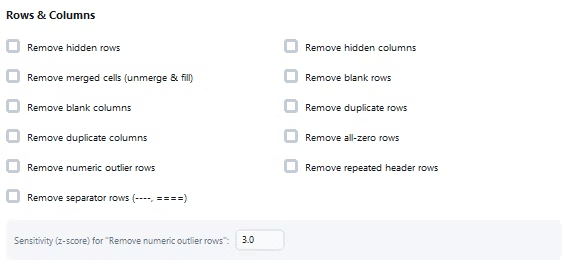
Rows & Columns: 11 Structural Cleanup Features
These attack the shape of the sheet rather than the contents of the cells. Each is an independent checkbox.
Remove hidden rows
Deletes every row flagged as hidden, where filtered-out records and concealed working data tend to live.
Remove hidden columns
The same for columns, which often carry stale calculation helpers nobody wants in a final export.
Remove merged cells
Unmerges every range and fills the value into the anchor cell, so a cosmetically formatted report becomes something a formula or pivot table can read.
Remove blank rows
Deletes rows where every cell in the used range is empty, including ones that only look occupied because of leftover formatting.
Remove blank columns
The column equivalent, for exports that trail empty columns to the right of the real data.
Remove duplicate rows
Keeps the first occurrence and drops later exact repeats. Runs after text cleaning, so rows differing only by a trailing space are caught.
Remove duplicate columns
Removes columns whose contents duplicate an earlier column — what happens when two exports are pasted side by side.
Remove all-zero rows
Drops rows where every numeric cell is zero, common in accounting and inventory exports that pad unused line items.
Remove numeric outlier rows
Uses a per-column z-score to find values far outside the distribution. The threshold sits beside the checkbox, defaulting to 3.0; columns with fewer than five numeric values or zero variance are skipped.
Remove repeated header rows
Deletes rows elsewhere in the sheet that exactly duplicate the header — the fix for a file built from a dozen concatenated exports that each brought their own.
Remove separator rows
Deletes rows containing nothing but dividers such as runs of dashes or equals signs. Formatting-as-text, not data, and it breaks every sort.
Merged cells are always flattened first. Unmerging has to happen before any row or column deletion, because merge ranges do not reliably re-anchor once rows shift underneath them. The pipeline enforces that regardless of the order you ticked the boxes.
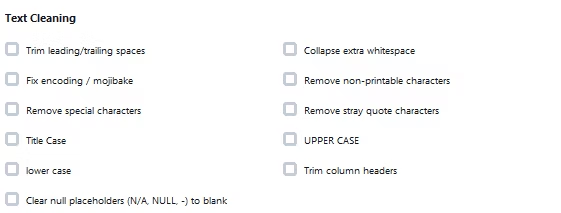
Text Cleaning: 11 Cell-Content Features
Where the invisible problems get fixed — the ones that make VLOOKUP return #N/A on two strings that look identical on screen.
Trim leading/trailing spaces
Strips whitespace from both ends of every text cell. The single most common cause of failed lookups and mismatched joins.
Collapse extra whitespace
Reduces runs of spaces or tabs inside a value to one space, so "Acme Corp" and "Acme Corp" stop being two customers.
Fix encoding / mojibake
Repairs text decoded with the wrong character set, classically UTF-8 bytes read as Latin-1, and normalizes values so visually identical characters compare equal.
Remove non-printable characters
Strips control characters and null bytes that survive a copy from a terminal, a PDF or a mainframe report.
Remove special characters
Removes symbols outside a safe allowlist, keeping the punctuation real data needs: full stops, commas, hyphens, slashes, at signs, brackets, percent signs and ampersands.
Remove stray quote characters
Trims apostrophes and double quotes that CSV round-trips leave wrapped around otherwise clean values.
Title Case
Word-aware title casing that handles apostrophes correctly, so possessives and contractions are not mangled.
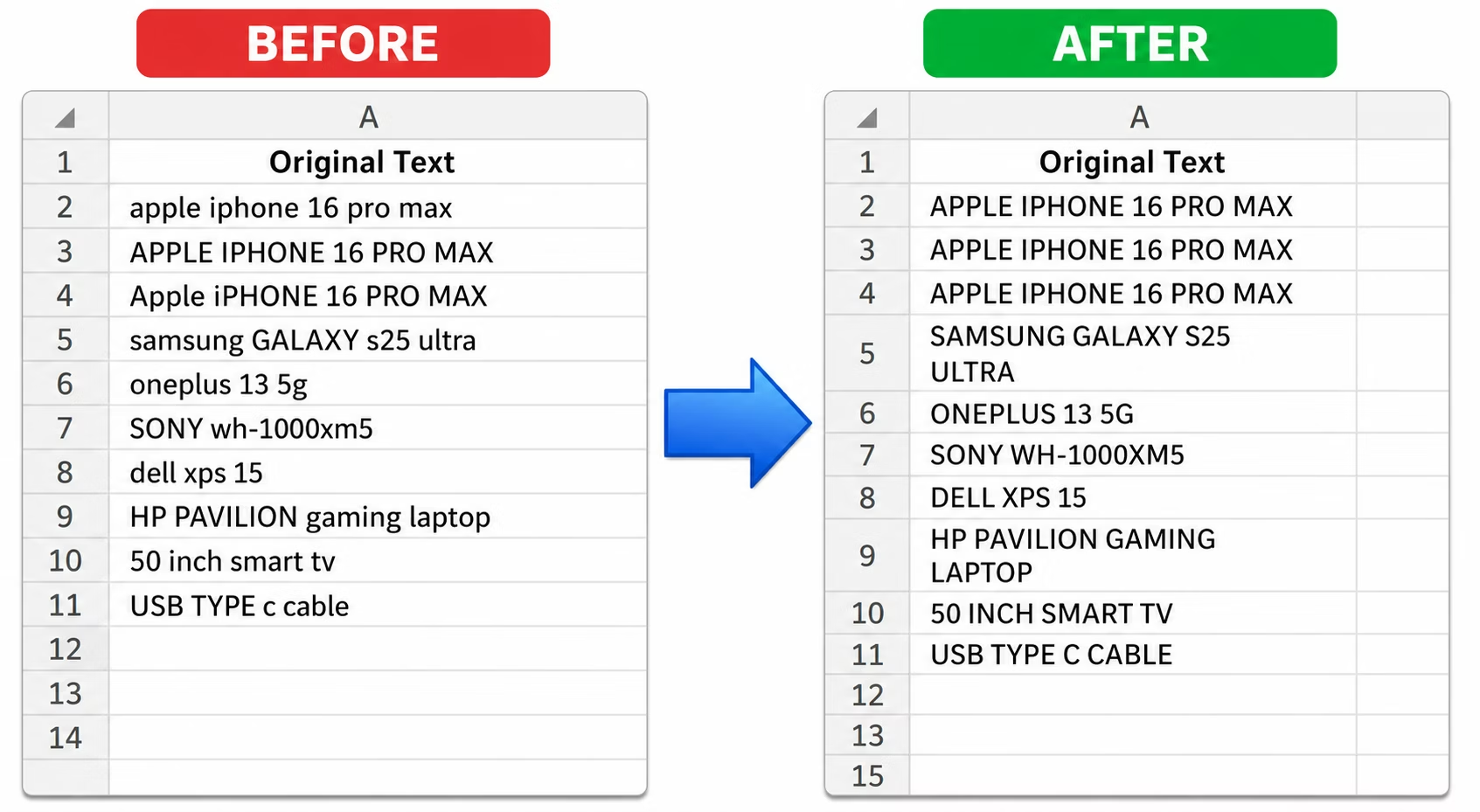
UPPER CASE
Uppercases text cells. Useful for country codes, SKUs and any column where case is noise rather than signal.
lower case
Lowercases text cells, usually what you want before deduplicating tags, usernames or category labels.
Trim column headers
Cleans the header row specifically, since a header with a trailing space breaks every downstream import and named-range reference.
Clear null placeholders
Converts N/A, NULL, None, -, --, unknown and #N/A into genuinely empty cells, so blank detection treats them as empty rather than as data.
All three case options leave email addresses, phone numbers and already-standardized YYYY-MM-DD dates untouched, whichever mode you pick.
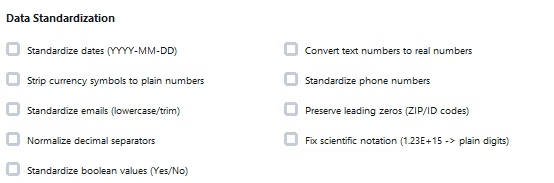
Data Standardization: 9 Value-Consistency Features
These take values that mean the same thing but are written differently and make them match. Each acts only on values it can confidently recognize.
Standardize dates
Recognizes thirteen layouts — day-first, month-first, year-first, dotted European, spelled-out months, compact eight-digit — and rewrites them all to ISO YYYY-MM-DD.
Convert text numbers to real numbers
Turns numeric values stored as text into actual numbers, so they sum and chart instead of silently contributing zero.
Strip currency symbols
Converts values carrying a dollar, euro, pound or yen sign into plain numbers, dropping the symbol and thousands separators.
Standardize phone numbers
Normalizes ten-digit numbers to one bracketed format, tolerating spaces, dots, dashes and a leading country digit. Anything with an unexpected digit count is left alone.
Standardize emails
Trims and lowercases anything that validates as a real address. Values with an at sign that are not valid addresses are left untouched rather than guessed at.
Preserve leading zeros
Flags ZIP codes, employee IDs and product codes beginning with zero as text, so nothing quietly turns 07421 into 7421.
Normalize decimal separators
Converts European-style numbers using a full stop for thousands and a comma for decimals into standard decimal numbers.
Fix scientific notation
Expands long IDs that Excel collapsed into 1.23E+15 back into a full plain digit string, stored as text so no later step can re-collapse it.
Standardize boolean values
Normalizes yes, y, true, no, n and false, in any capitalization, to Yes or No. It deliberately skips bare 1 and 0 text and genuine TRUE/FALSE cells, too easy to confuse with real data.
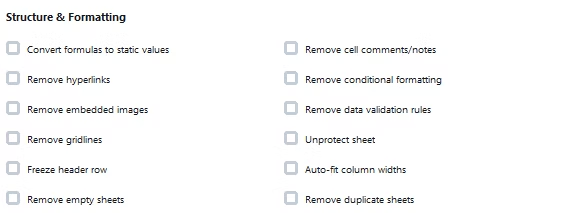
Structure & Formatting: 12 Workbook-Level Features
This category works on the workbook rather than its values: the objects, rules and decorations that make a file heavy, fragile or awkward to hand on.
Convert formulas to static values
Replaces every formula with its last calculated result: a file that opens instantly, carries no broken external references, and cannot recalculate differently elsewhere.
Remove cell comments/notes
Strips review comments and sticky notes, usually the first thing you want gone before a workbook leaves the building.
Remove hyperlinks
Clears link targets while leaving the visible text, so a pasted list of URLs stops catching accidental clicks.
Remove conditional formatting
Deletes formatting rules. Old workbooks accumulate hundreds of overlapping ones that bloat the file and slow scrolling.
Remove embedded images
Strips logos, screenshots and pasted charts that inflate file size without contributing to the data.
Remove data validation rules
Clears dropdowns and input restrictions built for an older version of the sheet that now reject valid entries.
Remove gridlines
Turns off gridline display for a cleaner printed or presented sheet.
Unprotect sheet
Removes protection so the cleaning steps, and you, can edit cells locked by a previous owner.
Freeze header row
Freezes the top row so headings stay visible while scrolling, which makes a long cleaned sheet usable.
Auto-fit column widths
Sizes every column to its longest value, clamped so one long cell cannot stretch a column across the screen.
Remove empty sheets
Deletes sheets with no real content anywhere in their used range, not just one-cell-blank ones, catching sheets left empty after other steps removed their rows.
Remove duplicate sheets
Removes sheets whose contents exactly duplicate an earlier sheet — the residue of one "Move or Copy" too many.
The last two operate across the whole workbook by definition, so they run only in All Sheets mode. Target a single sheet and they are skipped automatically.
The Recommended Preset: 19 Safe Features in One Click
Forty-three checkboxes is a lot of decisions about a file you have not opened. Recommended applies a fixed set of 19 features chosen to be broadly useful and non-destructive.
- Remove hidden rows, remove merged cells
- Remove repeated header rows, remove separator rows
- Remove blank rows, remove duplicate rows
- Fix encoding, trim spaces, collapse whitespace, remove non-printable characters
- Clear null placeholders, trim column headers
- Standardize dates, preserve leading zeros, fix scientific notation, convert text numbers to numbers
- Freeze header row, auto-fit column widths, remove empty sheets
What it leaves out matters as much: no case rewriting, no outlier removal, no boolean normalization — nothing opinionated about what your data should look like. It always produces the same 19 regardless of what is ticked, so it doubles as a reset. Select All and Deselect All sit beside it; Select All turns on one case mode rather than all three, since only one can apply per run.
The Interface, Panel by Panel
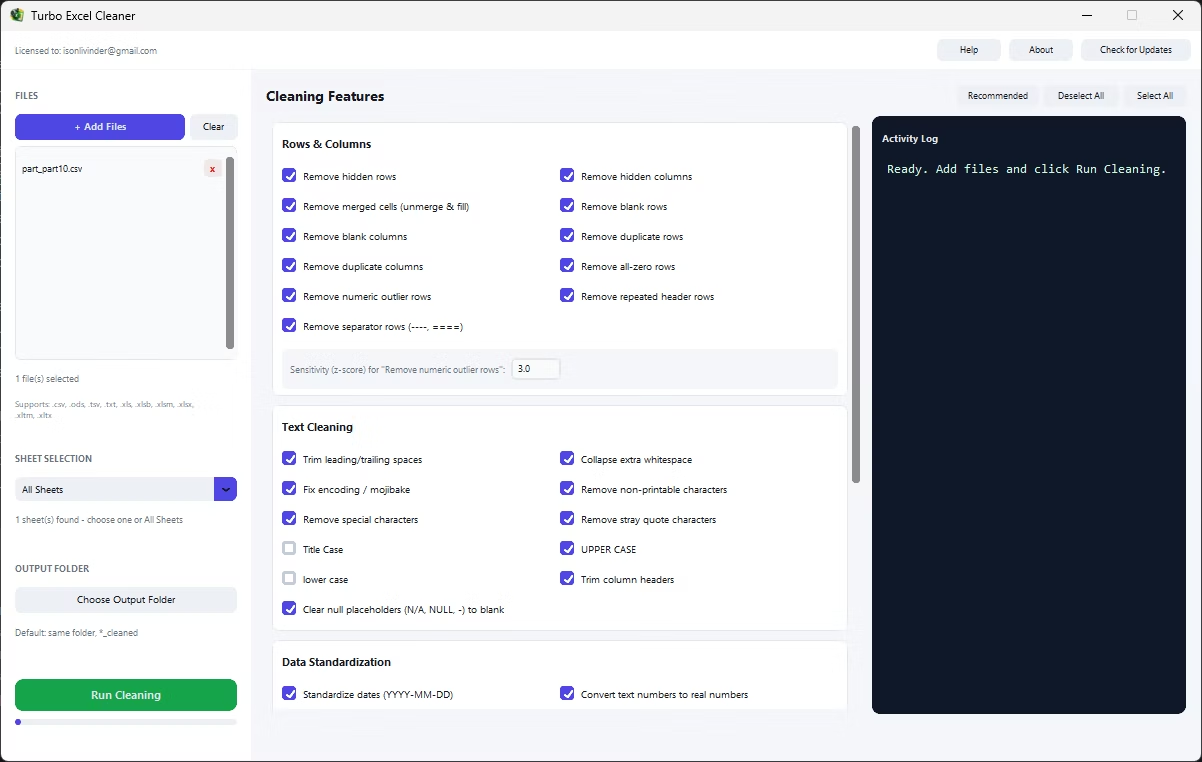
A compact fixed window in three areas: a top bar, a sidebar for input and output, and a main panel holding the feature checklist beside a live activity log.
Top bar
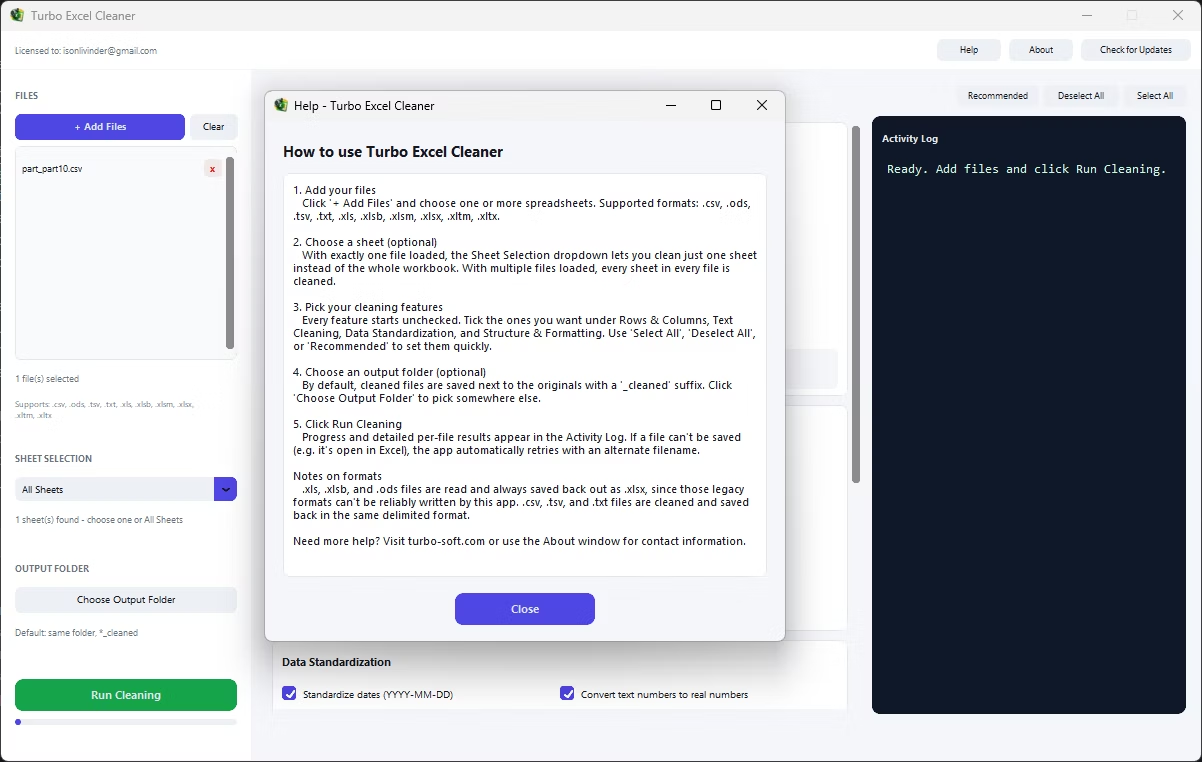
License status on the left — the email the copy is licensed to, or "Unlicensed" — and three buttons on the right: Help for a step-by-step guide, About for version and publisher, and Check for Updates, which opens the product page carrying the latest build.
Sidebar
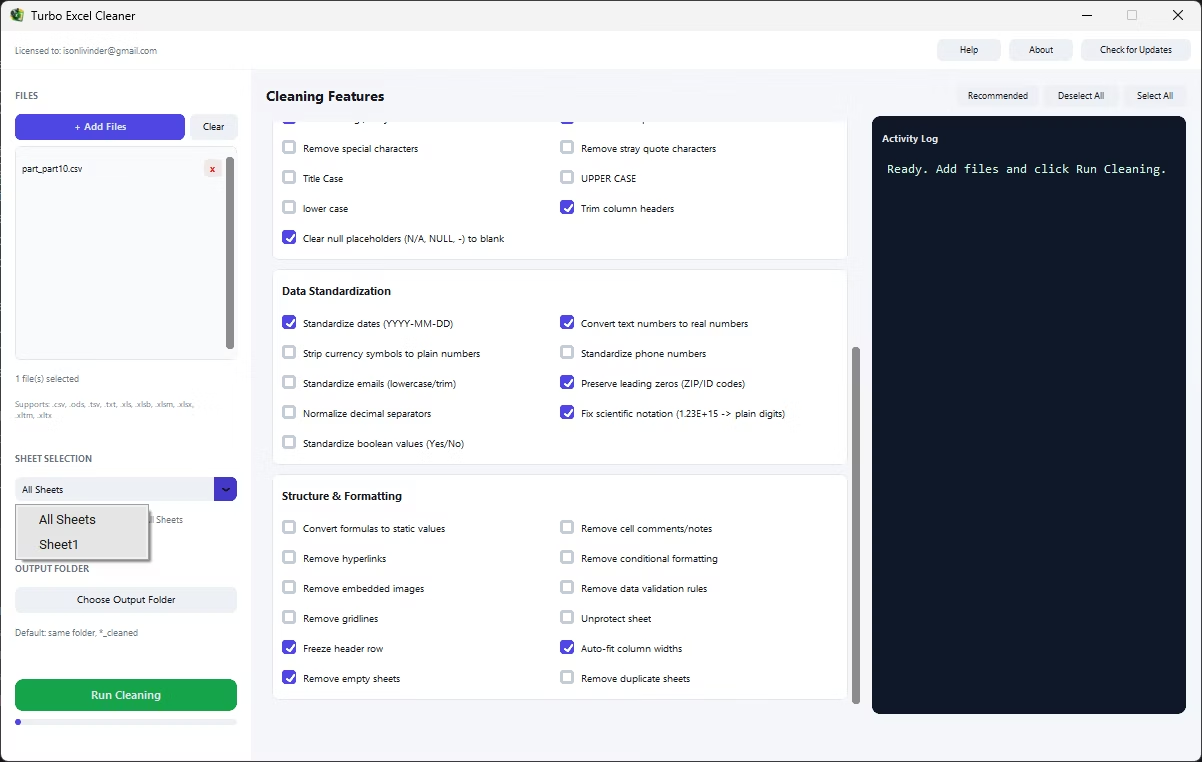
Add Files and Clear, a scrollable queue with a remove control on each entry, a running count, then Sheet Selection and Choose Output Folder. A green Run Cleaning button and progress bar are pinned to the bottom. Add Files rejects unsupported types up front, naming which files were skipped, and never queues the same file twice.
Feature checklist and log
The 43 features sit two per row inside four bordered cards, one per category, with Select All, Deselect All and Recommended in the header. The two features carrying an extra setting render it inside their own card — the z-score box sits directly under outlier removal, so you cannot change a threshold without seeing the feature it belongs to.
A dark panel down the right streams progress: which file is opening, which sheet is being cleaned, and a line per feature reporting how many cells, rows or sheets it actually changed. Features that changed nothing stay quiet, so the log reads as a summary rather than a wall of noise.
Cleaning One Sheet or the Whole Workbook
- Exactly one file loaded: the dropdown fills with that workbook's real sheet names plus All Sheets. Pick one and only that sheet is cleaned; every other sheet is written back untouched.
- Zero or several files loaded: it locks to All Sheets, since per-sheet targeting stops being meaningful across workbooks with different sheet names. Every sheet in every file is cleaned.
- CSV, TSV and TXT: always report a single sheet, since plain text has no concept of multiple sheets.
The dropdown refreshes whenever files are added or cleared, and re-locks the instant a second file joins. If a targeted sheet name does not exist in a given file, that file is skipped with a warning rather than failing the batch.
Why Processing Order Matters
Cleaning operations interfere with each other. Run them in the wrong sequence and you get a file that is technically cleaned and practically wrong, so the pipeline applies a fixed order no matter which boxes you tick.
- Workbook-level sheet removal runs first, so no work is wasted on a sheet about to disappear.
- Merged cells are flattened before any deletion, because merge ranges do not re-anchor reliably when rows shift.
- Repeated headers and separator rows are detected before text cleaning. Both match whole rows against raw content; trim the data rows first and a trimmed duplicate header no longer matches the untrimmed original.
- Text cleaning runs next — encoding, trimming, whitespace, null placeholders, control and special characters, quotes, case, headers.
- Phone and email standardization run before number conversion, or a digit-only phone number is silently turned into a plain number.
- Leading-zero preservation is respected by number conversion, so ZIP and ID columns keep their zeros.
- Row and column reduction runs after text cleanup, so blank and duplicate detection compare cleaned values.
- Formula flattening and formatting cleanup run last, once all content work is done.
One failure never kills the batch. Every cleaning function is self-contained and guarded, so an error on one sheet is caught and logged and the run continues. Twenty good files do not fail because of one bad one.
Text Case Standardization
Case is three plain checkboxes inside the Text Cleaning card rather than an enable toggle paired with a mode dropdown elsewhere. That pairing is easy to get wrong — pick a mode without ticking the second control and you get a cleaned file identical to the original. Here, ticking a mode is the enable action, and ticking one clears the other two.
Title casing is word-aware rather than naive. A naive routine treats an apostrophe as a word boundary and produces O'Brien'S Data; this one treats each letter run including internal apostrophes as one word.
Output Files and Safe Saving
Originals are never modified. Every run produces new files, written beside the source with a _cleaned suffix or into an output folder you choose.
Native Excel formats are saved back as they came in. Legacy binary formats — .xls, .xlsb, .ods — are always converted to .xlsx. Delimited formats keep their own: a CSV returns a CSV, a TSV a TSV.
Two things block a save regularly, neither a bug: a previous cleaned copy is still open in Excel, or Windows Controlled Folder Access is protecting Downloads, Documents and Desktop, which it does by default. Rather than a raw error, the app retries with alternate filenames — _cleaned_2.xlsx, _cleaned_3.xlsx — up to four attempts, logging which it used. Only if all four are blocked does it stop, with one clear message naming the likely causes.
Who Uses It and Why
Bookkeepers and accountants
Monthly bank and ledger exports arrive with separator rows, repeated headers, currency symbols and whatever date format the source system chose.
Operations and data analysts
Before anything reaches a pivot table or a database import, trailing spaces have to go, dates have to be ISO, and null placeholders have to be genuinely null.
E-commerce and inventory teams
Product feeds bring SKUs mangled into scientific notation, leading zeros stripped from codes, and duplicates from overlapping exports.
Researchers and survey teams
Survey exports carry inconsistent yes/no answers, mojibake in free-text responses, and outliers worth flagging before analysis.
Marketing and list owners
Email lists need lowercasing and trimming, phone numbers need one format, and duplicates across merged lists need to go before a send.
IT and migration teams
Moving data between systems means flattening formulas and stripping comments, hyperlinks, validation rules and images across hundreds of files in one pass.
Security and Privacy
Cleaning happens entirely on your machine. Nothing is uploaded, there is no cloud step and no account to create, and once installed the app works with the network disconnected. The only traffic it generates is license verification, which sends your purchase email and key and nothing else. That matters when the files you need to clean are payroll runs or client ledgers.
System Requirements
Minimum
| Operating system | 64-bit Windows 10 or Windows 11 |
| Processor | 64-bit x86 processor |
| Memory | 2 GB RAM |
| Disk space | 300 MB free |
| Display | 1280 × 800 or larger |
| Internet | Required once, for license activation |
Recommended
| Operating system | 64-bit Windows 11 |
| Processor | Modern multi-core 64-bit processor |
| Memory | 8 GB RAM or more for very large workbooks |
| Disk space | 1 GB free, plus room for the cleaned copies |
| Display | 1920 × 1080 |
| Storage | SSD, which materially speeds up large batch runs |
Cleaning holds a workbook in memory, so peak memory use scales with the largest single file rather than with how many files are queued.
App Info
| Application | Turbo Excel Cleaner |
| Version | 1.1 |
| Publisher | TurboSoft |
| Platform | Windows 10 and Windows 11, 64-bit |
| Category | Data tools, spreadsheet cleanup |
| Cleaning features | 43, in four categories |
| Recommended preset | 19 curated safe features |
| Input formats | 10 (.xlsx, .xlsm, .xltx, .xltm, .xls, .xlsb, .ods, .csv, .tsv, .txt) |
| Processing | 100% local, no uploads |
| Licensing | One-time purchase, activated with email and license key |
| Website | turbo-soft.com |
Installation, Activation and Licensing
- Purchase and download the Windows build. No subscription, no recurring fee.
- Launch it. On first run, an activation window asks for the email you purchased with and your license key.
- Activate once. The pair is verified, then cached locally so you never re-enter it.
- Later launches are silent. The cached license is re-verified before the main window opens; the activation window only reappears if that check fails.
- Check your status any time in the top-left corner of the main window.
To switch licenses, delete the cached license file from the app's folder in your local application data directory and relaunch.
Troubleshooting Common Issues
"No features selected"
Everything starts unchecked by design. Tick what you want, or press Recommended.
Run Cleaning is greyed out
Disabled until at least one file is queued, and during a run.
The cleaned file looks identical
Usually the selected features found nothing to change. Each feature reports a count only when it changed something, so a quiet log means a clean input.
Permission denied while saving
The target is open in Excel, or the folder is under Controlled Folder Access. If all four retries fail, close the file or pick another output folder.
A .xls or .ods file will not open
Legacy formats need an extra reader component; the app names the exact package to install.
The sheet dropdown is locked
Per-sheet targeting only applies with one file loaded. Remove the extras and it unlocks.
Case standardization did nothing
Only one mode applies per run, and ticking one clears the other two. Confirm the one you want is still ticked.
Outlier removal removed nothing
Columns with fewer than five numeric values or zero variance are skipped, and 3.0 is conservative. Lower it to widen the net.
Frequently Asked Questions
Does it modify my original files?
No. Every run writes new files, beside the originals with a _cleaned suffix or into a folder you choose. Sources are opened read-only.
Do I have to configure all 43 features myself?
No. Recommended applies 19 safe, non-destructive features in one click. Individual features stay available for anything more specific.
Why does everything start unchecked?
So nothing runs unless you asked for it. A cleaner that arrives with defaults already applied changes your data before you have decided what should change.
Can I clean just one sheet instead of the whole workbook?
Yes, when exactly one file is loaded. Every other sheet is written back untouched. With several files loaded the control locks to All Sheets.
Does it handle CSV files, not just Excel?
Yes. CSV, TSV and plain text are fully supported with delimiter and encoding auto-detection, and saved back in the format they arrived in.
What happens to my .xls or .ods files?
Read and always written back out as .xlsx, since those legacy formats cannot be reliably written. The cleaning itself is identical.
Does the order features run in matter?
A great deal, which is why the app fixes it for you. Merged cells are flattened before any deletion, header detection runs before text cleaning, and phone and email standardization runs before number conversion. Your checkbox order has no effect.
Is my data uploaded anywhere?
No. All cleaning happens locally. The only network call the app makes is license verification.
Will one bad file ruin the whole batch?
No. Each feature and each file is handled independently. Failures are logged and the run continues, with a summary at the end.
Can it standardize dates written several different ways in one column?
Yes. It recognizes thirteen layouts, including day-first, month-first, dotted European and spelled-out months, and rewrites them all to ISO YYYY-MM-DD.
Will it destroy my ZIP codes or product IDs?
Not with leading-zero preservation enabled, which marks those values as text so number conversion cannot strip the zeros. The scientific notation fix covers long IDs collapsing into exponent form.
Is it a subscription?
No. A one-time purchase activated with your email and license key, after which the app keeps working locally on that machine.
Ready to clean your spreadsheets automatically, in bulk, fully offline?