Rather than listing every technical difference between XLOOKUP and VLOOKUP, this page focuses on practical decision-making: given a specific situation, which function should you actually reach for in Excel? The right answer depends less on which function is objectively "better" and more on who else needs to open the file and what your data actually looks like.
The final section covers what to do when neither function's strict matching behavior is the real obstacle - which, in practice, is more often the case than people expect.
- File will be opened by people on Excel 2019 or older → use VLOOKUP for compatibility
- You're building a new workbook and everyone has Microsoft 365 → use XLOOKUP for its flexibility
- The return column sits to the left of the lookup column → XLOOKUP handles this directly; VLOOKUP needs the columns rearranged or an INDEX/MATCH substitute
- You need several columns returned per lookup → XLOOKUP can return an array in one formula; VLOOKUP needs one formula per column
- You're just cleaning up someone else's existing workbook → match whichever function is already used throughout the file for consistency
In a lot of real support requests, the person asking "XLOOKUP or VLOOKUP?" is actually running into a matching problem that neither function solves - a mismatch in spacing, capitalization, or accented characters between the two files being compared. Switching from VLOOKUP to XLOOKUP won't fix a #N/A caused by "Bob Smith " not equaling "Bob Smith", because both functions require an identical character match by default.
If #N/A errors persist after switching functions, or after double-checking FALSE/exact-match settings, the underlying cause is very likely a text formatting mismatch rather than the function itself being the wrong choice.
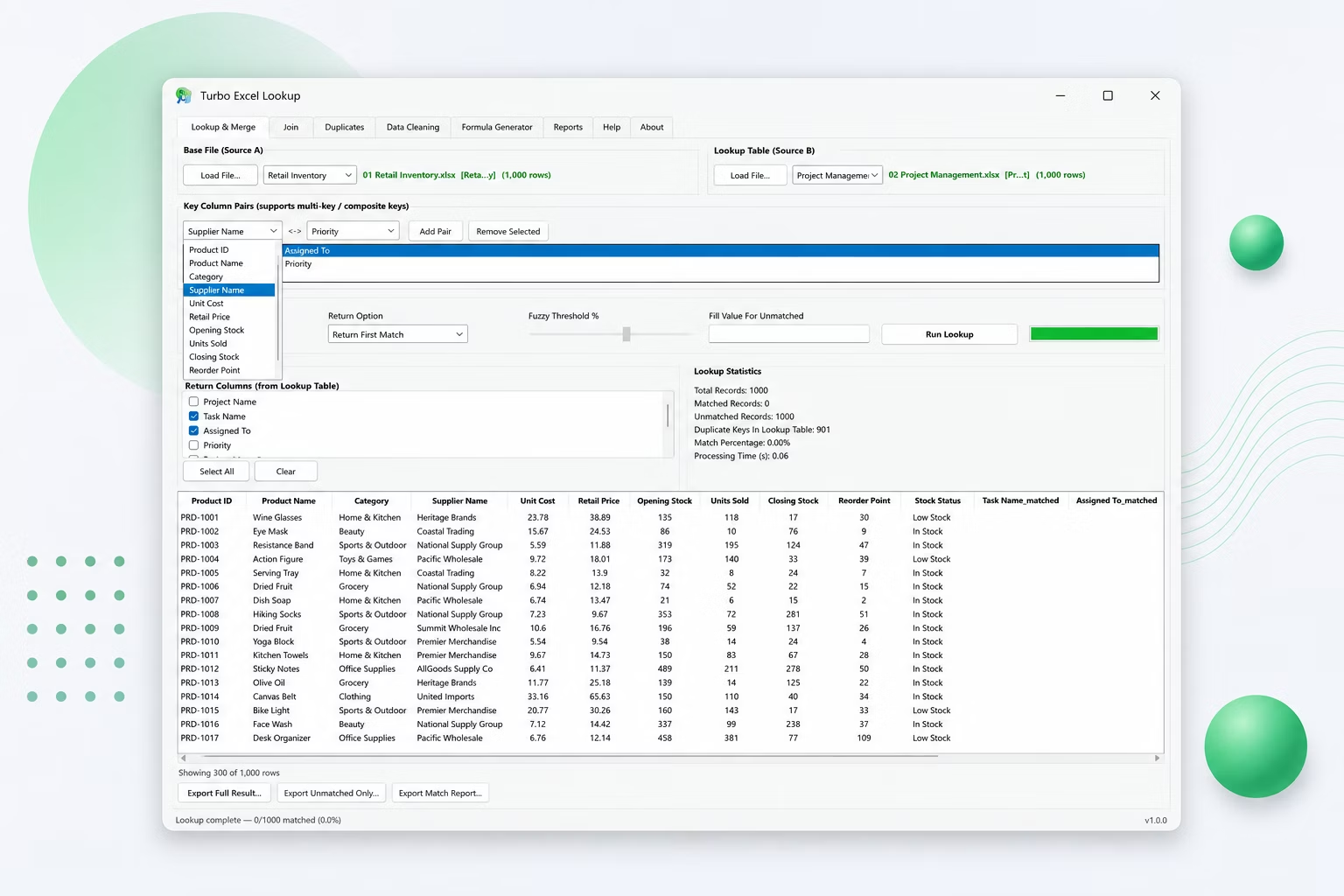
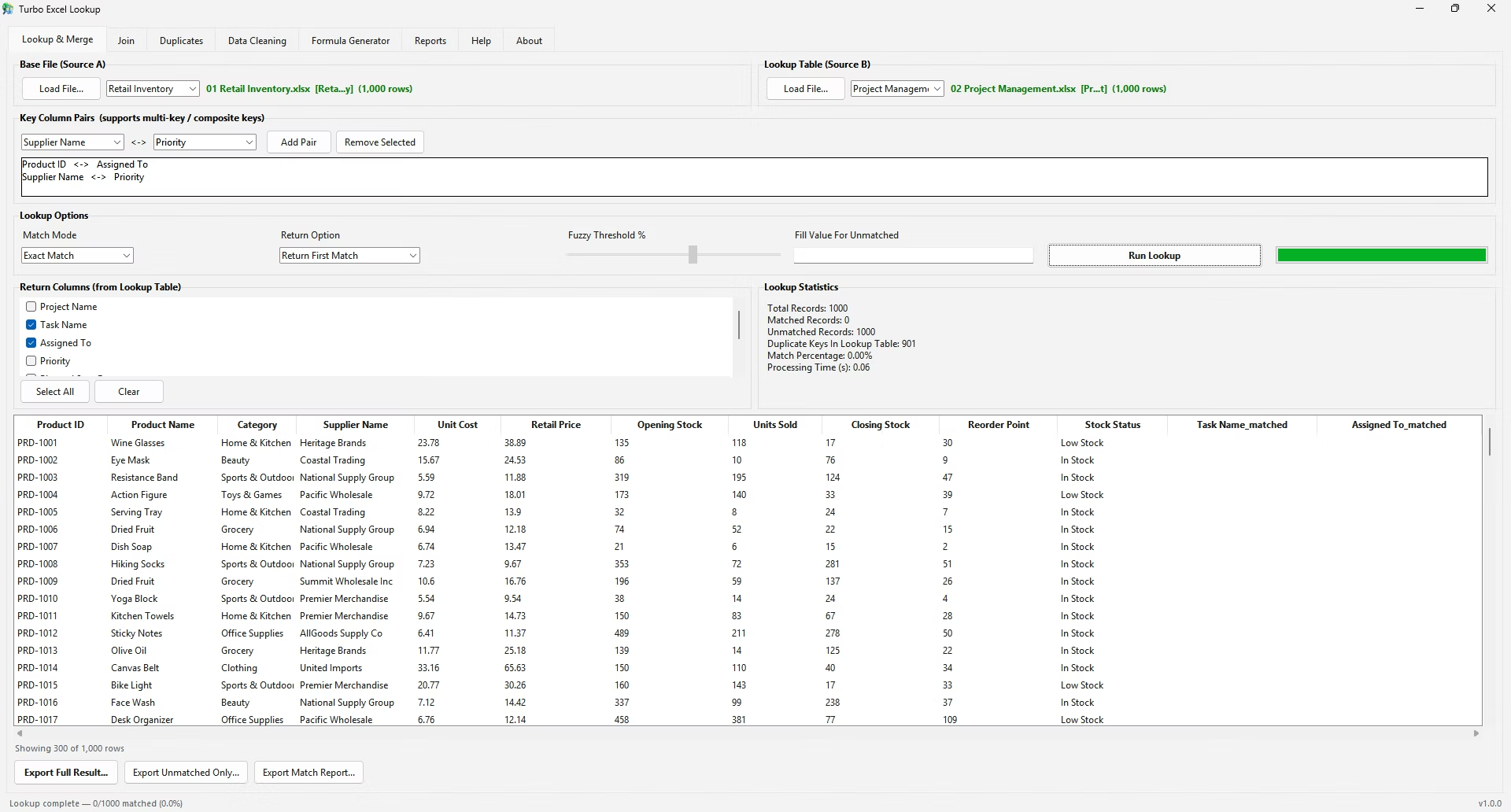
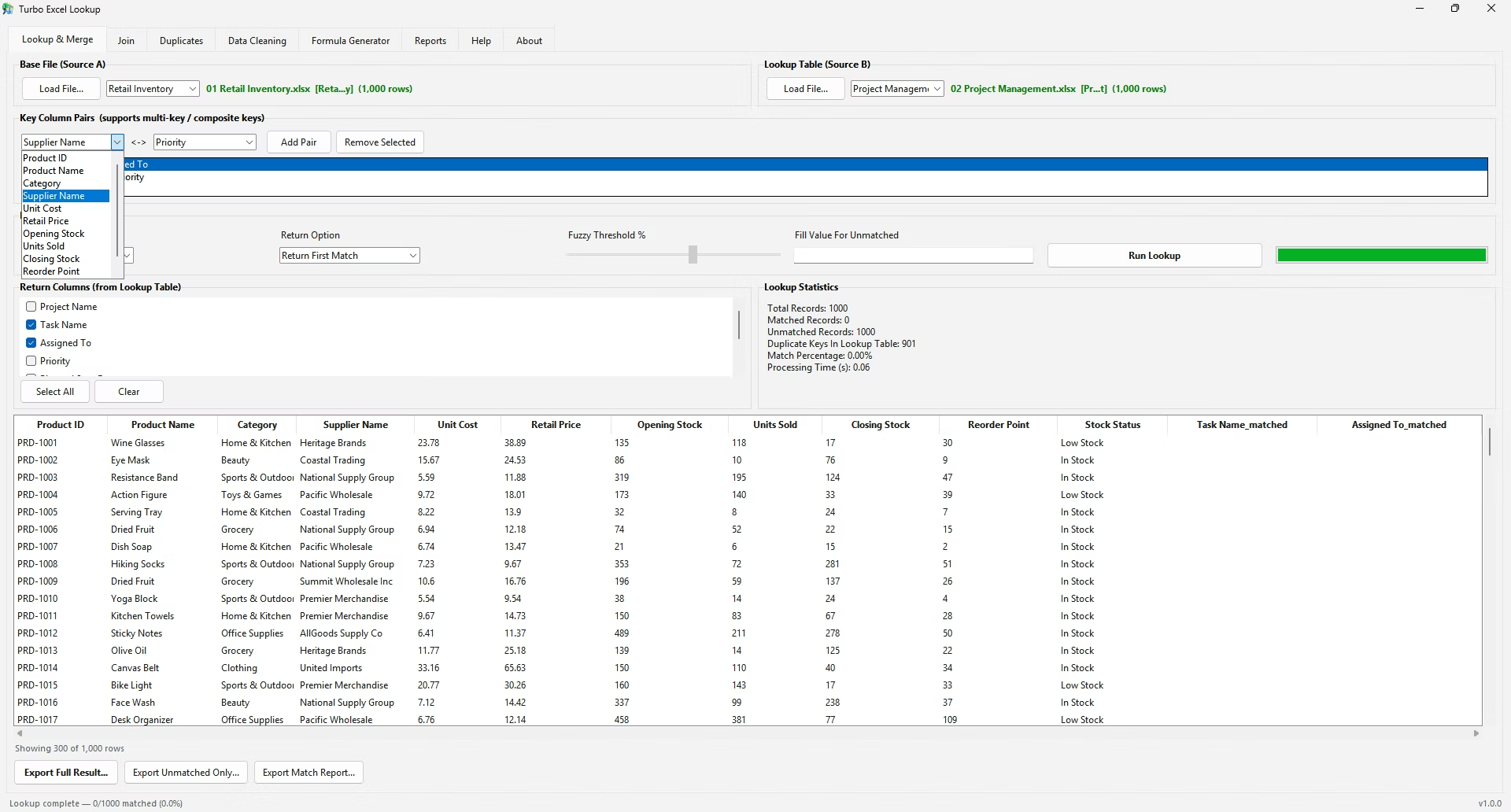
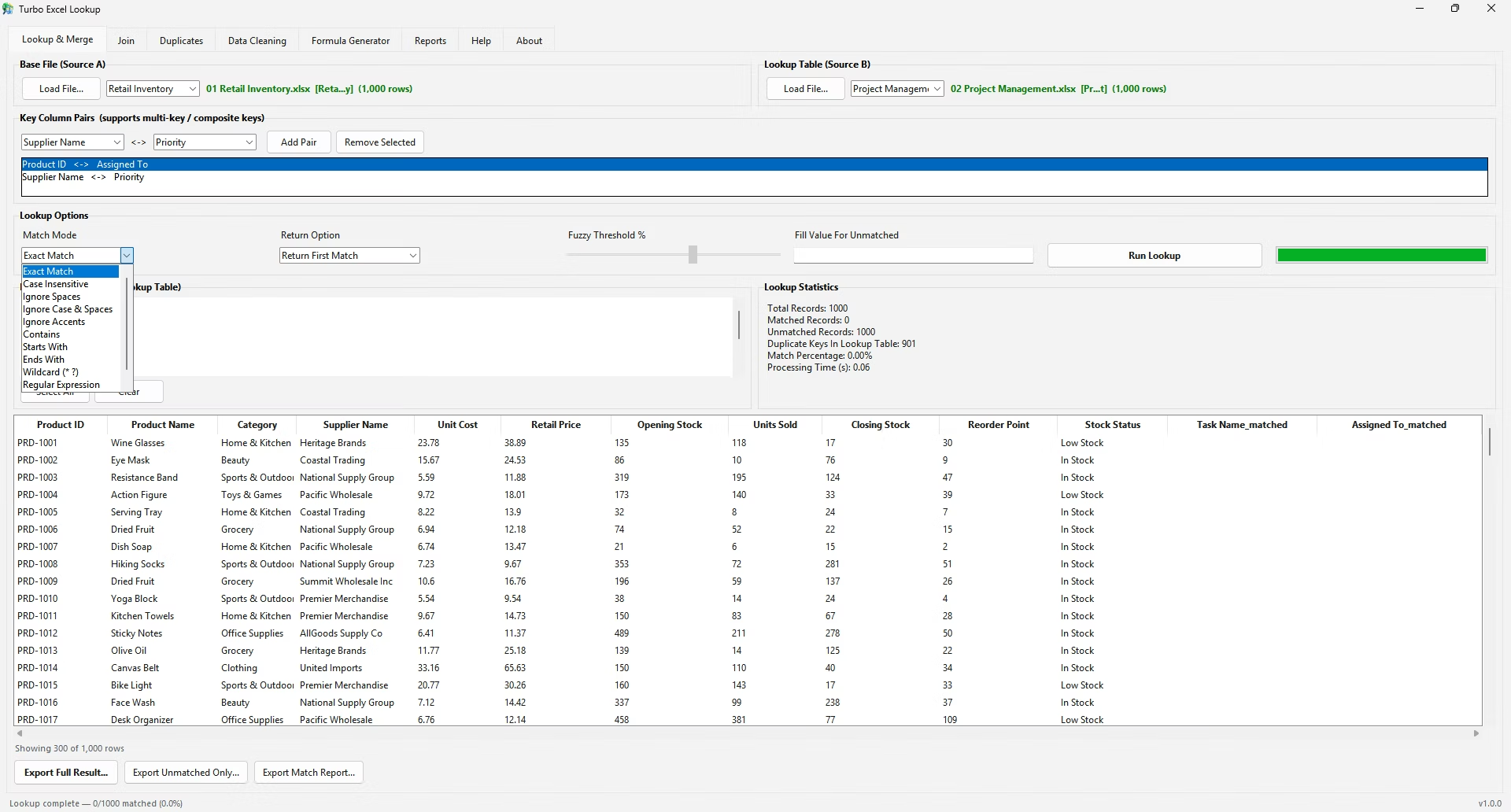
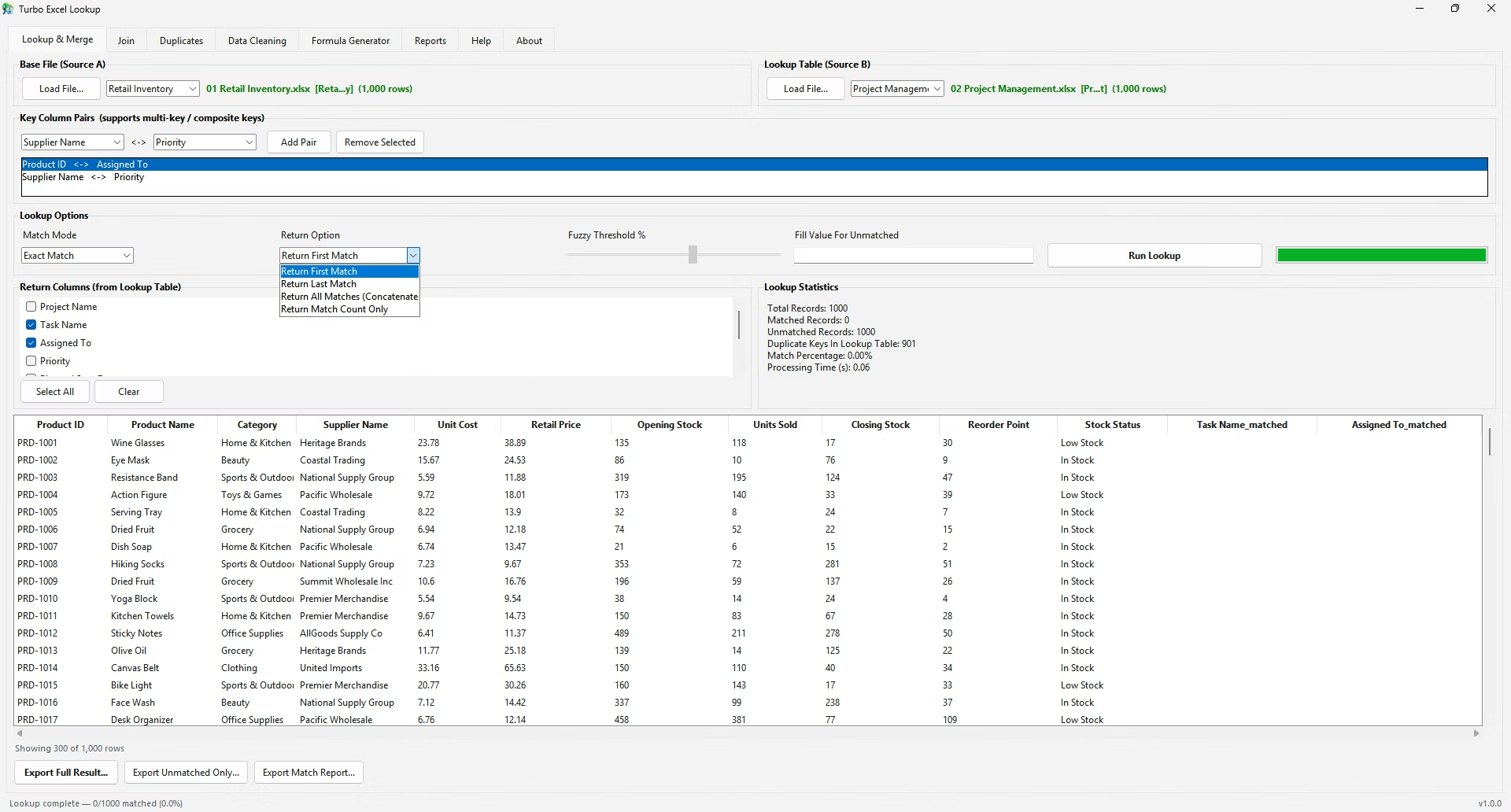
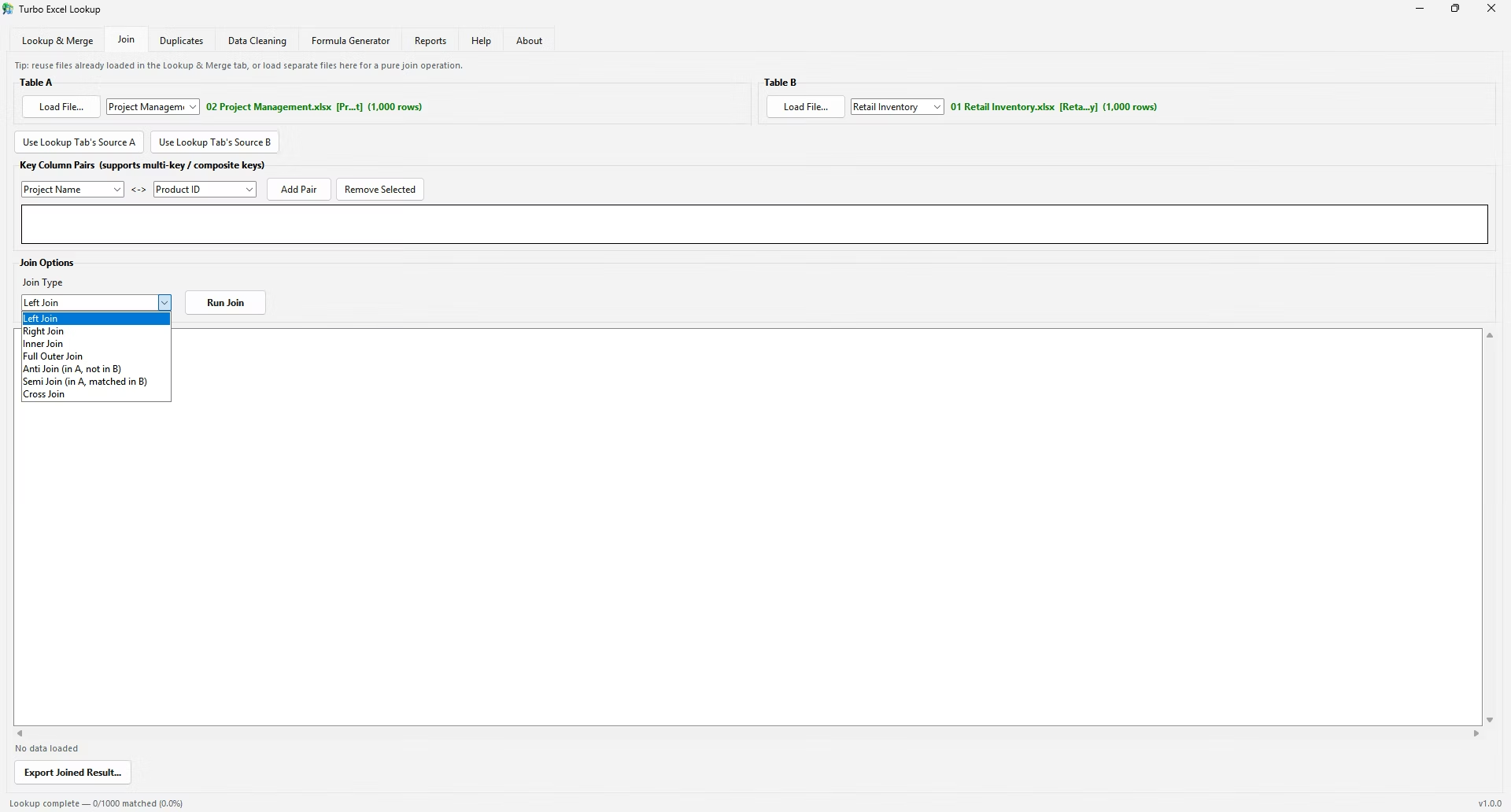
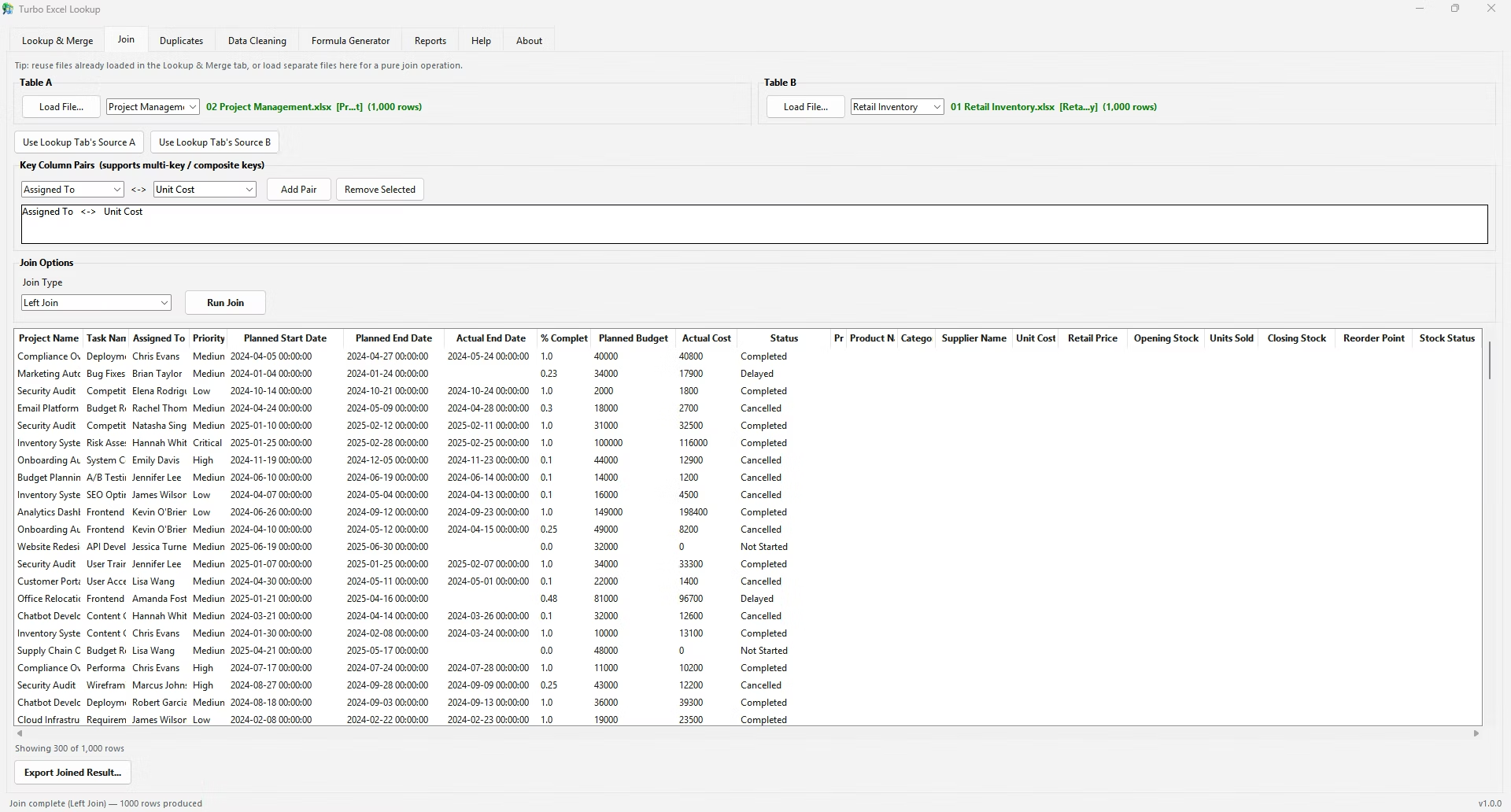
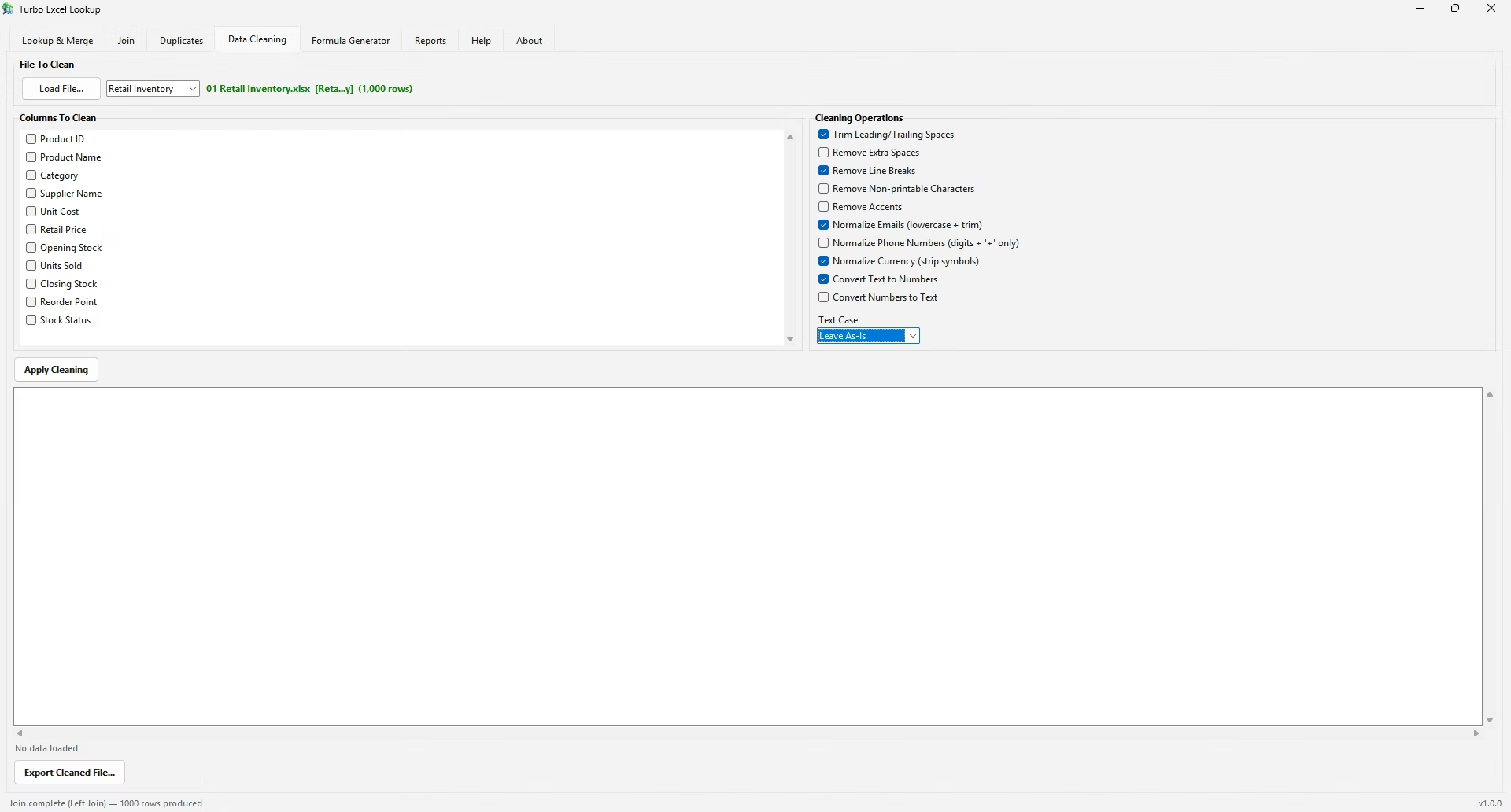
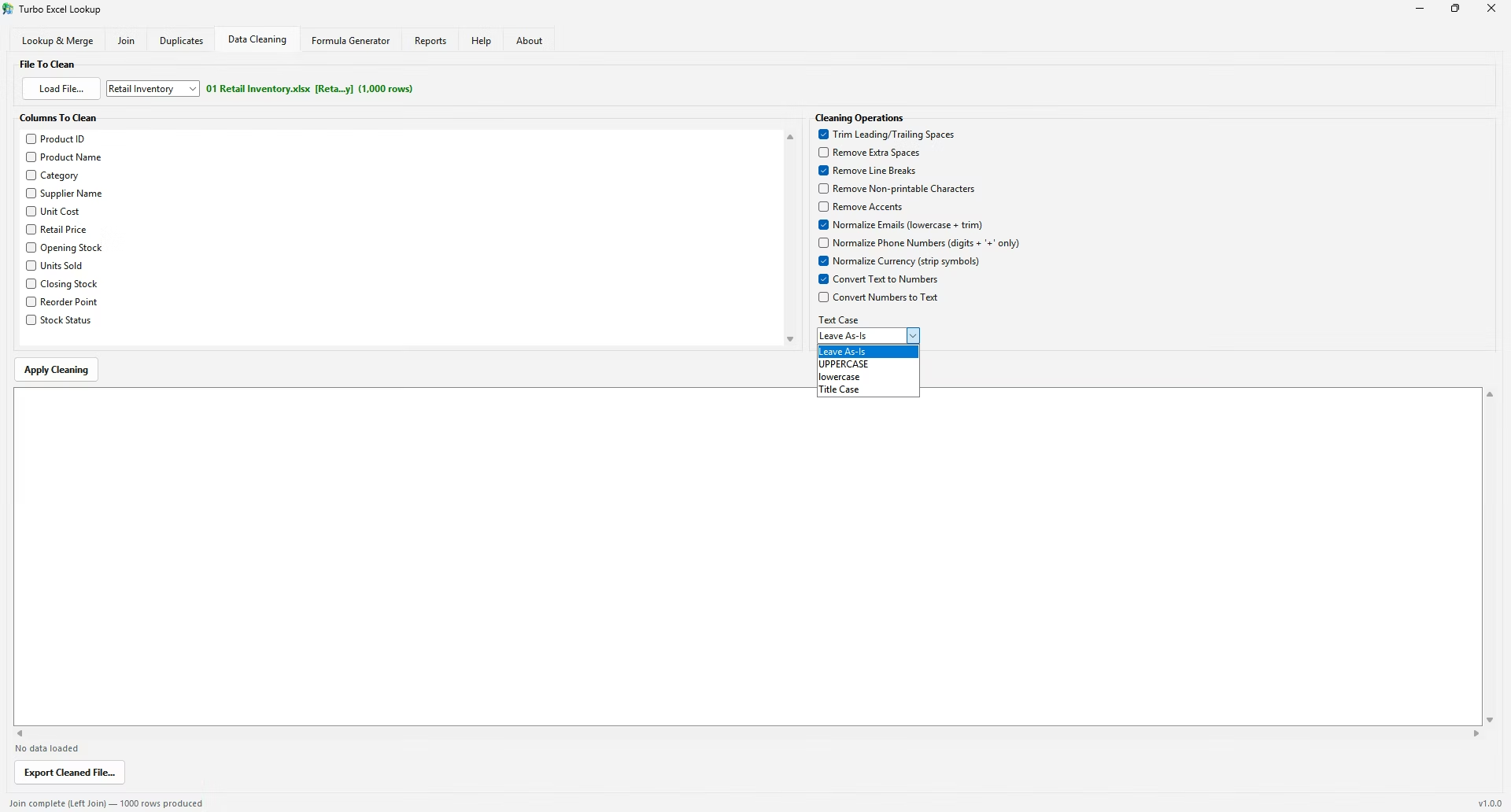
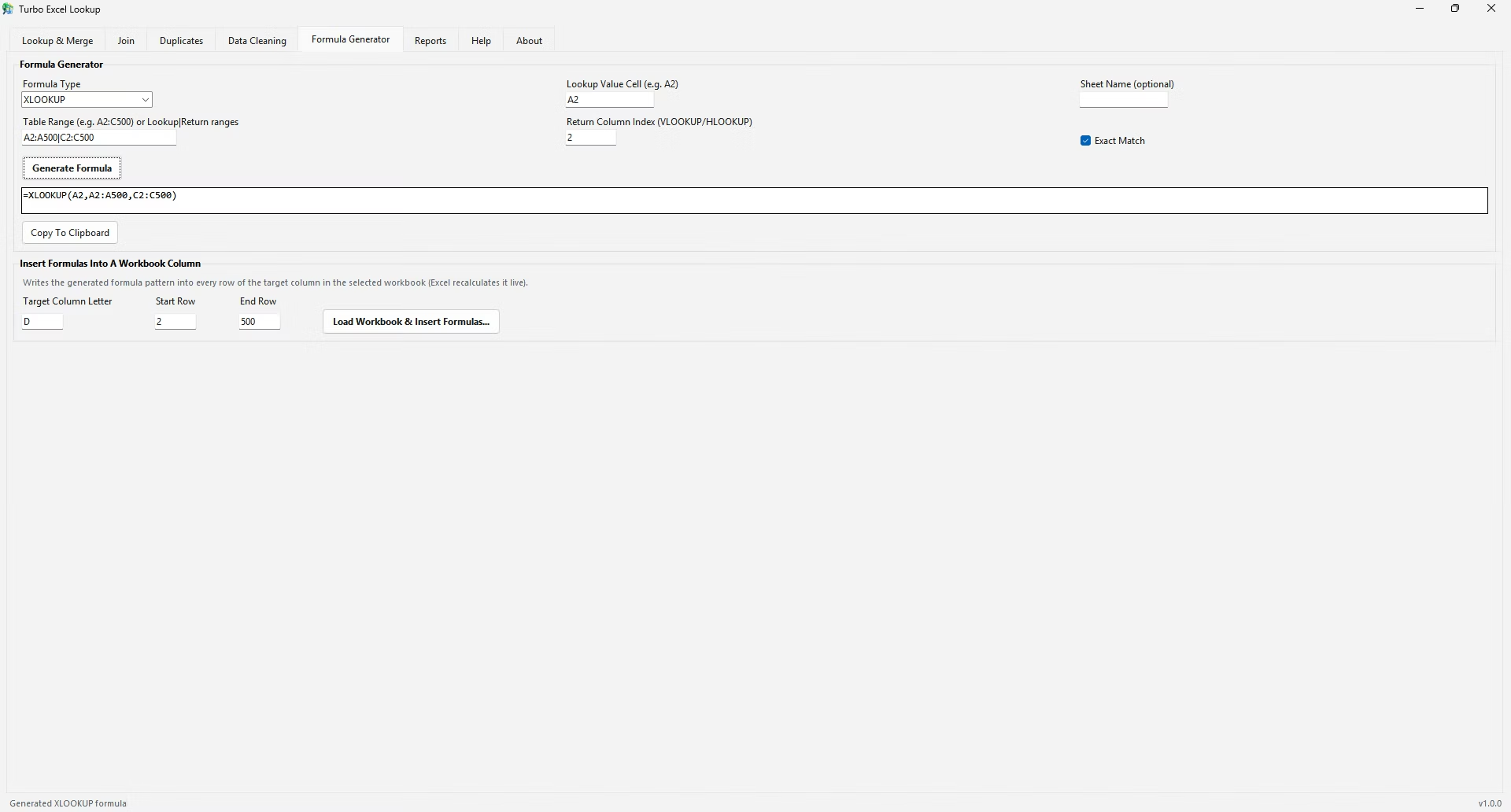
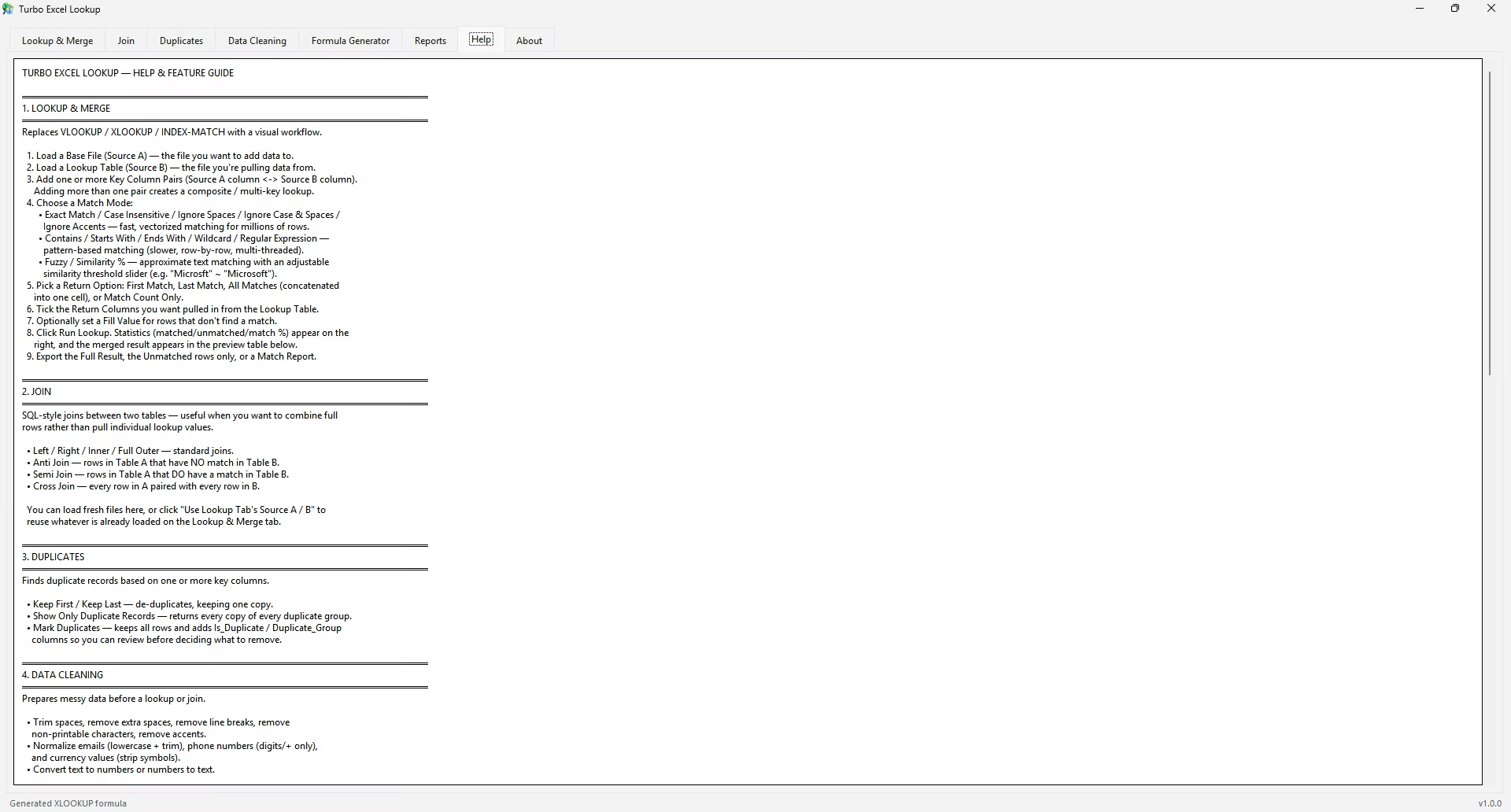
Turbo Excel Lookup removes this decision for day-to-day matching work, since its Lookup & Merge tab already has XLOOKUP's flexibility (any column order, multiple return columns) built in by default, and it works the same regardless of Excel version because it runs outside Excel entirely. When the underlying issue is messy text rather than function choice, its Case Insensitive, Ignore Spaces, Ignore Case & Spaces, Ignore Accents, and Fuzzy match modes solve that directly - something neither VLOOKUP nor XLOOKUP does on their own.
Beyond raw capability, it's worth considering who will maintain a workbook after you. XLOOKUP formulas tend to be easier for a future editor to audit, since lookup_array and return_array are visually distinct ranges rather than one combined table_array requiring a column count to interpret. VLOOKUP formulas, by contrast, require mentally counting into the table_array to understand what col_index_num 4 actually refers to, which is a small but real barrier when someone unfamiliar with the sheet needs to troubleshoot it later.
Neither consideration applies to Turbo Excel Lookup's saved lookup configuration, since anyone reopening the app sees the actual column names selected in each Key Column Pair, rather than a numeric position that requires cross-referencing back to the source sheet to interpret.
Before deciding which function to add to an existing workbook, it's worth checking what's already used elsewhere in the file - pressing Ctrl+F and searching for "VLOOKUP(" or "XLOOKUP(" across the workbook (with "Look in: Formulas" selected) reveals the existing convention quickly. Matching whatever convention is already established keeps the workbook easier to maintain than introducing a second function purely on personal preference.
Microsoft has continued actively developing around XLOOKUP and the broader dynamic array functions, while VLOOKUP remains supported for compatibility but isn't receiving new capability. For anyone building a workbook expected to be maintained for years, this trajectory is worth factoring in - not because VLOOKUP is going away, but because newer Excel features are increasingly designed with dynamic-array-style functions like XLOOKUP in mind first.
Treat the XLOOKUP-versus-VLOOKUP decision as situational rather than absolute - compatibility needs, existing workbook conventions, and the shape of your data all factor in. If #N/A errors persist regardless of which function you choose, the underlying issue is very likely inconsistent text formatting rather than the function itself.
If everyone on my team has Microsoft 365, is there any reason to still use VLOOKUP?
Mainly familiarity and consistency with existing formulas in a shared workbook - technically XLOOKUP would be the more capable choice in that situation.
Will switching from VLOOKUP to XLOOKUP fix my #N/A errors?
Only if the cause was a column-order or missing-value-handling issue. If the cause is inconsistent text formatting between the two data sources, both functions will still fail to match.
Can I use both functions in the same workbook?
Yes, there's no restriction against mixing VLOOKUP and XLOOKUP formulas in the same file, though keeping one convention makes the workbook easier for others to follow.
How do I know if my #N/A errors are a spacing or casing issue?
Selecting a lookup value and a table value that look identical, then comparing their character length or running them through Turbo Excel Lookup's Ignore Spaces mode, will usually reveal whether hidden characters are the cause.
Which function is easier for someone else to audit later?
XLOOKUP tends to be easier since its ranges are self-describing, while VLOOKUP's col_index_num requires counting into the table_array to understand what it refers to.
Does Turbo Excel Lookup save a lookup configuration for later reference?
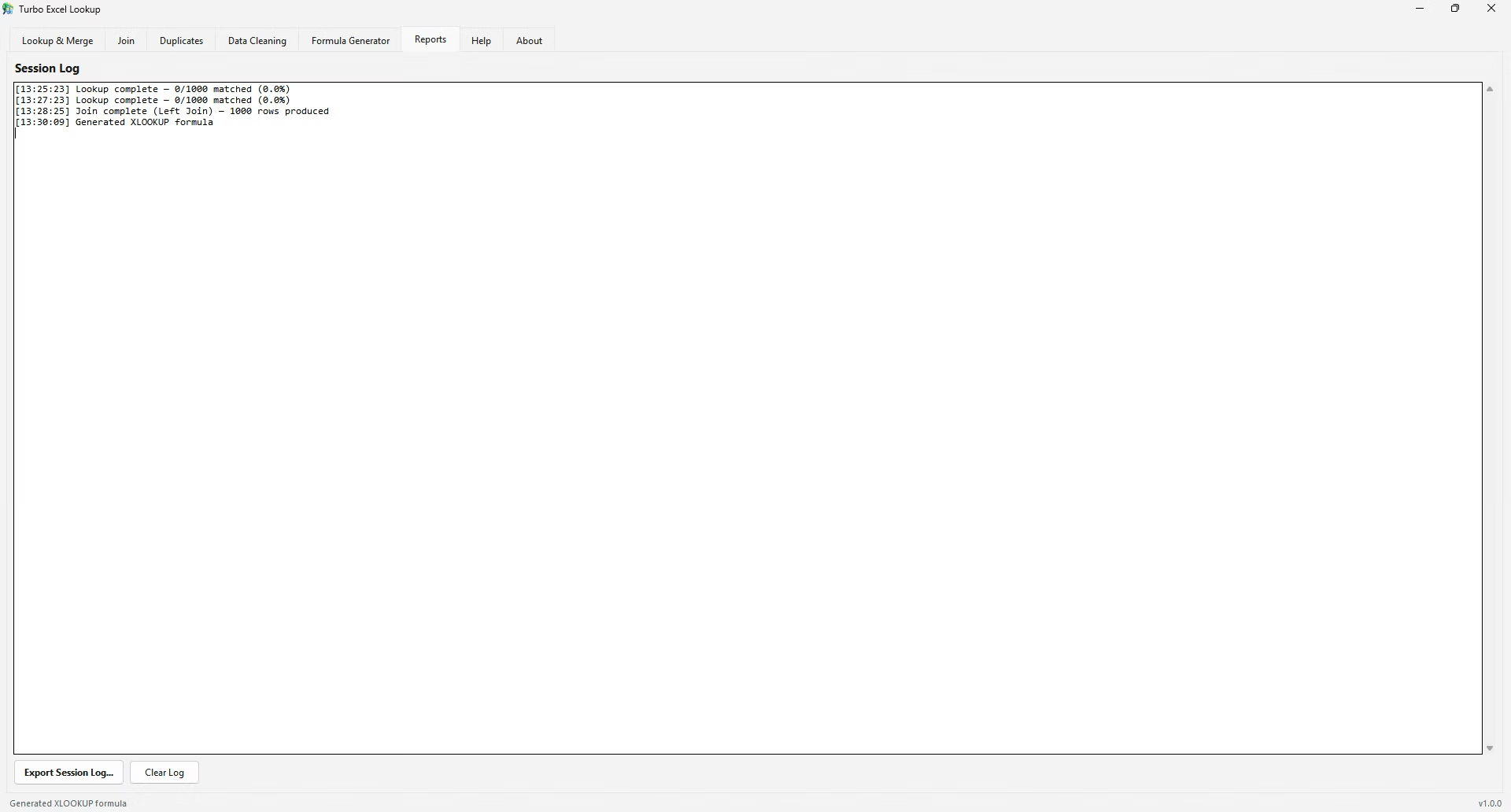
Yes, the Reports tab logs the columns, match mode, and settings used for each lookup performed in a session.
How can I quickly check which lookup function a workbook already uses?
Use Ctrl+F with "Look in: Formulas" selected and search for "VLOOKUP(" or "XLOOKUP(" to see which convention is already established in the file.
Is VLOOKUP being phased out by Microsoft?
No, VLOOKUP remains fully supported for compatibility, but Microsoft's newer feature development has focused more on dynamic-array functions like XLOOKUP rather than extending VLOOKUP further.
Ready to stop fighting #N/A errors and match your spreadsheets visually?