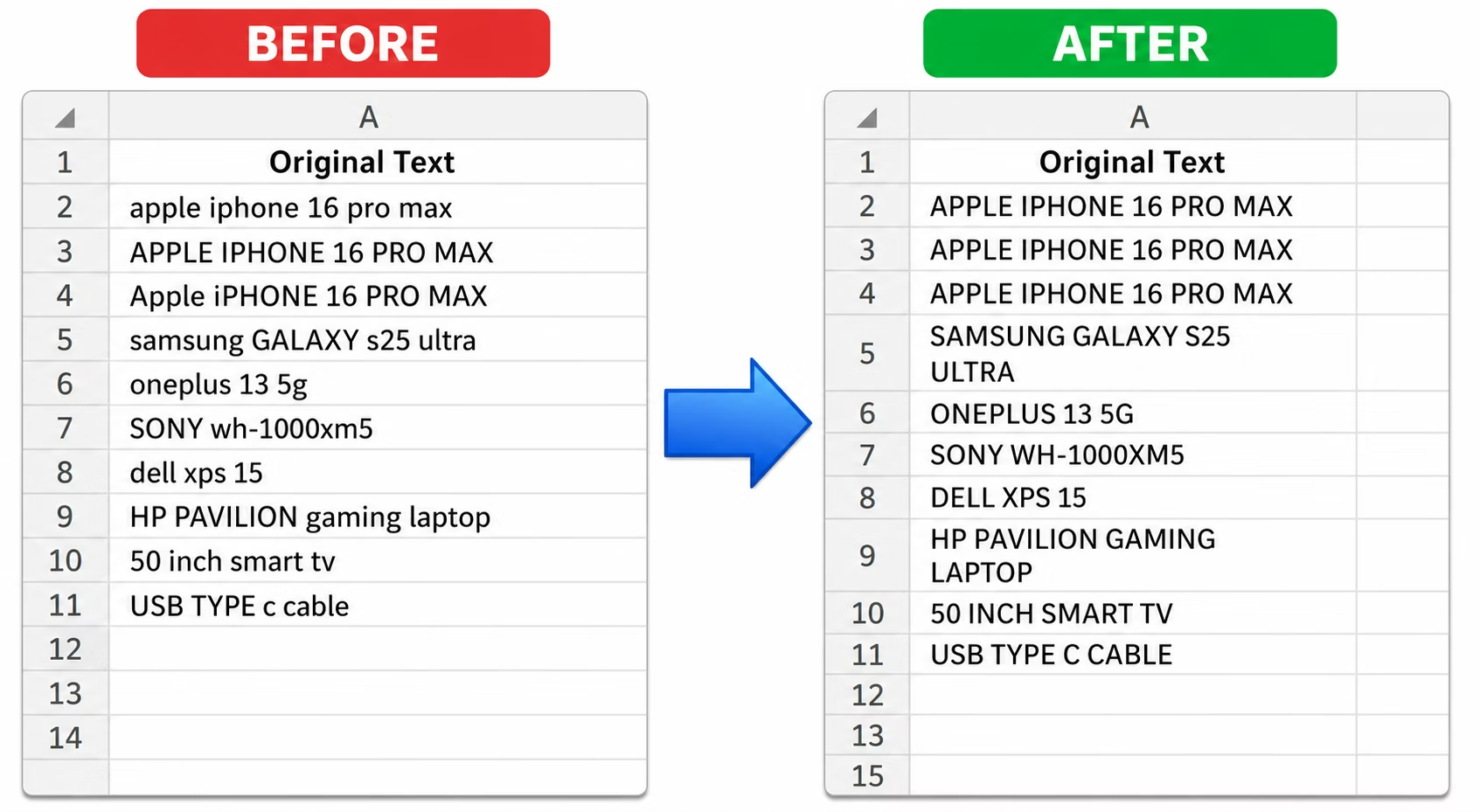
Some workflows require every cell in a spreadsheet to use uppercase text - product codes, reference IDs, and certain government or compliance forms are common examples where mixed-case entries are technically invalid even though they display fine. When data has been typed by different people over time, or merged from multiple sources, capitalization tends to become inconsistent, with some entries in Title Case, others in lowercase, and others already in upper case.
Converting the entire sheet to uppercase in one pass removes that inconsistency and produces a dataset that matches strict formatting requirements or simply looks uniform when printed or exported.


Excel does not have a single button that uppercases an entire sheet in place - the built-in UPPER function only works when applied to a helper column, after which you must copy the results and paste them back as values over the original cells. This works but takes several extra steps: create the helper column, fill the formula down, copy the results, paste as values, then delete the helper column. It is also easy to accidentally uppercase a column of numbers or dates, which UPPER simply passes through unchanged, or to miss a sheet in a multi-sheet workbook.
For a single small table this is manageable, but repeating it across many worksheets or many files quickly becomes tedious and error-prone.
One common mistake is applying UPPER to an entire sheet indiscriminately, which can uppercase text inside notes, comments, or reference columns that were never meant to be touched. It is safer to select the specific range that actually needs conversion rather than the whole worksheet. Another pitfall is forgetting the Paste Special Values step, which leaves the original mixed-case text sitting underneath a helper column that references it, rather than genuinely replacing it.
- Insert a helper column next to the data you want to convert.
- In the first cell of the helper column, enter =UPPER(A1), adjusting the cell reference as needed.
- Fill the formula down to cover every row in your range.
- Select the helper column, copy it, then right-click the original column and choose Paste Special > Values.
- Delete the helper column once the original text has been replaced with uppercase values.
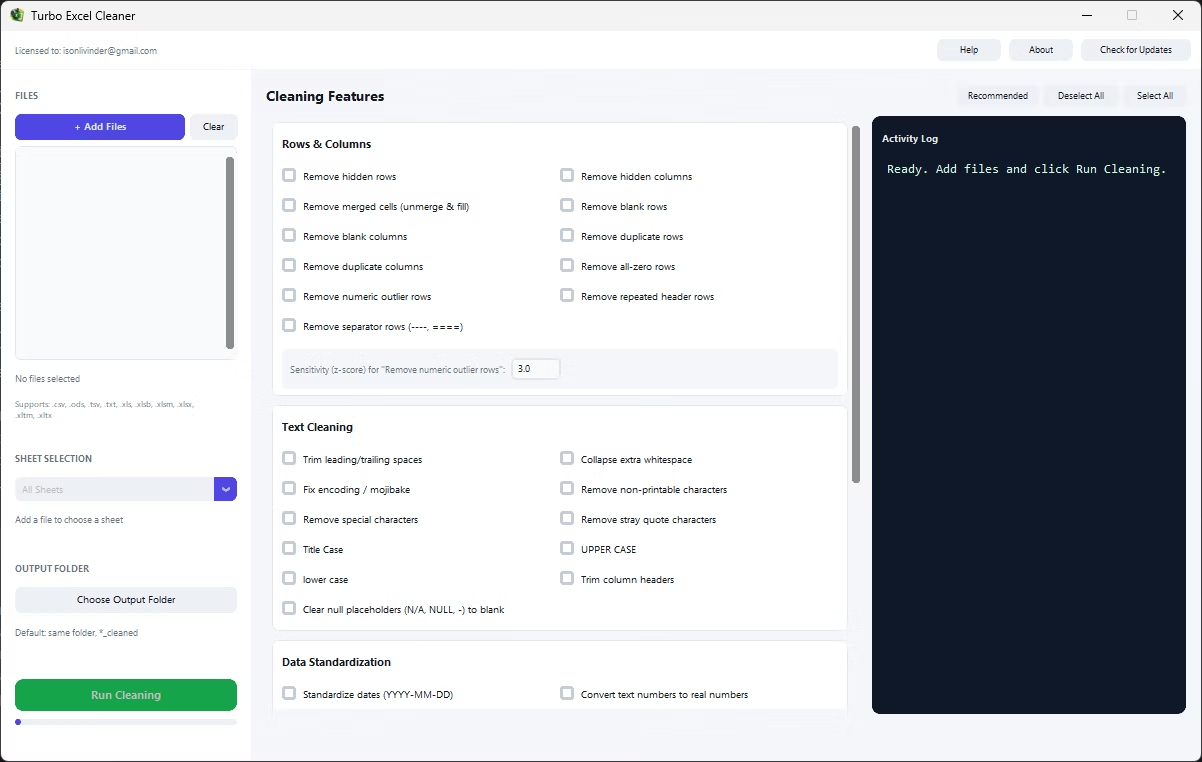
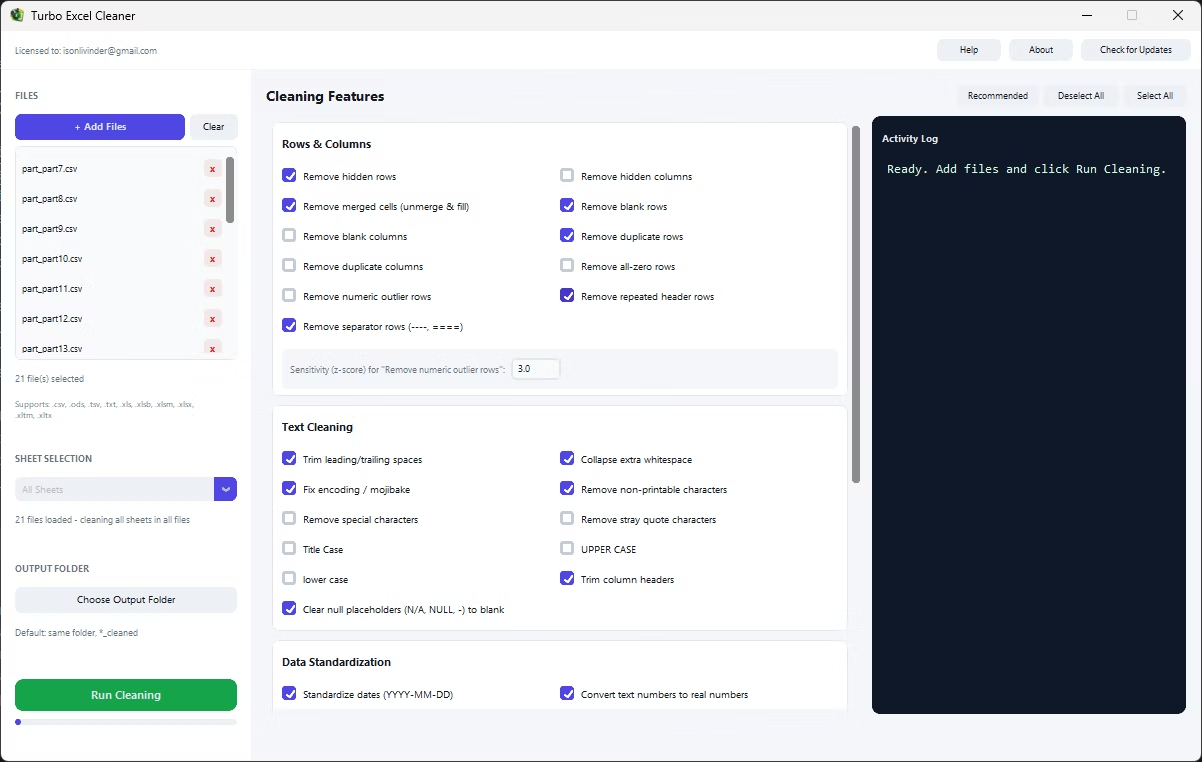
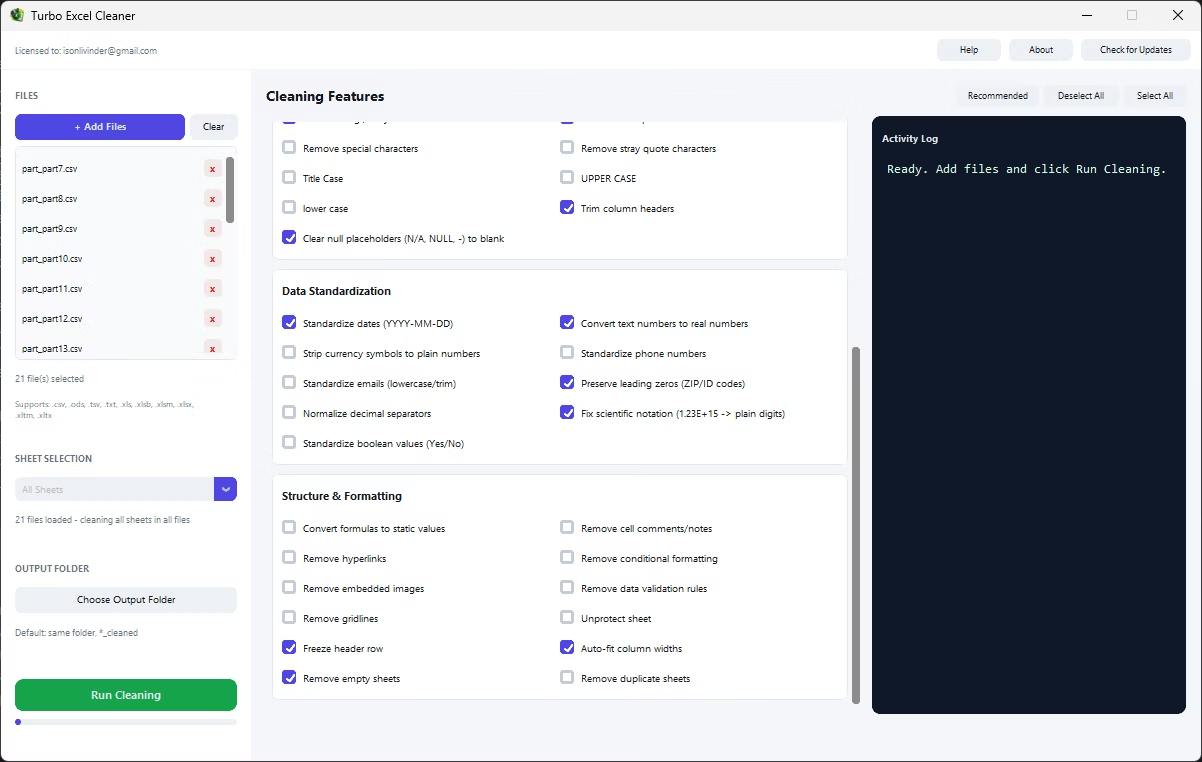
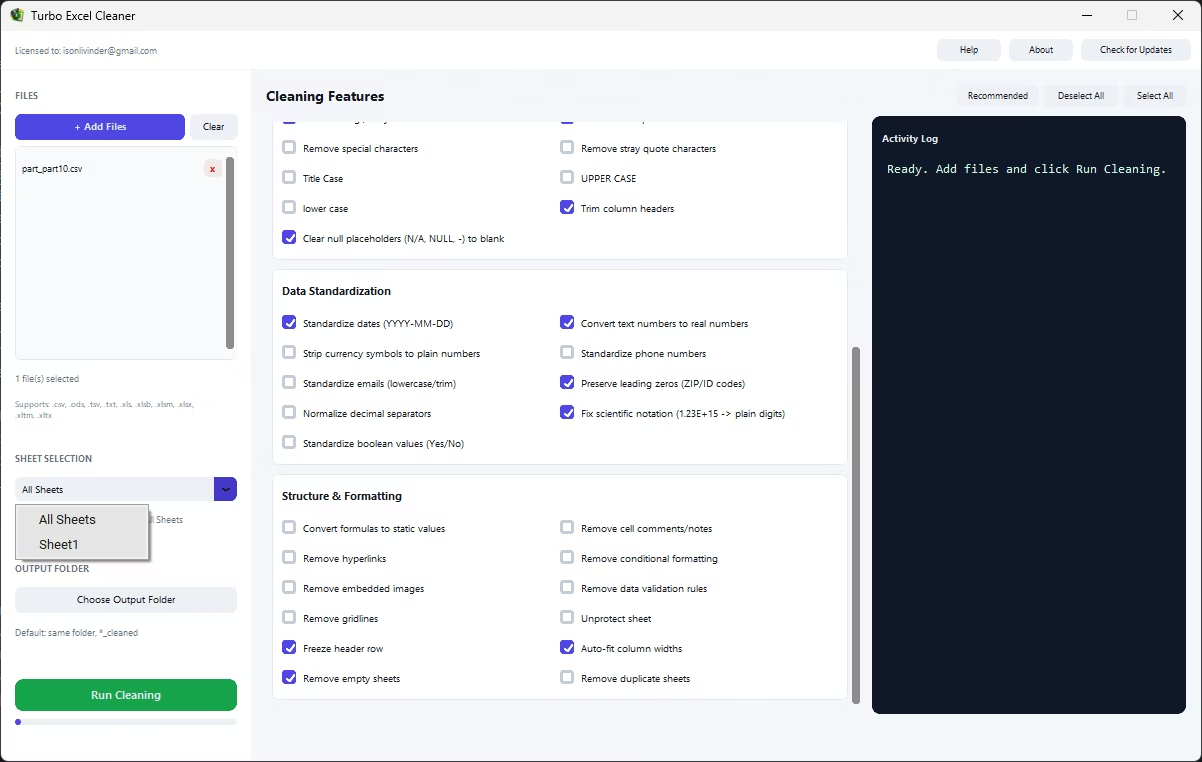
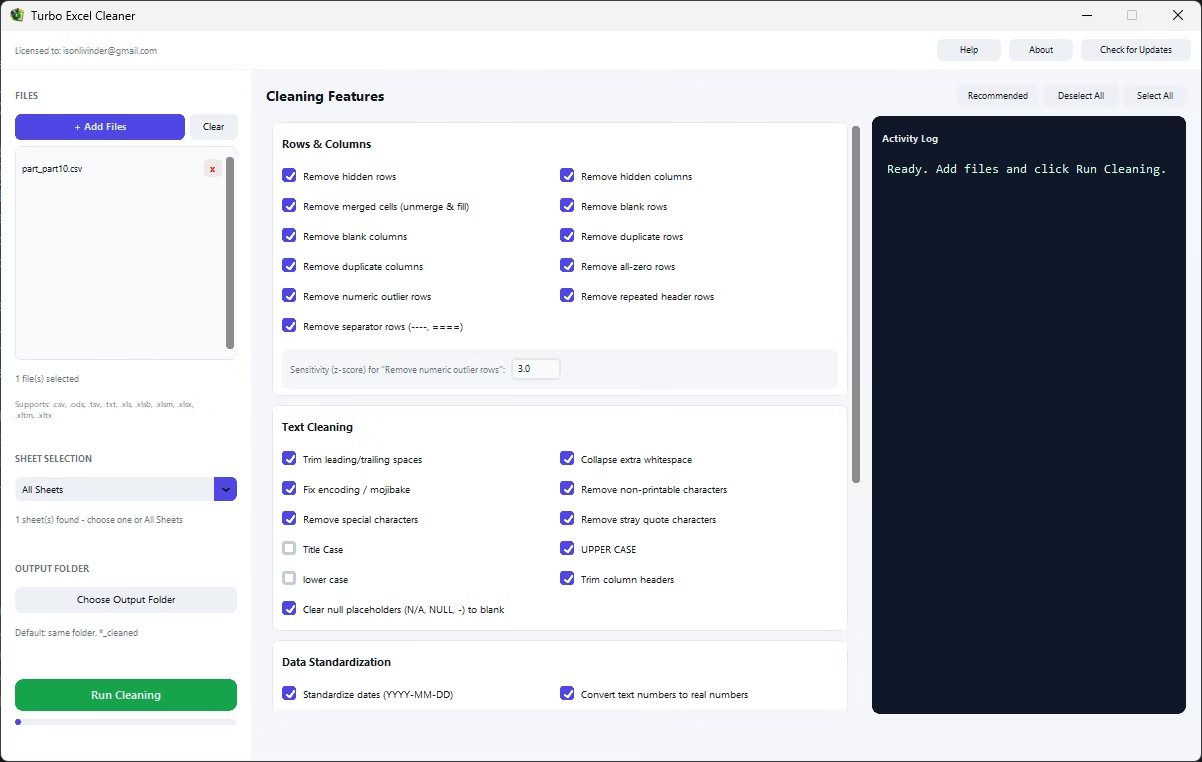
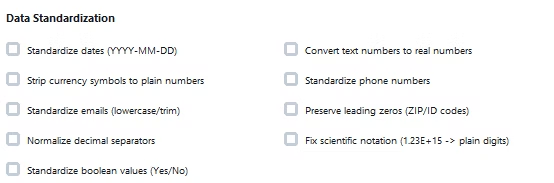
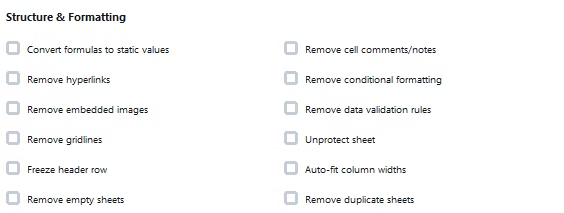
Turbo Excel Cleaner includes an Uppercase text-cleaning feature that applies UPPER-style conversion directly to your text cells, without the helper-column workaround, and does it across every sheet in every workbook you queue up. It intelligently targets text content so numeric values, dates, and formulas are left alone, which avoids the common mistake of accidentally mangling a numeric column.
Because it is one of 43 selectable cleaning operations, you can combine uppercase conversion with whitespace trimming or duplicate removal in the same batch run, producing a fully standardized dataset in a single pass instead of a multi-step manual process repeated file by file.
- One-click Uppercase conversion for text cells across a whole sheet
- Automatically skips numbers, dates, and formulas
- Processes every sheet in every file in the batch
- Combine with 42 other cleaning features in the same run
- Works on XLSX, XLS, XLSB, ODS, CSV, TSV, and TXT files
Will uppercasing affect formulas in my sheet?
No, text-case conversion targets the displayed text values in cells and leaves formulas and their calculated results alone unless the formula itself outputs text.
Can I uppercase just one column instead of the whole sheet?
Turbo Excel Cleaner applies its case-conversion features across the sheet, but the manual UPPER-formula approach described above lets you target a single column if that is all you need.
Does this work on CSV files as well as Excel workbooks?
Yes, the same uppercase conversion applies to CSV, TSV, and TXT files, which are saved back out in their original delimited format.
Ready to clean your spreadsheets in bulk, offline, with full privacy?