Blank rows show up in spreadsheets for all sorts of reasons - a filter was cleared and left gaps, an export from another system inserted spacer rows between records, or someone deleted the contents of a row without deleting the row itself. Wherever they come from, blank rows quietly break things. They can stop AutoFilter and sorting from working correctly, cause charts to plot a gap, and confuse formulas like SUM or VLOOKUP that expect a continuous range of data.
Removing blank rows keeps a table looking and behaving like a proper data range rather than a collection of loosely related fragments, which matters whether you are preparing a report, importing data into another system, or simply trying to keep a shared file tidy.
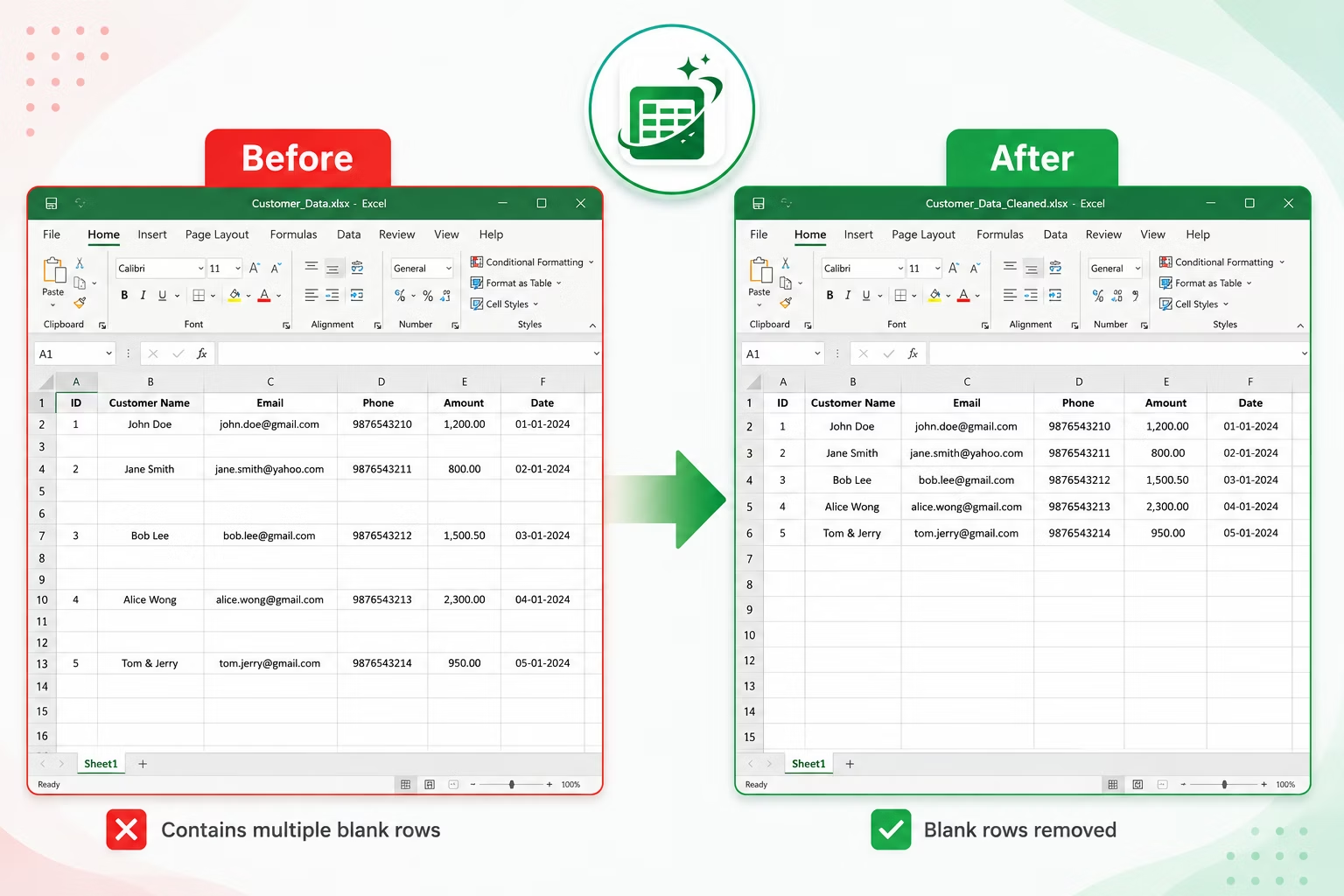


Before deleting anything, it helps to confirm which rows are genuinely empty versus rows that merely look empty because of formatting or a single stray space character. A row that contains a single space in one cell will not be picked up by Excel's Go To Special "Blanks" feature the same way a truly empty row will, so a quick visual scan or a helper formula such as COUNTA can save you from an incomplete cleanup.
Once you are confident a row has no meaningful data in it anywhere across the used range of the sheet, it is safe to remove.
A common mistake when removing blank rows is using Go To Special Blanks on a range that includes formulas returning an empty string, since Excel treats that as a value, not a true blank, and the row will not be selected even though it looks empty. It is also easy to forget that deleting rows shifts everything below upward, which can silently break a formula elsewhere in the workbook that referenced a specific row number rather than a named range.
- Select the full data range, then press Ctrl+G and click Special.
- Choose Blanks and click OK - Excel selects every empty cell in the range.
- Go to the Home tab, click Delete, then choose Delete Sheet Rows.
- Review the result carefully, since this method deletes any row containing at least one blank cell, which can remove rows that are only partially empty.
- Save the file once you have confirmed the remaining rows are correct.
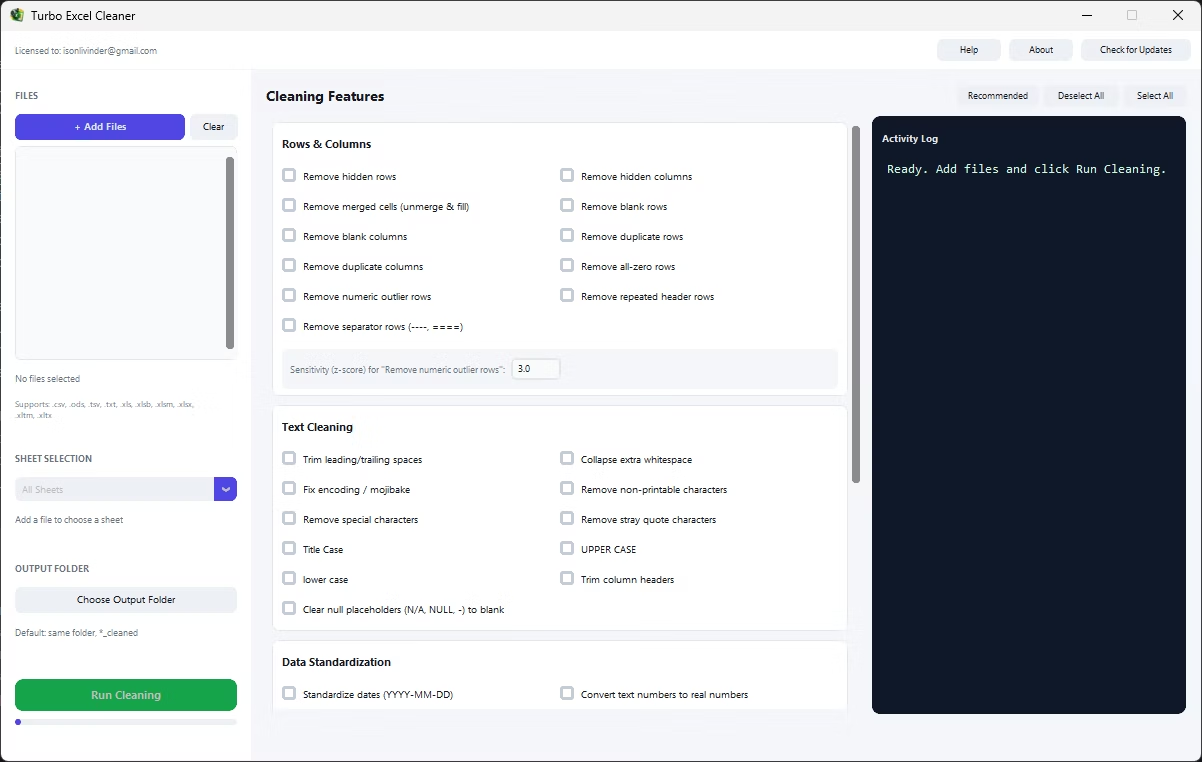
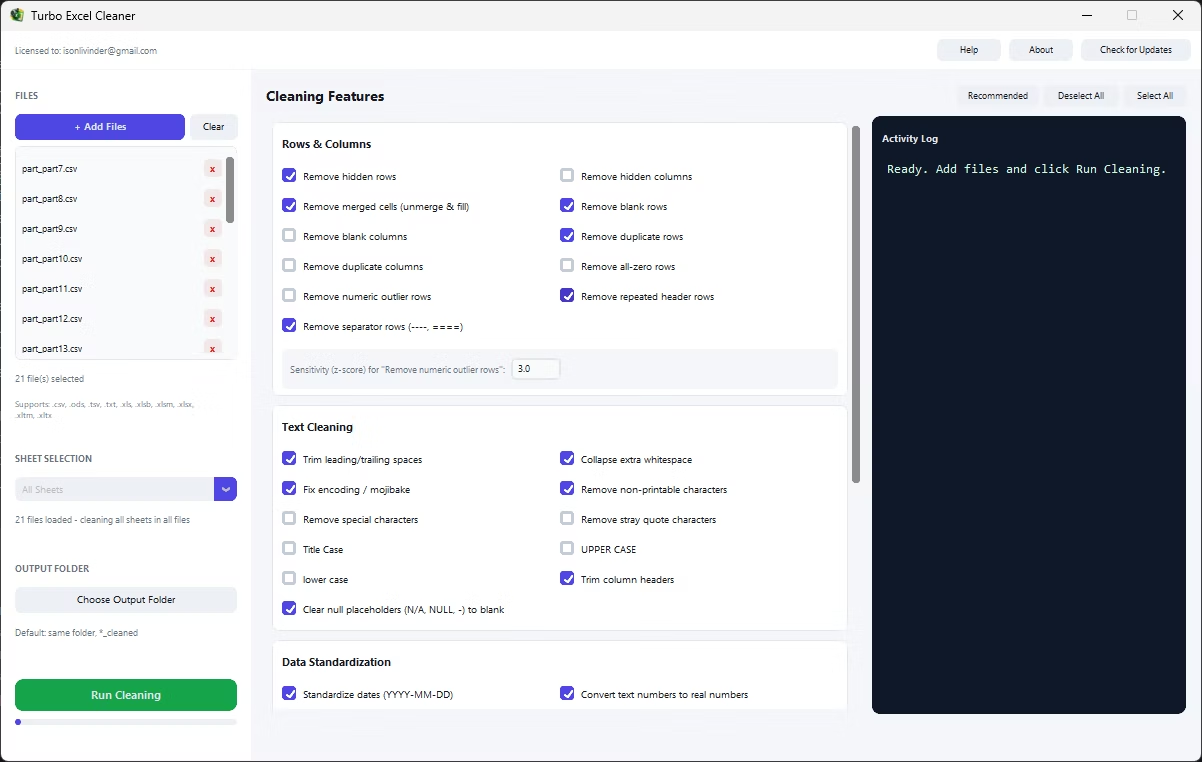
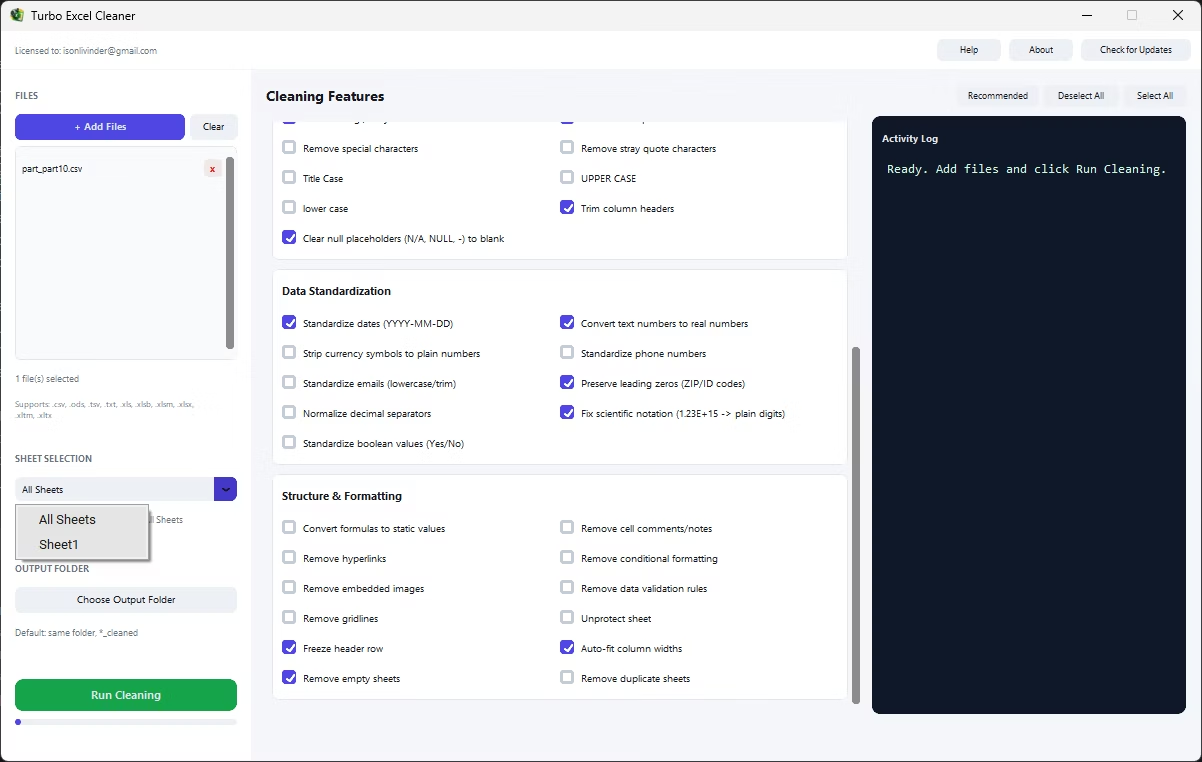
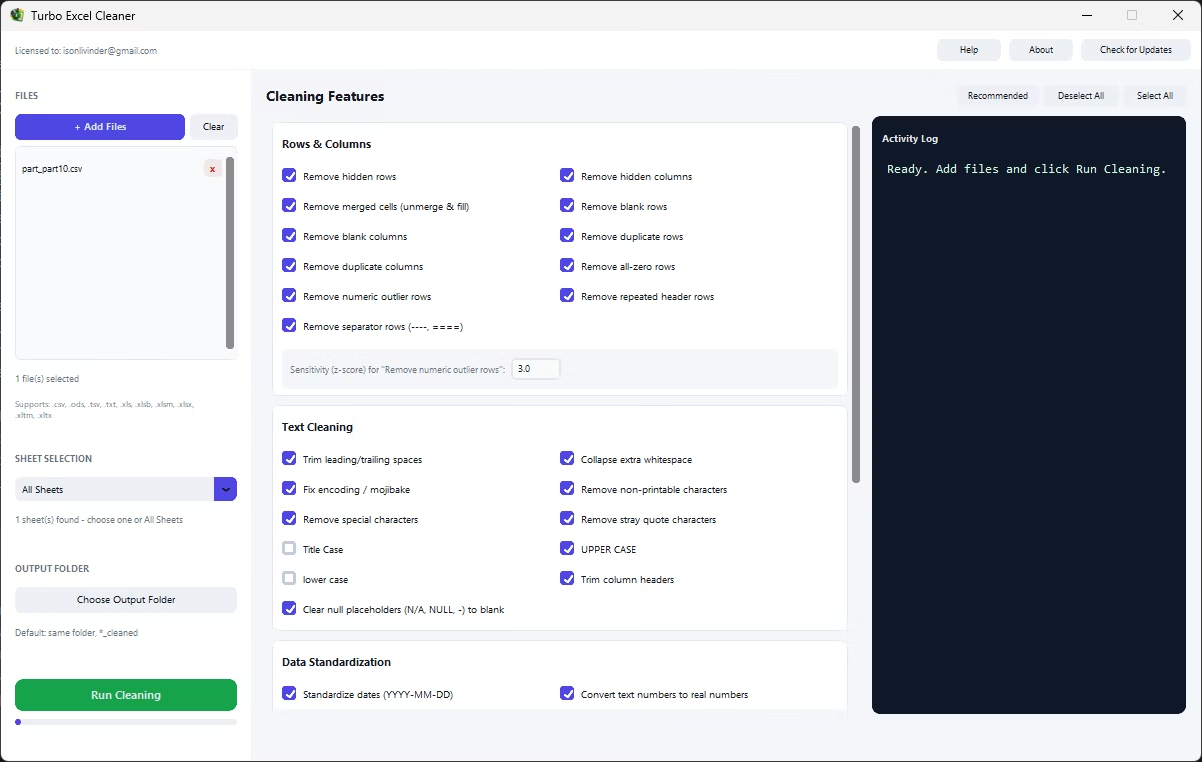
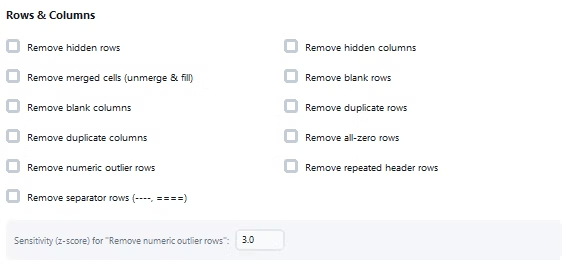
The Go To Special method works fine for a single sheet, but it becomes tedious fast once you are dealing with dozens of exported files that all need the same cleanup. Turbo Excel Cleaner includes a dedicated Remove Blank Rows feature under Rows & Columns that applies the same logic consistently across every sheet in every file you load, without the risk of accidentally deleting a row that only looked empty.
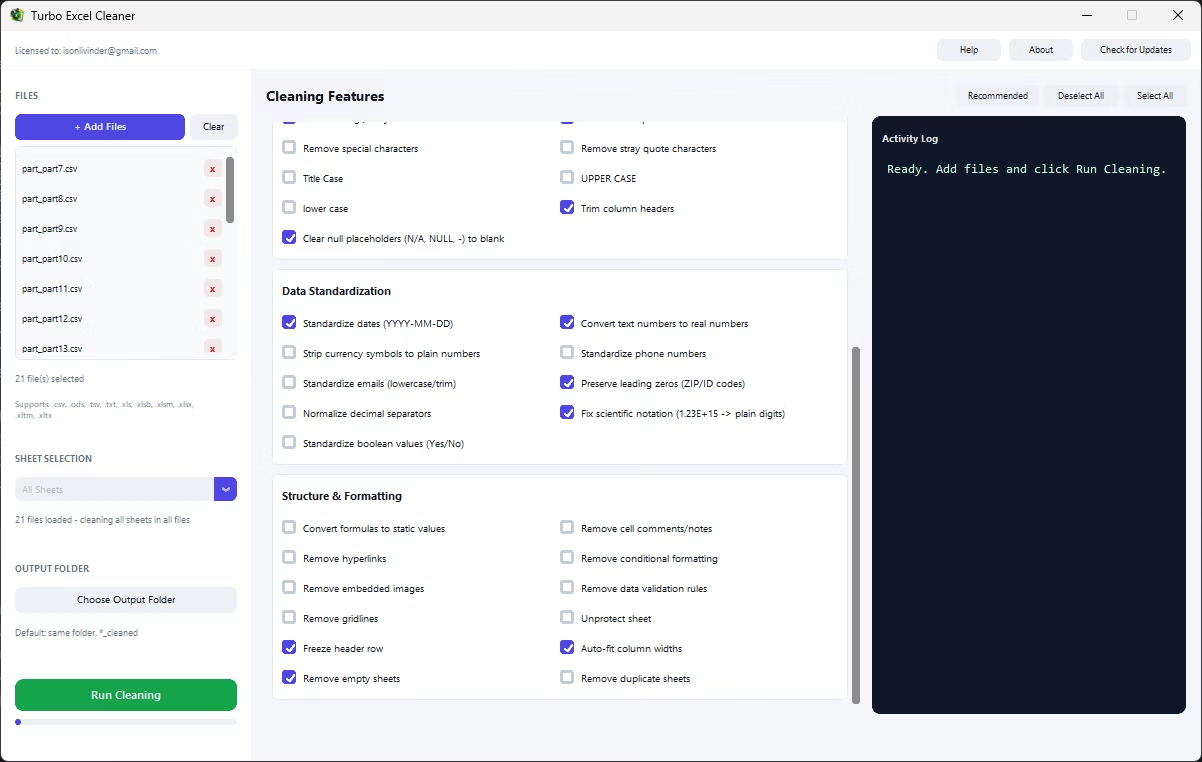
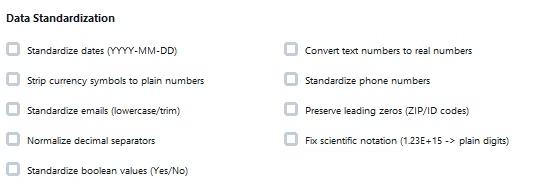
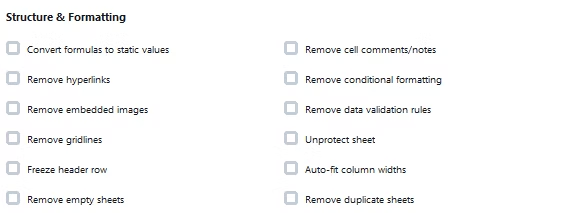
Because the feature is one of 43 independent options, you can pair it with other cleanup steps - trimming whitespace, removing duplicates, standardizing dates - and run everything in a single batch pass instead of repeating the same manual steps file after file.
- Dedicated Remove Blank Rows feature under Rows & Columns
- Distinguishes truly empty rows from rows with stray whitespace
- Processes every sheet in every file automatically
- Combine with any of the other 42 cleaning features in one run
- Cleaned files are saved separately, so your originals stay untouched
Will removing blank rows shift my data or formulas?
Deleting a row does shift everything below it up by one row, so any formulas that reference specific row numbers should be reviewed afterward - Turbo Excel Cleaner recalculates ranges automatically when it removes rows.
What counts as a blank row?
A row is treated as blank when every cell across the sheet's used columns has no value, so a row containing only a stray space is handled separately by the app's whitespace trimming feature.
Can this be applied to CSV files too?
Yes, the Remove Blank Rows feature works the same way on CSV, TSV, and TXT files as it does on native Excel workbooks.
Ready to clean your spreadsheets in bulk, offline, with full privacy?