A number stored as text looks like an ordinary number in a cell, but Excel treats it as a string of characters rather than a numeric value, which means SUM, AVERAGE, and other numeric formulas silently skip it instead of including it in a calculation. This is one of the most common causes of a total that mysteriously does not match the visible numbers in a column, and it usually happens when data is imported from a CSV file, a database export, or a system that formats every field as text by default.
Excel actually flags this for you visually - numbers stored as text are left-aligned by default and often show a small green triangle in the corner of the cell along with a warning icon.






When Excel detects numbers stored as text, selecting the affected cells reveals a small warning icon with a Convert to Number option, which is the fastest fix when the green-triangle warning is present. If the warning icon is not showing, a manual method is to multiply the text values by 1 in a helper column, since arithmetic operations force Excel to reinterpret the text as a number, after which you copy the results back over the original cells as values.
Either method works well for a single column, but needs to be repeated for every column and file affected by the same issue.
A common mistake is multiplying a text value by 1 using a helper formula, forgetting that this trick fails silently on values containing thousands separators or currency symbols, leaving a #VALUE! error instead of a converted number. It also helps to check for a leading apostrophe, which is sometimes used deliberately to force a number to be stored as text, and removing it as part of the same cleanup pass usually resolves the issue completely.
- Select the range of cells showing the green-triangle warning icon.
- Click the warning icon that appears next to the selection.
- Choose Convert to Number from the menu that appears.
- If no warning icon appears, use a helper column with a formula like =A1*1 instead, then paste the results back as values.
- Confirm the converted cells are now right-aligned, which indicates they are true numeric values.
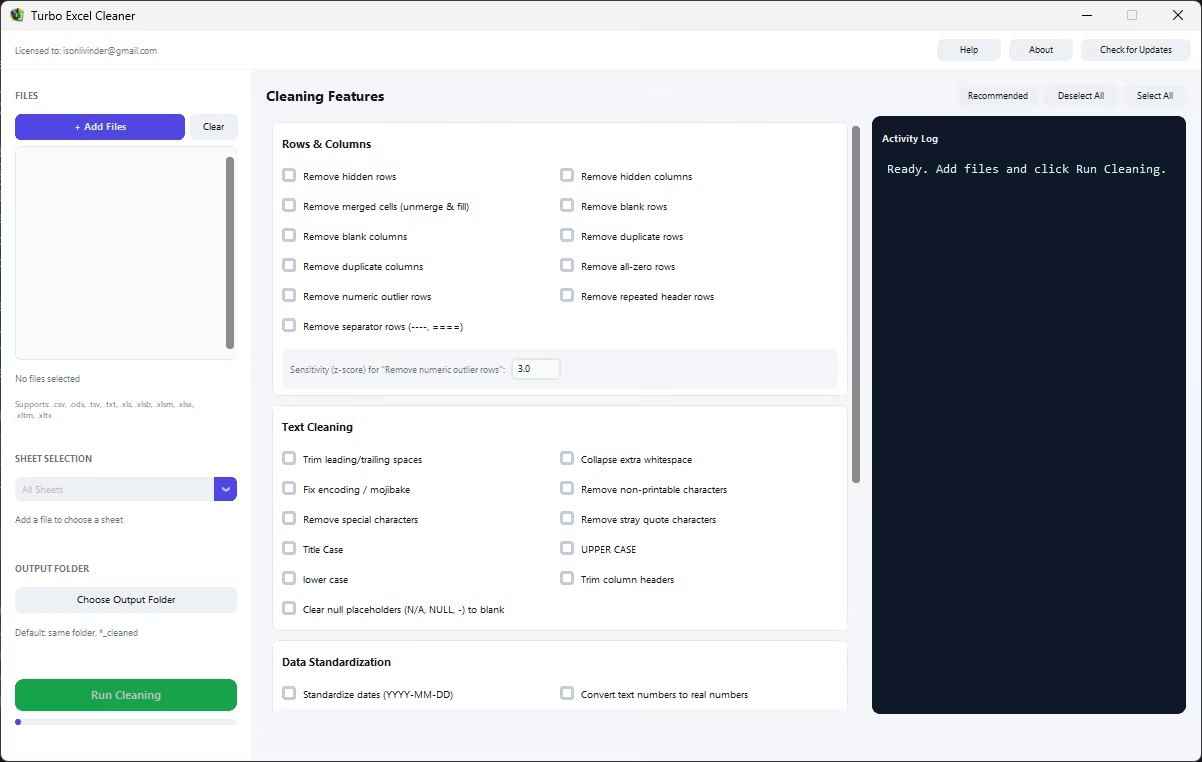
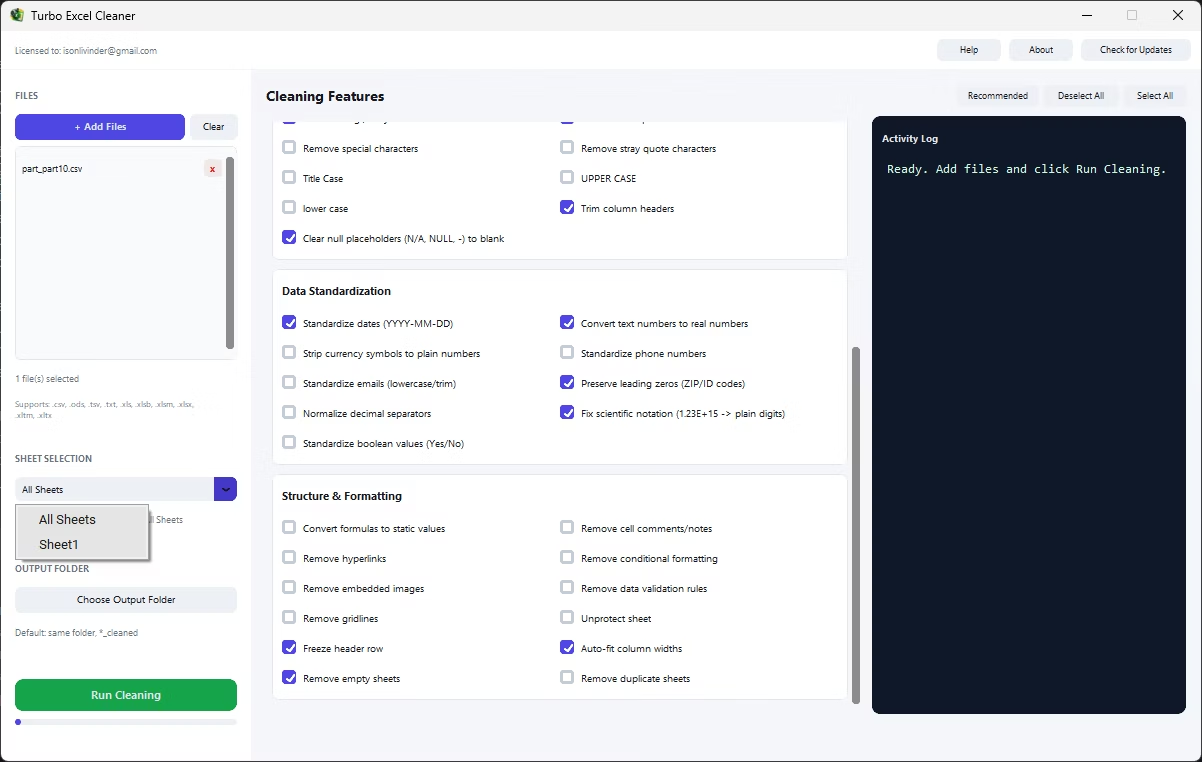
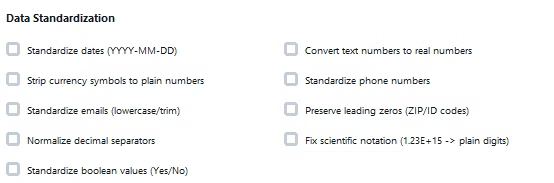
Clicking through the Convert to Number warning one range at a time works for a single file, but a folder of CSV exports that all share the same text-number problem calls for something faster. Turbo Excel Cleaner's Convert Text Numbers to Real Numbers feature scans every column across every sheet you load, identifies numeric values that are stored as text, and converts them into true numbers automatically.
This is especially valuable before running any SUM, AVERAGE, or chart based on a column, since a mix of real numbers and text-numbers in the same column will silently produce an incomplete or misleading result until the conversion is done.
- Automatically detects numbers stored as text across a sheet
- Converts them into true numeric values usable in formulas
- No manual green-triangle clicking or helper columns needed
- Applies across every sheet in every file in the batch
- Works on Excel, OpenDocument, CSV, TSV, and TXT files
How can I tell a number is stored as text?
Text-stored numbers are left-aligned in a cell by default, while true numbers are right-aligned; a green triangle warning icon in the corner of the cell is another common indicator.
Why does this happen so often with CSV imports?
CSV files carry no built-in data type information, so depending on how the import is handled, numeric-looking values can be interpreted as plain text instead of numbers.
Will converting text numbers change how the value looks?
The displayed digits remain the same, but the cell becomes a true numeric value that formulas like SUM and AVERAGE can correctly include in calculations.
Ready to clean your spreadsheets in bulk, offline, with full privacy?